
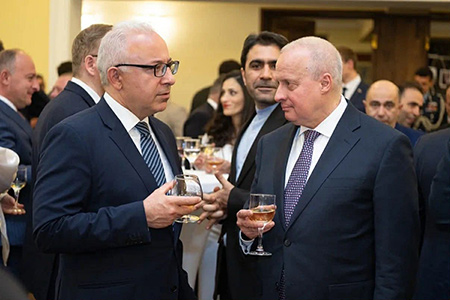
ArmInfo. Russia is fully interested in a sovereign, strong, and self-sufficient Armenia. This was stated by Russian Ambassador to Armenia Sergey Kopyrkin on the occasion of Diplomats' Day.
In his speech, the Russian diplomat noted that the South Caucasus region is experiencing the impact of geopolitical turbulence. According to Kopyrkin, under these challenging conditions, relations between Russia and Armenia have entered a new stage of adaptation to changing realities.
"Overcoming the current challenges requires long-term political will and strategic wisdom from both sides to preserve and expand the accumulated wealth of bilateral cooperation.
I hope that the recent visit to Moscow of the Speaker of the National Assembly of the Republic of Armenia has given additional impetus to progress in this direction. I am convinced that the country's full participation in our joint integration associations effectively contributes to this. For example, over the 10 years of membership in the EAEU, Armenia's GDP has increased 2.5-fold," the Russian Ambassador said.
He added that last year's results confirmed that, despite external shocks, Russia remains Armenia's leading trade, economic, and investment partner, a time-tested guarantor of the country's energy and food security.
"Cultural, humanitarian, and people-to-people contacts have traditionally been vibrant. It's significant that Russians lead the way among foreign tourists visiting Armenian soil. The friendship between the peoples of Russia and Armenia has been bequeathed to us by generations of ancestors, forged over centuries by glorious shared victories and joint creative labor, and forged by close human ties. We will preserve this legacy and pass it on to future generations," he added.
Speaking generally about global processes, he noted that the entire world is witnessing "tectonic" changes to the previous world order, which is undergoing a painful transition to a multipolar system. "New centers of political influence, economic growth, technological and financial power are emerging. It is still too early to talk about the parameters of the future global architecture. But it is already clear that it must be founded on genuine equality, a culture of consensus, and mutual consideration of interests. These principles guide the new type of multilateral associations-the SCO and BRICS," Kopyrkin said.
According to him, the era of the undivided supremacy of the "collective West," unaccustomed to taking the rest of the world into account, has come to an end. This historical process cannot be stopped.
"Russia, as a responsible member of the 'Global Majority,' which includes countries in Greater Eurasia, Africa, and Latin America, consistently advocates for equal, fair, and mutually beneficial cooperation based on universally recognized norms of international law, the central role of the UN, and the sovereign right of states to determine their own development paths. Our country strives to have a friendly external environment and to build constructive interaction with foreign partners in all formats and across all geographic areas, provided there is mutual interest.
We have put forward the initiative to create a Greater Eurasian Partnership and, building on this foundation, a pan-continental architecture of equal and indivisible security. To further this concept, together with our Belarusian friends, we are promoting the development of a Eurasian Charter of Diversity and Multipolarity in the 21st Century," Kopyrkin concluded.







 Analyst: The primary issue with Armenia`s new Parliament Speaker`s speech lies is its one-sided interpretation of the causes of the political crisis
 Expert: Gagik Tsarukyan embodies post-Soviet model of big business-state relations; this model is used in many other post-Soviet countries
 Expert: Azerbaijan promoting aggressive plans against Armenia at state level
 Iranologist: Baku`s propaganda of might masks the country`s inability to provide water to its own population
 NA Vice Speaker candidate believes his wife`s salary as director of HayPost is the lowest in the company`s history
 RF Permanent Representative: There is no CSTO-Armenia conflict
 Moscow: NATO seeking to "Pull" Armenia away from CSTO Allies
  Political analyst: Russia intends to determine which "Camp" Armenia will choose through a referendum
 Narek Karapetyan will give up his parliamentary salary in favor of charitable contributions.
 Armenia and France discuss further development of strategic partnership and EU cooperation
  To overcome risks Armenia must reduce domestic escalation - expert
 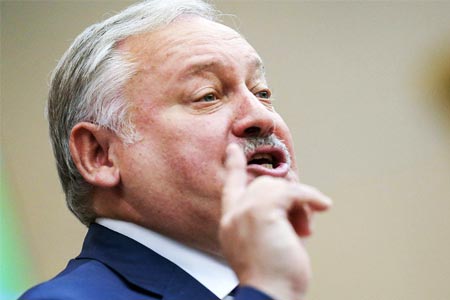 Zatulin: Pashinyan was eager to get back to Russia because he actually lost the elections
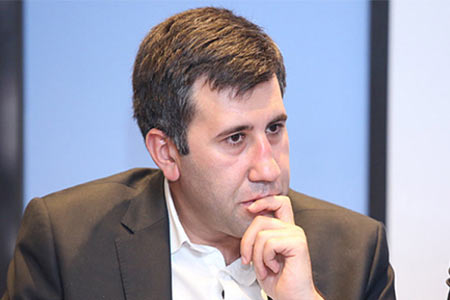 Human rights activist Ruben Melikyan dismissed from YSU
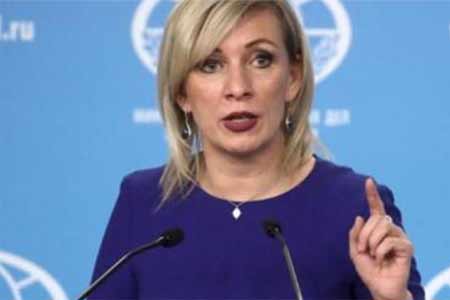 Zakharova: Armenia`s pro-EU pivot poses economic security risks to EAEU member states
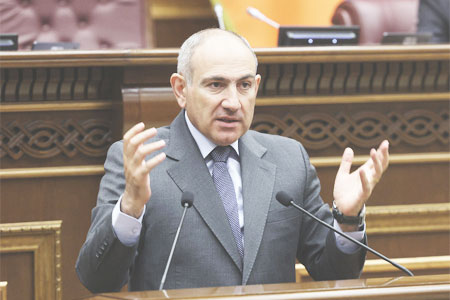 It`s time for South Caucasus countries to think of South Caucasus as single, unified region - RA premier
  Pashinyan: Armenia and Azerbaijan should leave each other alone
 Moscow sees situation with Armenia as attempt to attack Russia-involving integration associations - Russian presidential aid