


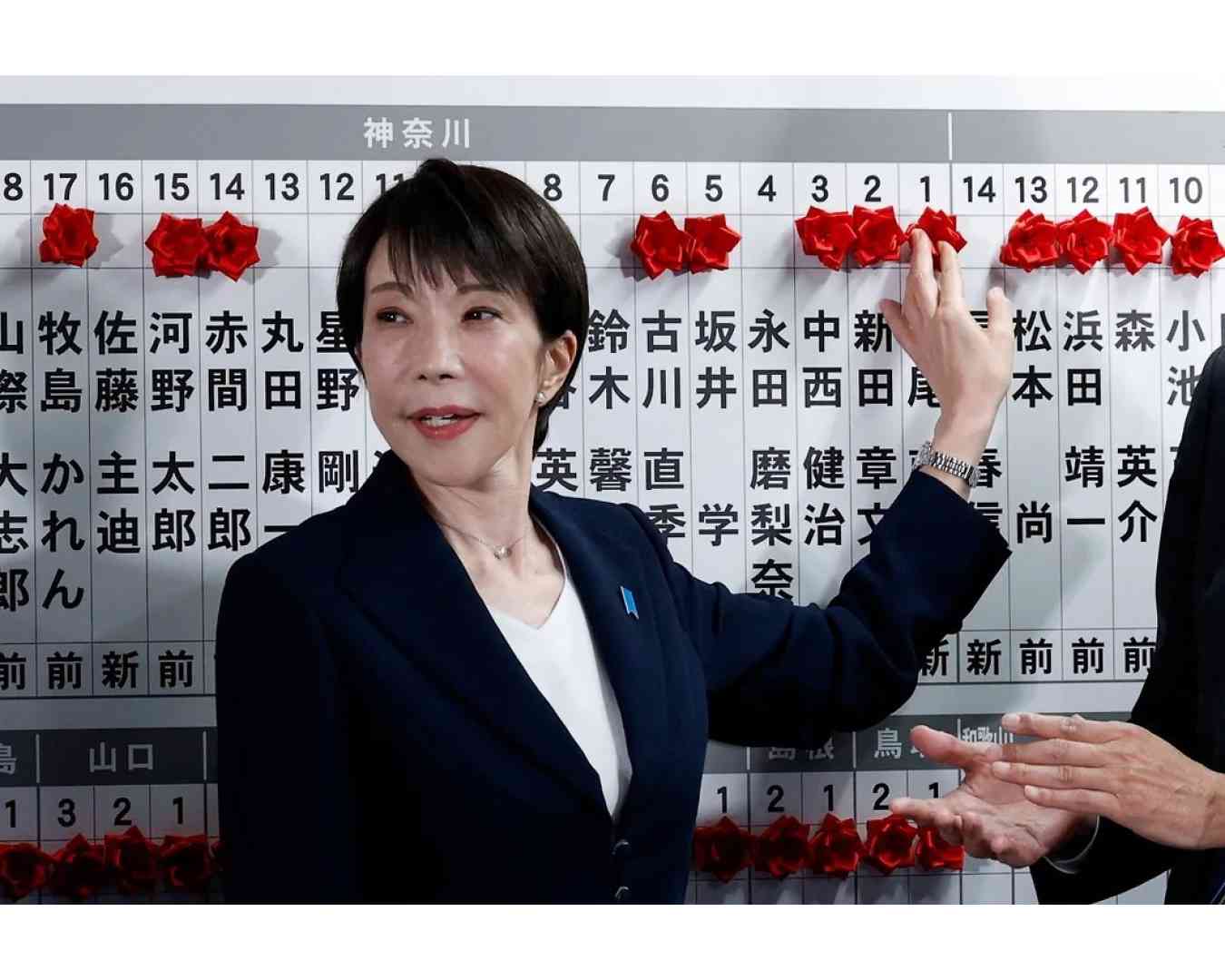
ArmInfo. Japan's Liberal Democratic Party (LDP), led by Prime Minister Sanae Takaichi, won a landslide victory in Sunday's elections to the key lower house of parliament. According to preliminary estimates, the party secured two-thirds of the seats, allowing the LDP and its coalition partner, who previously lacked a stable majority in the lower house, to easily pass any legislation.
The path to victory was paved in part by populist promises, which alarmed economists but were enthusiastically received by voters. Sanae Takaichi's confident foreign policy steps also contributed to her carte blanche to govern the country, according to Vedomosti.
Many Japanese were also pleased with the way Sanae Takaichi distinguished herself on the international stage in the first weeks of her premiership.
First of all, she strengthened Tokyo's alliance with Washington by pompously welcoming President Donald Trump, who was visiting Japan on a state visit.
Incidentally, just days before the election, Trump openly endorsed his Japanese counterpart and her party. "Prime Minister Takaichi deserves every recognition for the work she and her coalition are doing. I am honored to express my full and unconditional support to her and to her esteemed coalition," Trump wrote on his social media account, Truth Social, on February 5.
It's hard to say that the American leader's support was the deciding factor for the Japanese—after all, the prime minister was already popular. However, the fact that Trump favors Takaichi certainly played a role. "From the business community's perspective, improved relations and Trump's recognition will be seen as positive... Trump is surprisingly popular in Japan compared to some Western countries," noted Mizuho Bank geopolitical analyst Asuka Tatebayashi (quoted by Reuters).
Meanwhile, relations with China have, on the contrary, gone downhill under Sanae Takaichi. After she publicly suggested Japan would use military force in the event of a blockade of Taiwan or an attack by China, Beijing made an example of Tokyo: it canceled many flights to Japanese cities, urged its students not to study in Japan, and even removed pandas from the Tokyo Zoo, leaving the country without a single panda in half a century (the absence or presence of pandas in other countries has long been an unofficial indicator of the state of China's relations with that country).
The conflict with China has had a negative impact on Japan's economy, but Takaichi's ratings have remained unaffected. On the contrary, her firmness in dealing with Beijing only earned her additional points in the eyes of Japan's nationalist public. "Beijing will not welcome Takaichi's victory. China is now faced with the reality that she is firmly entrenched in her position and that its attempts to completely isolate her have failed," David Boling, chief consultant at Asia Group, told Reuters after the initial election results were released.




























































 Politician: With high voter turnout, current government to no chance
 Political analyst: Relatively high turnout indicates that Armenian citizens are actively and consciously shaping the country`s future
 Head of IPA CIS Council Secretariat: Extremely difficult atmosphere during parliamentary elections campaign in Armenia accompanied by mass arrests
 Pashinyan`s party leads with 51.13% based on vote counts from 533 polling stations
 Voting in parliamentary elections in Armenia ends
  Strong Armenia: Administrative Court not providing judicial decisions to citizens wishing to vote in parliamentary elections
 Russia trying to convey to Armenia that the EU has effectively transformed into a military-political union – Overchuk
 Armenian FM: Relations between Armenia and Russia need " a certain degree of healing"