
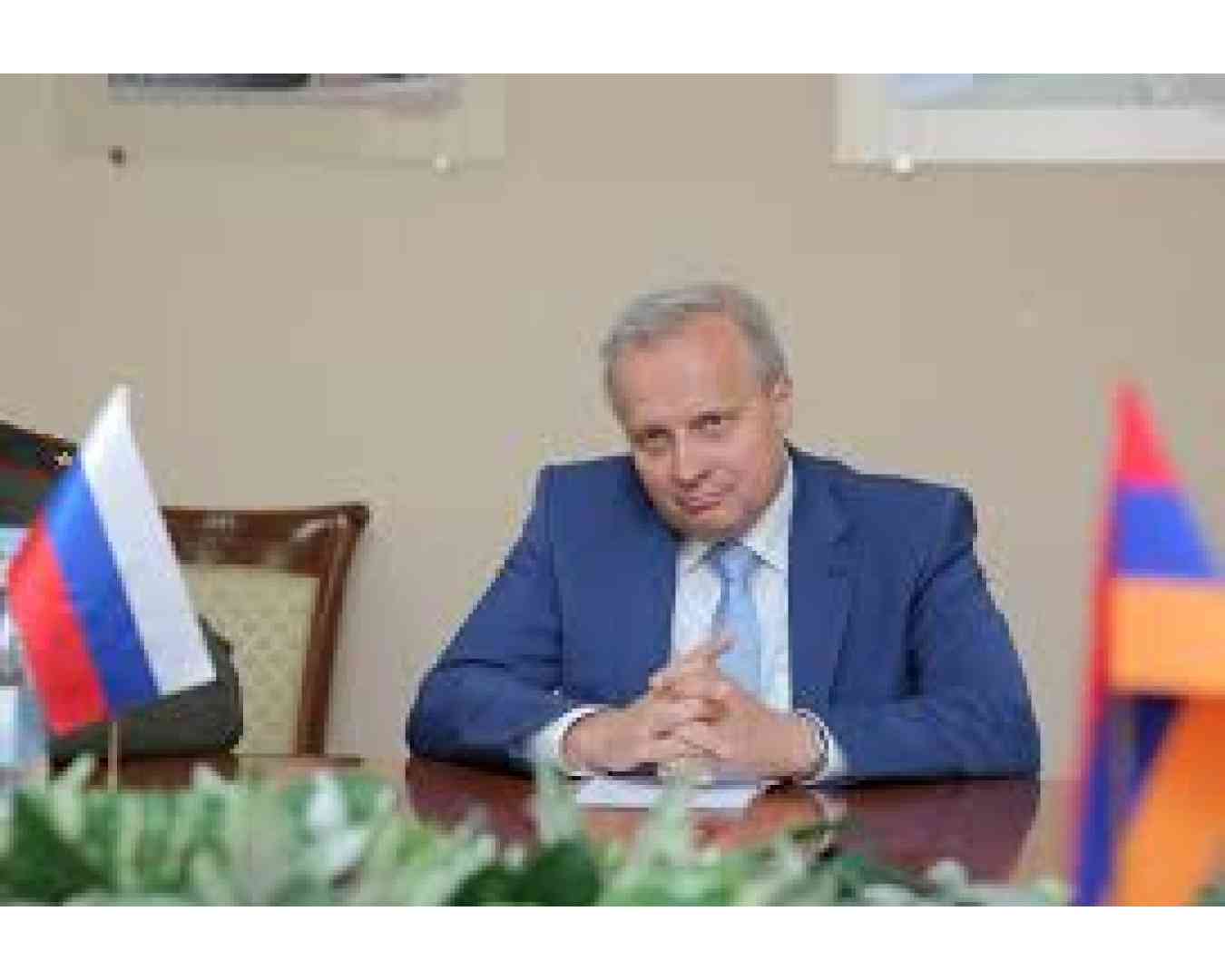
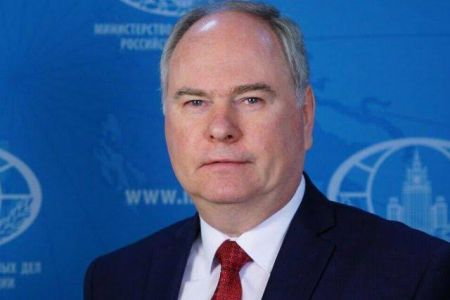
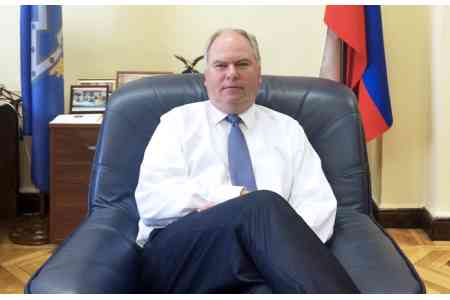
ArmInfo. Russian Ambassador to Armenia Sergey Kopyrkin discussed Moscow's position on events in the South Caucasus and emphasized Armenia's benefits from membership in the Eurasian Economic Union (EAEU).
"Of course, what's happening in the world, the tectonic changes we're witnessing, cannot help but impact the South Caucasus region, particularly what's happening in the Middle East and more broadly. As is well known, Armenia is currently pursuing a policy of broad diversification of its foreign policy relations, and a very significant element of this policy is rapprochement with Western countries, the European Union, and the United States," the diplomat said in an interview with Rossiya-24.
In this vein, he noted that Moscow sees the EU currently pursuing a hostile policy toward the Russian Federation and, in general, openly signals to its partners that they need to support this policy, including sanctions. "Of course, this creates new challenges to our relations and requires a very reasonable, wise, and balanced approach from both sides, as well as strategic foresight. In general, this requires our relations to adapt to new realities—I would even use the word 'maturity'—in order to preserve the important things that united and continue to unite our countries and peoples," added the Russian Ambassador to Armenia.
According to him, high-level dialogue is a very significant and key element in this regard. He believes it is crucial for synchronizing watches, understanding current events, and developing joint ways to preserve and develop our relations in the new reality.
Kopirkin continued on this topic by noting that the economic component of Armenian-Russian relations remains very significant today. He recalled that Russia remains Armenia's leading trade, economic, and investment partner.
"Companies with Russian participation play a very significant role, I would say a crucial one, in the Armenian economy; they are among the leading taxpayers in the Republic of Armenia. This, of course, must all be taken into account and utilized. Of course, we have always been united and continue to be united by spiritual, moral, and cultural ties, as well as people-to-people connections. And, as an example, Russians continue to be the largest tourist contingent to the Republic of Armenia," the diplomat said.
He then cited an example of the benefits Armenia has received during its 10 years of membership in the EAEU. "For example, over the 10 years of Armenia's membership in the EAEU, its GDP has increased 2.5-fold. According to statistics, over the first 10 months of last year, Armenia's total exports amounted to $6.4 billion, $2.6 billion of which went to EAEU countries, primarily Russia. Russia accounts for 37% of the republic's exports. The benefits of Armenia's membership in the EAEU are obvious, but whether the EU can guarantee the same level of economic and social development remains a big question," Kopyrkin noted.
At the same time, he urged consideration of the political factor of the EU's increasingly militarized nature and its openly anti-Russian policies. "All of this must, of course, be taken into account. Incidentally, it's also a fact that, under current conditions, it's difficult to talk about Armenia's EU membership, but EU standards are already being actively implemented in the republic. And we are all well aware of the signals the EU leadership is sending to countries aspiring to join this union regarding the policies Brussels believes they should pursue toward Russia," the diplomat added.
Regarding the parallel processes of EU accession and EAEU membership, Kopyrkin emphasized that there is a clear understanding, on both sides, that membership in the European Union and the Eurasian Economic Union are incompatible. "Basically, this has been stated by the Armenian leadership as well, that at some point a choice will be made. I still hope that the choice will be made based on the best interests of Armenia and the Armenian people," he concluded.













 Expert: Gagik Tsarukyan embodies post-Soviet model of big business-state relations; this model is used in many other post-Soviet countries
 Expert: Azerbaijan promoting aggressive plans against Armenia at state level
 Iranologist: Baku`s propaganda of might masks the country`s inability to provide water to its own population
 Political analyst: Russia intends to determine which "Camp" Armenia will choose through a referendum
 Narek Karapetyan will give up his parliamentary salary in favor of charitable contributions.
 Armenia and France discuss further development of strategic partnership and EU cooperation
  To overcome risks Armenia must reduce domestic escalation - expert
  Zatulin: Pashinyan was eager to get back to Russia because he actually lost the elections
 Human rights activist Ruben Melikyan dismissed from YSU
 Zakharova: Armenia`s pro-EU pivot poses economic security risks to EAEU member states
 It`s time for South Caucasus countries to think of South Caucasus as single, unified region - RA premier
  Pashinyan: Armenia and Azerbaijan should leave each other alone
 Moscow sees situation with Armenia as attempt to attack Russia-involving integration associations - Russian presidential aid
 Zakharova: Armenia views relations with Russia as tool for financially securing reorientation toward EU
