


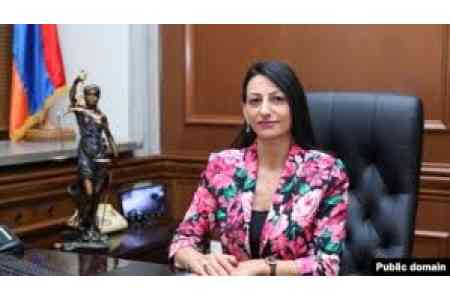
ArmInfo.Armenian Ombudsperson Anahit Manasyan has issued a statement demanding the elimination of discriminatory and hate speech against individuals or groups. She also called for all political and other public debates, as well as legal proceedings, to be conducted in compliance with human rights standards.
In an official statement released by the Human Rights Defender's (HRD) office, Manasyan noted that public discourse in Armenia increasingly contains dangerous labeling directed at various social groups. She emphasized that this trend becomes particularly acute as the parliamentary elections scheduled for June 7, 2026, approach-a period when such rhetoric is often weaponized for political gain.
Specifically, Manasyan condemned the rising use of labels against women, gender prejudices, and language that effectively demeans their dignity. She noted that these stereotypes are rooted across all levels of society, directly contradicting the principle of equality. Furthermore, the Human Rights Defender noted that the attacks on representatives of the Armenian Apostolic Church, other religious organizations, and atheists continue to be recorded. Manasyan stressed that while any issue can be the subject of democratic debate, it cannot be achieved by violating human rights guarantees regarding religious freedom.
The Armenian Ombudsperson also called labeling people with disabilities, including those with mental health issues, and discriminatory statements against them in the context of political debates unacceptable. Attention was drawn to the impermissibility of political and public figures spreading hate speech based on ethnicity. She cited the derogatory use of terms like "Turk" or "Yezidi" as specific examples of this harmful practice.
As Manasyan recalled, in connection with the strict observance of guarantees regarding freedom of religion, including the importance of respecting the autonomy of religious organizations, the Human Rights Defender had previously issued a public statement demanding that competent state bodies comply with international guarantees regarding freedom of religion.
"The Ombudsman reaffirms the positions set forth in the statement and emphasizes that in all cases where law enforcement proceedings concern representatives of the Armenian Apostolic Church or other religious organizations, law enforcement and other competent authorities are obligated to exercise the necessary sensitivity, respect individuals' religious beliefs, and conduct proceedings without creating the impression that individuals' religious beliefs are not respected or that criminal proceedings are being conducted on the basis of religious beliefs," the Human Rights Defender's office noted.
Manasyan emphasized that several criminal cases against representatives of the Armenian Apostolic Church are also currently under scrutiny. She noted that in one case, the dilemma of whether this issue could be discussed in the context of a court hearing, given the autonomy of the church, became a subject of public discussion.
"Considering the existence of a judicial decision in the case and without interfering in any way with the activities of the courts, the Human Rights Defender considers the public communication conducted by the competent authorities on this matter insufficient and emphasizes that, with regard to such sensitive and legally contentious issues, continuous, comprehensive communication is necessary in accordance with international standards, presenting the grounds for the legality of the actions of the competent authorities," the Human Rights Defender noted in this regard, adding that public communication on these issues must be carried out with the necessary sensitivity.
According to Manasyan, her focus also includes guaranteeing religious freedom for persons deprived of their liberty. In this regard, she reported that, during the course of cooperation between the Human Rights Defender and the competent authorities, several issues related to guaranteeing this right in places of detention were resolved. "At the same time, the Ombudsman considers it necessary to reiterate that guaranteeing religious freedom for persons deprived of their liberty has numerous specific features, and therefore it is necessary to demonstrate a systemic approach to this issue and develop conceptual solutions in this regard," the Ombudsperson added.
In conclusion, Manasyan emphasized that government officials, political and public figures, the media, and professional communities must play an active role in both eliminating and countering prohibited types of speech, guided by the principles of respect for diversity in society, eliminating discrimination, fostering social solidarity, and fostering healthy public dialogue.


















 Politician: Statement by Armenia`s third president may deprive opposition of only political basis for ousting Pashinyan
 Political scientist: Real recount will deprive Pashinyan of any constitutional majority
 Elections in Armenia were accompanied by unprecedented pressure on opposition, RF MFA spokesperson claims
  Expert: Even OSCE observers recorded numerous violations during elections in Armenia
  Moscow to await official results of Armenian elections - Peskov
 Antonio Costa: EU to deepen its partnership with Armenia, expanding cooperation in energy, trade, and digitalization
 Israeli MFA congratulates Pashinyan
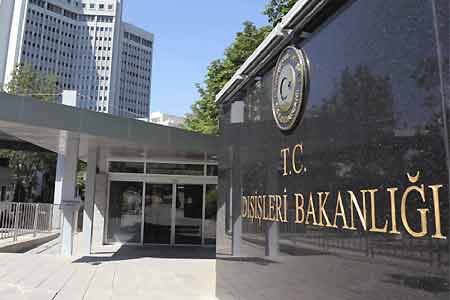 Turkish MFA comments on results of Armenian elections
 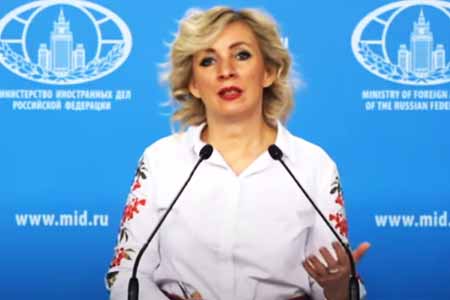 Zakharova: International observers cannot ignore `flagrant violations` in Armenian elections
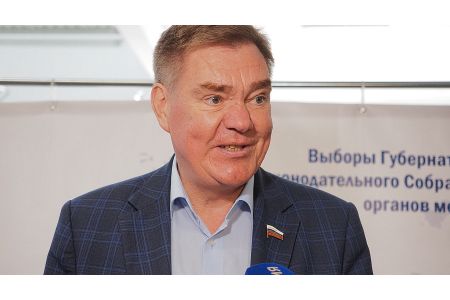 Russian Senator: Opposition complaints regarding election violations by ruling party remain unanswered
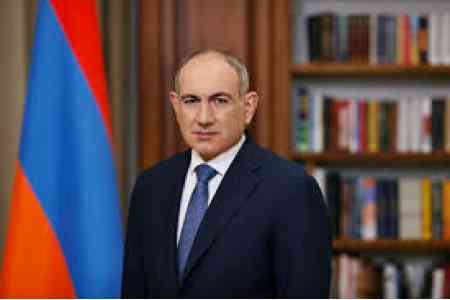 RA premier receiving congratulations on his victory in parliamentary elections
 Head of IPA CIS Council Secretariat: Extremely difficult atmosphere during parliamentary elections campaign in Armenia accompanied by mass arrests
 Pashinyan`s party leads with 51.13% based on vote counts from 533 polling stations