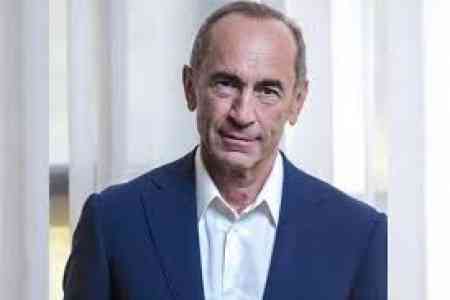
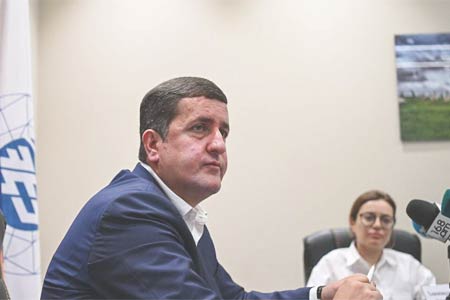
ArmInfo. The final format regarding the participation of the second President of the Republic of Armenia, Robert Kocharyan, in the 2026 parliamentary elections has not been determined yet, as stated by the former president during a press briefing on January 29.
According to him, rumors have recently been circulating in the media that if the "formers" step down, greater prospects will open up for the remaining candidates. However, as Robert Kocharyan noted, one should not lump all three presidents of the RA into one category.
"We, the three former presidents-myself, Serzh Sargsyan, and Levon Ter-Petrosyan-are completely different in character. We have varying views and work styles, but we share one commonality: our past roles as presidents. If simply being a former president is reason enough to declare 'You shouldn't participate in elections,' then former ministers, members of parliament, or ombudsmen should not participate either. Is that normal? Of course not," the second president noted, adding that each person decides for themselves whether to participate in elections, and if so, in what format.
At the same time, the former president noted that if his political force doesn't take first place in the elections, he personally will have no ambitions. "In this case, this force must answer whether it accepts Kocharyan's leadership or not. However, every opposition force participating in the elections must declare that it excludes any cooperation with the "Civil Contract" party." The former president also stated that he does not see himself serving as a minister. "In our political team, there are many people who possess the necessary knowledge and can do this." As for who will become prime minister, there is a very simple option: the one who receives the highest percentage of votes has the priority right to be nominated for the post of prime minister," the second president of the Republic of Armenia noted.
In response to a question about Pashinyan accusing the former presidents of robbery, Robert Kocharyan replied that the Prime Minister himself came to power with a slogan of love for the people, but it later turned out that he loves money. If he had loved the people, Kocharyan continued, the situation of pensioners would not be as it is now. The former president noted that in 2008, he did not hold any public office. "I was a free man, worked for a large company, earned a lot of money, and was not responsible for everything. This was a pleasure for a person who, from 1998 to 2008, constantly went through difficult trials and assumed responsibility in crisis situations. Now the situation is again in crisis, and Iface a choice: to take responsibility or evade it. I believe that no one can lead the country out of this situation better than me. If you name someone with more experience in all areas, that would be very good," the former Armenian president said.
In this regard, speaking about the support for Nikol Pashinyan from foreign countries and organizations, Robert Kocharyan recalled the statements by Turkish Foreign Minister Hakan Fidan and EU High Representative for Foreign Affairs and Security Policy Kaja Kallas. The former president believes that this support is not their initiative, but rather comes from Armenia. "Delegations from Armenia go and declare: 'We have taken a pro-Western stance, and Russia is waging a hybrid war against us.' Saakashvili did the same: he escalated relations and then fled, asking for support. Armenia is escalating relations and trying to get something from the West in return. How will this affect domestic politics? There will be a certain impact. From this perspective, the opposition has found itself in an unequal conditions. Russia doesn't make such statements, nor does China. The difference between China and the US is that the US says, "If you don't do this, I'll punish you," while China says, "If you do this, I'll reward you." There's a big difference between these approaches, which is why China is much more attractive to many countries. For some reason, Armenia has found itself in a situation where relations with one side have to be build by destroying relations with the other. For a small country, this is not normal," Robert Kocharyan noted.







 Opinion: Following Berlin talks, Baku gains expanded influence within EU and strengthens cooperation ties with main European powerhouse
 Armenian expert: Could modern Azerbaijan even exist without Russian and Soviet modernization?
 Zatulin: Pashinyan was eager to get back to Russia because he actually lost the elections
 Human rights activist Ruben Melikyan dismissed from YSU
 Pashinyan removed from INNOPROM guest list
 Zakharova: Armenia`s pro-EU pivot poses economic security risks to EAEU member states
 It`s time for South Caucasus countries to think of South Caucasus as single, unified region - RA premier
  Pashinyan: Armenia and Azerbaijan should leave each other alone
 Moscow sees situation with Armenia as attempt to attack Russia-involving integration associations - Russian presidential aid
 Zakharova: Armenia views relations with Russia as tool for financially securing reorientation toward EU
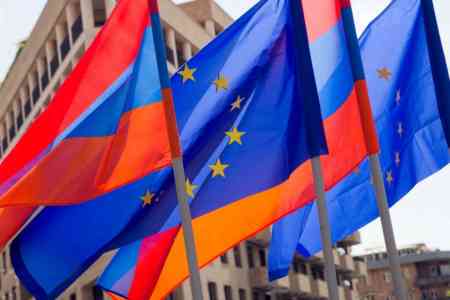 The Armenian Minister of Justice and the EU Ambassador discussed visa liberalization issues for Yerevan.
 Azerbaijan`s aggressive plans against Armenia became possible in wake of Pashinyan`s decisions on Artsakh - expert
  Zakharova: Russia sent a note of protest to Armenia over the act of vandalism at the "Mother Armenia" memorial in Gyumri
 Samvel Karapetyan proposes creating a post-election opposition coalition