


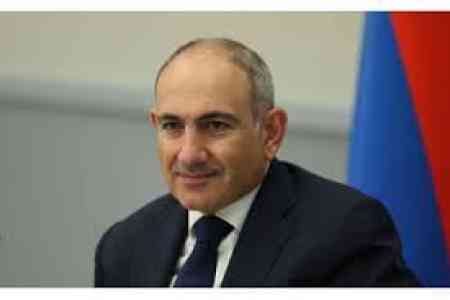
ArmInfo.We need to take immediate action based on yesterday's statement regarding the implementation of the Trump Pathway for International Peace and Prosperity (TRIPP) project. Prime Minister Nikol Pashinyan stated this at a government meeting on January 15.
According to Nikol Pashinyan, this is the next important step following the statement of August 8, 2025, which addresses, at the framework level, one of the key and fundamental issues of the peace process- unblocking regional communications, which touches on all fundamental issues.
"The meaning and practical significance of the statement is that peace in our republic and our region is being established through very concrete and practical steps, and this is now a practical reality," he noted.
Pashinyan emphasized the need to carefully maintain the established peace, noting that Armenia, as a state and society, has historically not experienced long-term peace, and that this process requires a new culture and mindset. "The logic of conflict remains very strong in our language, thinking, and expressions, while peace is penetrating our consciousness very slowly. This is normal, given the experience of the last 35 years, but what's important is that realities already exist that should contribute to the formation of socio- psychological peace," he said.
On the other hand, the prime minister believes that a great deal of practical work remains to be done. "We need to take action based on yesterday's statement as quickly as possible. First of all, we need to adopt them de jure in the form of agreements. We will begin work on the necessary draft agreements and legal solutions; in particular, a company called TRIPP should be established in Armenia. We must also determine routes, development rights, land use, and construction permits," he said, adding that government agencies should begin preparing for the upcoming processes today.
The day before, the Armenian Foreign Ministry published a document outlining the implementation procedures for the Trump Pathway for International Peace and Prosperity (TRIPP) project. The document was presented following the Mirzoyan-Rubio meeting in Washington. It is noted that the document represents a new step toward fulfilling the commitments made at the White House on August 8, 2025, to promote lasting peace in the South Caucasus. It is emphasized that it sets forth the framework for implementing TRIPP. "This framework does not create and is not intended to create any legal obligations or liabilities for Armenia or the United States," the document states.
The document emphasizes that Armenia intends to authorize and support the establishment of the TRIPP Development Company. "The company is expected to be responsible for the development of the TRIPP project, receiving an initial development right for a period of 49 years. Armenia intends to offer the United States a 74% stake in TRIPP Development Company, retaining 26%. This partnership is expected to be extended for an additional 50 years, with an additional ownership stake granted to the Armenian government, bringing its stake to 49%," the published document states.
In parallel with the direct implementation of the railway and road components of the project, TRIPP Development Company is expected to establish separate legal structures for the larger infrastructure components, which will be the subject of further study and analysis. It is also emphasized that Armenia's sovereignty and jurisdiction over border and customs operations are absolute and indisputable. "All border and customs activities are expected to be conducted in accordance with internationally recognized border management standards, adhering to the principles of the August 8 Declaration, using a front-office-back- office operating model. Armenia intends to continue to develop and implement modern integrated border management practices, for which the United States can provide technical assistance, including: risk-based inspection and customs clearance procedures; modern screening technologies; digital customs and border systems; coordinated interagency processes; and development of the professional skills of Armenian civil servants," the document states.
It also states that modern information systems will be installed for border and customs management, which will remain under Armenia's sovereign control.






















 Political Scientist: As long as the opposition remains silent, Pashinyan can use Plan B and secure a constitutional majority
 US-Iranian memorandum more beneficial for Iran from political and economic perspective - expert
  Political analyst: While Pashinyan pledges peace with Azerbaijan, Baku continues promoting the "Western Azerbaijan" project
 Political analyst: In light of new realities, Yerevan may propose advancing peace process with Baku without constitutional referendum
 Present-day geopolitical competition shifts from territorial control to infrastructure flows
 Zakharova: Armenia views relations with Russia as tool for financially securing reorientation toward EU
 The Armenian Minister of Justice and the EU Ambassador discussed visa liberalization issues for Yerevan.
 Azerbaijan`s aggressive plans against Armenia became possible in wake of Pashinyan`s decisions on Artsakh - expert
  Zakharova: Russia sent a note of protest to Armenia over the act of vandalism at the "Mother Armenia" memorial in Gyumri
 Samvel Karapetyan proposes creating a post-election opposition coalition
 Artsakh`s Cultural Heritage Ombudsman called on Moscow to respond to destruction of WWII monuments by Azerbaijan in occupied NKR
 Prosecutor General`s Office petitions Central Electoral Commission for criminal prosecution of Robert Kocharyan
 Dutch Prime Minister expresses his support for Armenia`s democratic reform and economic diversification agenda
 Heritage: It`s time for Armenia`s opposition to present people with legitimate alternative to power
 RA Security Council Sec, Assistant to President of Azerbaijan hold negotiations in Dilijan
  CEC Neutralizes PAP: Three Political Forces to Enter Armenian Parliament Following Election Vote
 Expert: Even OSCE observers recorded numerous violations during elections in Armenia
 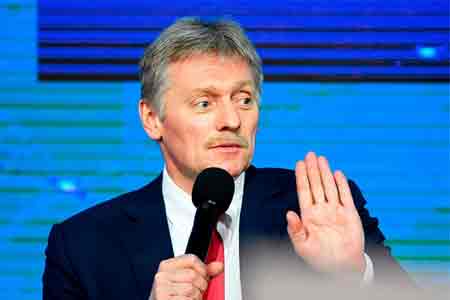 Moscow to await official results of Armenian elections - Peskov