


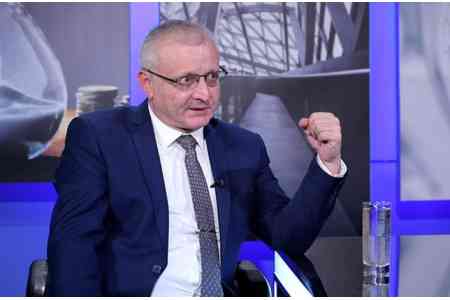
ArmInfo.Imitating peace, especially in conditions of power and political imbalance, not only fails to reduce existing risks but may actually exacerbate them in the long term, as noted by political scientist Suren Surenyants in a post on his Facebook page.
According to him, the gratitude expressed by Armenian Prime Minister Nikol Pashinyan to Azerbaijani President Ilham Aliyev during the meeting of EAEU leaders for lifting the blockade on the transit of goods through Azerbaijan to Armenia and creating conditions for the start of bilateral trade could be perceived by outside observers as a signal of easing regional tensions. However, the political scientist believes that an in-depth political analysis shows that such an interpretation is not only premature, but also does not fully correspond to the logic of real processes.
"Armenian-Azerbaijani relations continue to be at the stage of structural contradictions. There is no peace treaty; instead, Baku consistently puts forward both new and previously formulated preconditions. Azerbaijan puts forward preconditions, for example, amendments to the Armenian constitution, which complicates the process. The de facto occupation of part of Armenian territories continues, and in Baku, maximum prison terms, including life imprisonment, are applied to Armenian prisoners of war. Against this background, individual economic steps cannot be considered as components of an institutional peace process. The import of 22 train cars of Azerbaijani gasoline to Armenia, regardless of the information noise generated around it, has no systemic significance from an economic point of view. It does not change the structure of Armenia's energy market, does not reduce external dependence, and does not create long-term predictability. Therefore, we are not talking about economic policy, but about political symbolism. When there is no reciprocity on fundamental issues: security, territorial integrity, the return of prisoners of war, any unilateral "gesture of goodwill" turns into a violation of political balance. It strengthens the position of the side retaining the instruments of pressure, while weakening the side attempting to present the process as progress," Surenyants noted.
The political scientist pointed out that in this context, the import of 22 railcars of gasoline into Armenia is perceived ambiguously. Public perception sees it primarily as a move serving domestic political goals, demonstrating the effectiveness of the government's "peace agenda" during the pre-election period. This is especially evident in the absence of institutional foundations for peace and the unresolved key components of the conflict. "Peace requires clear political agreements, legal obligations, and mutual responsibility. Without these components, any 'unblocking' or 'resumption of trade' remains fragile, easily reversible, and susceptible to short-term political speculation. In this situation, we are not talking about institutional peace, but about its imitation," the political scientist noted.














 US-Iranian memorandum more beneficial for Iran from political and economic perspective - expert
  Political analyst: While Pashinyan pledges peace with Azerbaijan, Baku continues promoting the "Western Azerbaijan" project
 Political analyst: In light of new realities, Yerevan may propose advancing peace process with Baku without constitutional referendum
 Present-day geopolitical competition shifts from territorial control to infrastructure flows
 Artsakh`s Cultural Heritage Ombudsman called on Moscow to respond to destruction of WWII monuments by Azerbaijan in occupied NKR
 Prosecutor General`s Office petitions Central Electoral Commission for criminal prosecution of Robert Kocharyan
 Dutch Prime Minister expresses his support for Armenia`s democratic reform and economic diversification agenda
 Heritage: It`s time for Armenia`s opposition to present people with legitimate alternative to power
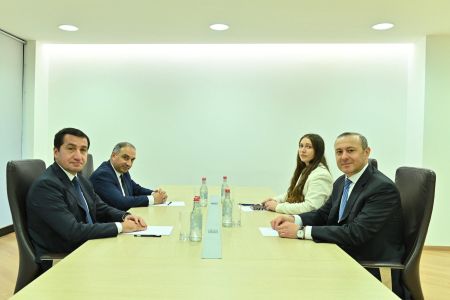 RA Security Council Sec, Assistant to President of Azerbaijan hold negotiations in Dilijan
 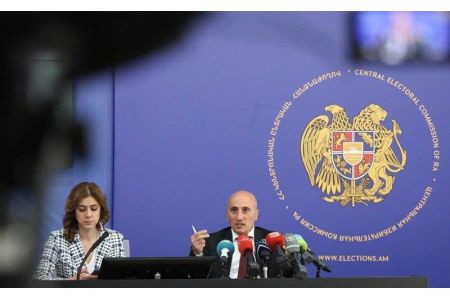 CEC Neutralizes PAP: Three Political Forces to Enter Armenian Parliament Following Election Vote
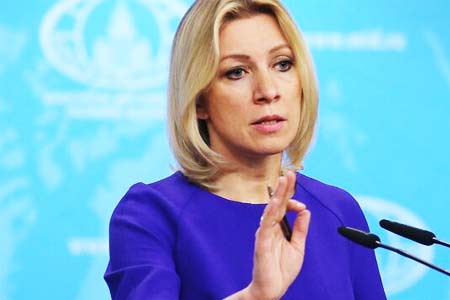 Elections in Armenia were accompanied by unprecedented pressure on opposition, RF MFA spokesperson claims
 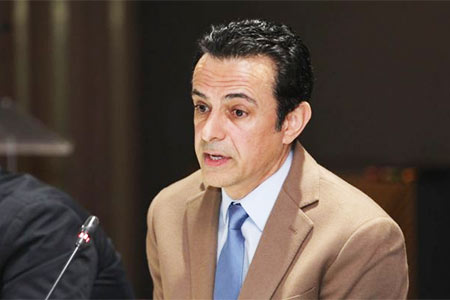 Expert: Even OSCE observers recorded numerous violations during elections in Armenia
 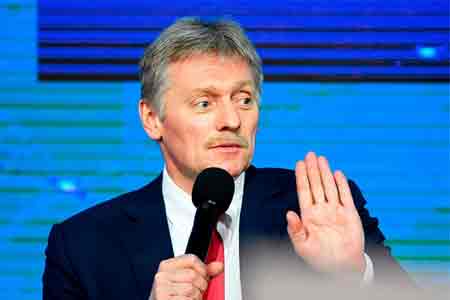 Moscow to await official results of Armenian elections - Peskov
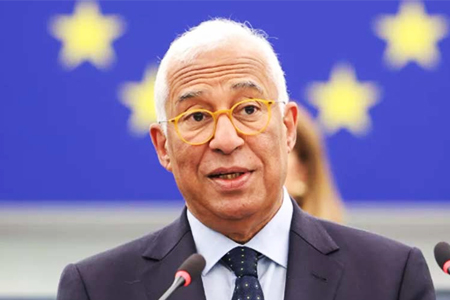 Antonio Costa: EU to deepen its partnership with Armenia, expanding cooperation in energy, trade, and digitalization
 Israeli MFA congratulates Pashinyan
 Turkish MFA comments on results of Armenian elections
 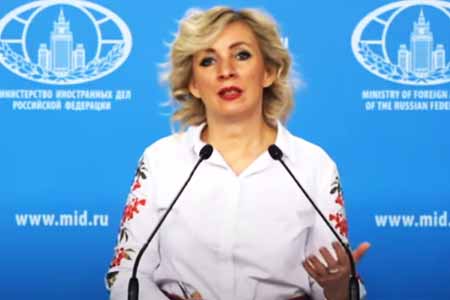 Zakharova: International observers cannot ignore `flagrant violations` in Armenian elections