


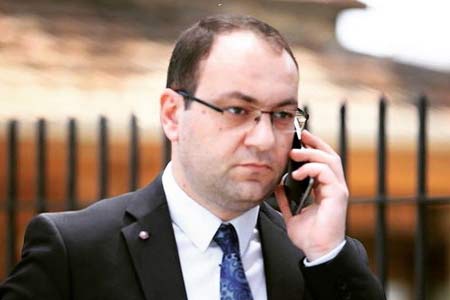
ArmInfo.The rule of law begins where the country's authorities find the strength not to punish freedom of speech. Lawyer Arsen Babayan wrote this on his Facebook page, referring to criminal prosecutions of opposition figures in Armenia for their statements under articles on hooliganism.
Therefore, as the lawyer noted, the article on "hooliganism" is becoming a tool for restricting freedom of speech. "Although this article is intended to criminalize actual violations of public order, in practice it is used not to protect public safety, but to suppress inconvenient speech," Babayan clarified.
As an example, the lawyer shared one of the court cases in which he acts as a defender. Babayan noted that the charge was based on the following logic: the individual had expressed a critical, harsh, but not offensive opinion out loud in a public place. "No physical violence was used, nor was any material damage caused. Nevertheless, the charge was framed as a 'gross violation of public order with blatant disrespect for society.' In other words, an attempt was made to portray the statement as a crime," the lawyer noted.
In this regard, he recalled that the European Court of Human Rights has developed a clear approach over many years: freedom of speech also protects against harsh, offensive, shocking, or disturbing statements, but the state cannot use criminal coercion to punish criticism, and 'public order' in this context cannot be an absolute justification. "That is, if there is no actual violence, threat, or direct call for physical violence, criminal prosecution becomes a disproportionate intervention," Babayan clarified. The lawyer believes this is a dangerous practice, because when the boundaries of "hooliganism" are blurred, any loud word can be classified as a crime, and citizens are forced to self-censor, which threatens the guarantees of free speech. "In this situation, criminal law loses its character as a last resort. This is no longer just a legal issue. It's a question of the quality of the rule of law or its complete destruction. As a lawyer specializing in criminal proceedings, I am convinced that words must be protected, not criminalized," the lawyer emphasized. After all, as Babayan pointed out, the role of the court is not to punish for inconvenient phrases, but to determine where speech ends and real danger begins. "And if today we criminalize speech under the pretext of protecting public order, then tomorrow the same tool can be applied to any other case," the lawyer concluded.
It should be noted that since the advent of "velvet power" in Armenia following the well-known events of 2018, various opposition figures have been persecuted for their views under various articles of the criminal code.

















 Politician: Statement by Armenia`s third president may deprive opposition of only political basis for ousting Pashinyan
 Political scientist: Real recount will deprive Pashinyan of any constitutional majority
 Elections in Armenia were accompanied by unprecedented pressure on opposition, RF MFA spokesperson claims
  Expert: Even OSCE observers recorded numerous violations during elections in Armenia
  Moscow to await official results of Armenian elections - Peskov
 Antonio Costa: EU to deepen its partnership with Armenia, expanding cooperation in energy, trade, and digitalization
 Israeli MFA congratulates Pashinyan
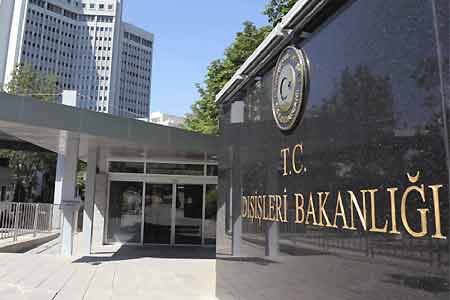 Turkish MFA comments on results of Armenian elections
  Zakharova: International observers cannot ignore `flagrant violations` in Armenian elections
 Russian Senator: Opposition complaints regarding election violations by ruling party remain unanswered
 RA premier receiving congratulations on his victory in parliamentary elections
 Head of IPA CIS Council Secretariat: Extremely difficult atmosphere during parliamentary elections campaign in Armenia accompanied by mass arrests
 Pashinyan`s party leads with 51.13% based on vote counts from 533 polling stations