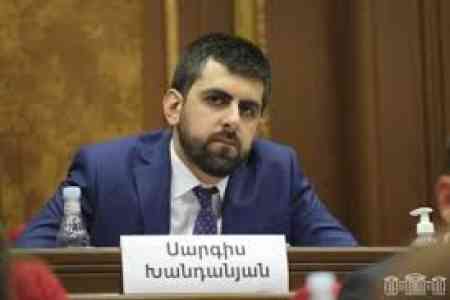
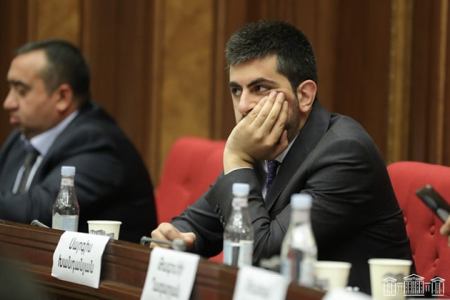
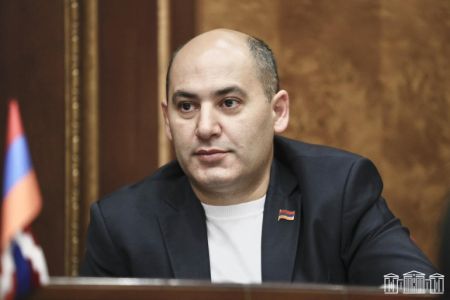
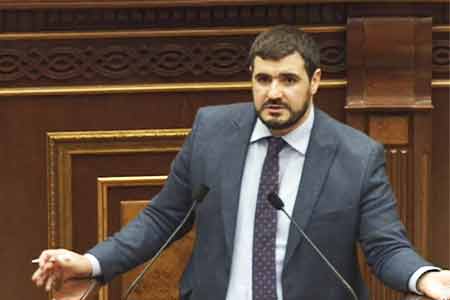
ArmInfo. Sargis Khandanyan, member of parliament from the ruling Civil Contract party and chairman of the National Assembly's Foreign Relations Committee, has deemed Iran's concerns about possible NATO influence in the South Caucasus region as inappropriate, assuring that the project is purely infrastructural.
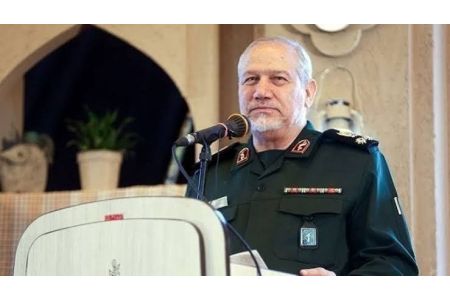
In a conversation with journalists, the MP responded to a statement by Ali Akbar Velayati, Advisor to Iran's Supreme Leader, who noted that Trump's plan is no different from the so-called "Zangezur Corridor" (the route through Armenia's Syunik - ed.) and could essentially establish NATO presence to the north of Iran, creating serious security threats for northern Iran and southern Russia.
"Trump's route is a joint initiative between Armenia and the United States that has nothing to do with security issues. The project's main goal is to develop infrastructure and unblock communications in the region," Khandanyan clarified. He assured that Armenia's cooperation with NATO within this project is limited to certain formats, which do not imply a "physical presence" in the alliance.
In response to these concerns, according to the MP, constant communication is maintained with Iranian colleagues at various levels. He also assured that even at the initial stage, when the project was presented to Iran, the Iranian Foreign Minister and other high-ranking officials stated that their concerns had been allayed. "Further discussions will take place in the near future to help clarify potential issues. Armenia maintains a good political dialogue with Iran, and relations between the countries in this context should not depend on specific projects," the ruling party MP stated.
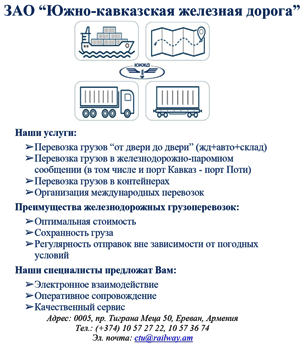
Khandanyan pointed out that Iran is also participating in various infrastructure projects, such as the construction of a section of the North-South highway corridor. The MP highlighted Russia's involvement in infrastructure initiatives, for example, through the South Caucasus Railway (SCR). He added that SCR has no plans for a "Trump route" on its books. As Khandanyan explained, the decision on who will be the project's beneficiaries will depend on its progress. "This isn't a political issue, it's a business one. First and foremost, we need to identify organizations willing to invest in the project and the amount of their investments," Khandanyan concluded.
r













 Expert: Current process is not about peace, but implementing Azerbaijan`s wishlist
 Expert: Real peace unattainable until Armenia-Azerbaijan agreement is signed and ratified
 TRIPP`s proximity to Iranian border could slow its implementation - expert
  Who and why is sacrificing RA National Security Service`s reputation? - expert
  Tehran creating security environment in which sustainable shipping in Strait of Hormuz difficult to imagine without its direct participation - expert
  Arrested Armenian oligarch on economy and new jobs
  NA Vice Speaker candidate believes his wife`s salary as director of HayPost is the lowest in the company`s history
 RF Permanent Representative: There is no CSTO-Armenia conflict
 Moscow: NATO seeking to "Pull" Armenia away from CSTO Allies
  Political analyst: Russia intends to determine which "Camp" Armenia will choose through a referendum
 Narek Karapetyan will give up his parliamentary salary in favor of charitable contributions.
 Armenian analyst: Developing relations with Europe and the U.S. must not jeopardize relations with regional powers
 Armenia and France discuss further development of strategic partnership and EU cooperation
  To overcome risks Armenia must reduce domestic escalation - expert
  Zatulin: Pashinyan was eager to get back to Russia because he actually lost the elections
 Human rights activist Ruben Melikyan dismissed from YSU
 Pashinyan removed from INNOPROM guest list
 Zakharova: Armenia`s pro-EU pivot poses economic security risks to EAEU member states
 It`s time for South Caucasus countries to think of South Caucasus as single, unified region - RA premier
  Pashinyan: Armenia and Azerbaijan should leave each other alone