


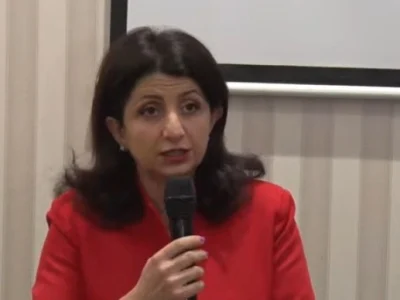
ArmInfo. The fate of 1,300 Armenians who went missing during the Nagorno-Karabakh conflict from the late 1980s to 2023 remains unclear, as stated by Anna Melikyan, human rights expert and representative of the "Protection of Rights Without Borders" NGO during a press conference in Yerevan.
The human rights activist emphasized that the issue of missing persons and their families is not just a humanitarian or statistical matter, but a human rights issue. This right, she stated, obliges states to take all necessary steps to clarify the fate and whereabouts of a missing person until definitive and accurate information about their fate is obtained.
Melikyan lamented the lack of state policy and a unified approach even when it comes to updating lists of missing persons. She also recalled that, according to human rights organizations, search efforts have been significantly limited by Azerbaijan. "This is one of the reasons why certain issues remain unclear to this day, especially in the territories occupied by Azerbaijan following the forced displacement of the Artsakh population in 2023. Therefore, Azerbaijan's primary responsibility in this matter is to ensure access to the occupied territories, preferably with the participation of international mediators," Melikyan emphasized.
The expert noted that in this context, the fact that Azerbaijan is conducting large-scale construction work in these territories, which is not under any control, is also of concern. As Melikyan explained, if remains are discovered, the Azerbaijani side claims they belong to victims of the events in Ivanyan, although there are no DNA tests to confirm this.
The expert also recalled that, according to international standards, when a person is captured by an enemy, it occurs not at the will of the individual, but with the permission of the state, which makes it responsible for the fate of the captive. In Armenia, as Melikyan noted, criminal cases have been opened on this matter to clarify the circumstances. "However, there are also difficulties here, since Armenia does not control this territory, and work on the ground is necessary to obtain evidence. Therefore, international mediation is also necessary in this matter. Additionally, it should be taken into account that this issue cannot be postponed until a peace treaty is signed with Azerbaijan, as every day works against us: evidence is lost and the likelihood of clarifying the fate of the missing persons decreases," the human rights expert concluded.
It should be noted that the exact number of Armenian prisoners of war and hostages held in Azerbaijani prisons remains unknown. According to the latest data from the International Committee of the Red Cross (ICRC), as of August 2024, approximately 1,000 people are considered missing on the Armenian side, with approximately 300 of these individuals reported missing following the latest escalation in the Nagorno- Karabakh conflict zone between autumn 2020 and autumn 2023. All data was collected by the ICRC based on requests from relatives of the missing. The ICRC also reported that among these 300 individuals, there are several dozen requests concerning cases where the family disagreed with the DNA data provided by the state.

























 Present-day geopolitical competition shifts from territorial control to infrastructure flows
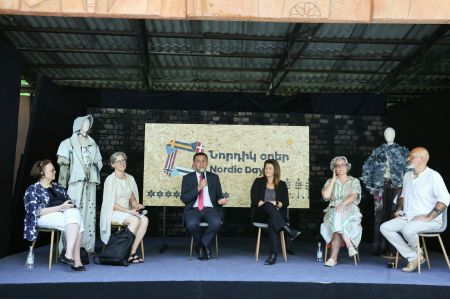 Expert: Public participation in decision-making essential for sustainable urban development
  Politician: Statement by Armenia`s third president may deprive opposition of only political basis for ousting Pashinyan
 RA Security Council Sec, Assistant to President of Azerbaijan hold negotiations in Dilijan
 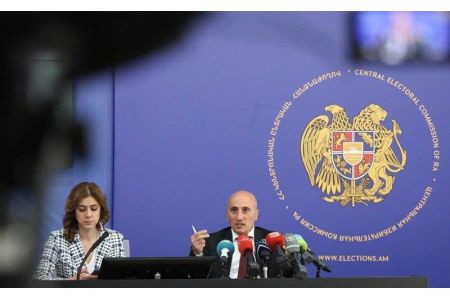 CEC Neutralizes PAP: Three Political Forces to Enter Armenian Parliament Following Election Vote
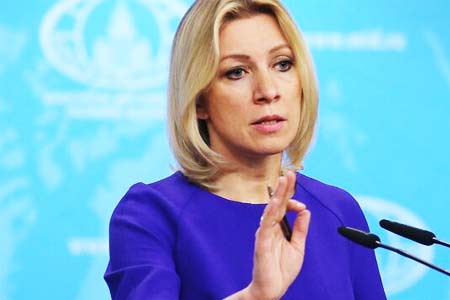 Elections in Armenia were accompanied by unprecedented pressure on opposition, RF MFA spokesperson claims
 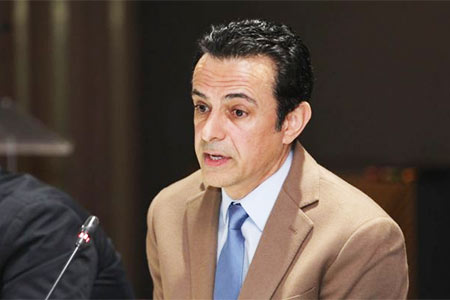 Expert: Even OSCE observers recorded numerous violations during elections in Armenia
  Moscow to await official results of Armenian elections - Peskov
 Antonio Costa: EU to deepen its partnership with Armenia, expanding cooperation in energy, trade, and digitalization
 Israeli MFA congratulates Pashinyan
 Turkish MFA comments on results of Armenian elections
  Zakharova: International observers cannot ignore `flagrant violations` in Armenian elections
 Russian Senator: Opposition complaints regarding election violations by ruling party remain unanswered
 RA premier receiving congratulations on his victory in parliamentary elections
 Head of IPA CIS Council Secretariat: Extremely difficult atmosphere during parliamentary elections campaign in Armenia accompanied by mass arrests
 Pashinyan`s party leads with 51.13% based on vote counts from 533 polling stations