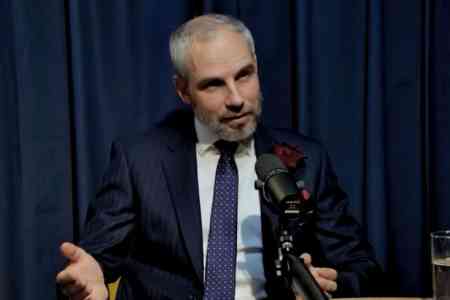
ArmInfo. Armenia's EU membership is not currently on the agenda, but only ways to bring us closer and deepen cooperation are being discussed. Petr Peruncik, Ambassador Extraordinary and Plenipotentiary of the Czech Republic to Armenia, stated this in an interview with Civilnet.
Nevertheless, he noted, it is clear to all responsible politicians that there are principles that cannot be "separated." And being a member of one organization (the EAEU - ed.), one cannot be part of another. At the same time, we are not asking the question of choosing between one or the other. Our goal is to develop cooperation with Armenia, and we hope that the country is also interested in deepening relations with the EU. This is mutually beneficial cooperation in the interests of both Armenia and the EU, not a choice between alternatives. Nevertheless, he noted that the country will have to make its choice at some point. However, this does not mean the EU expects an immediate choice between the two associations. The ambassador expressed the view that Armenia no longer has the same specific security ties with Russia and the Czech Republic, which, as an industrial country, has much to offer. He also emphasized that Armenia's prospects for European integration will primarily depend on Armenia's own concrete steps. In this regard, he mentioned the new strategic partnership framework between Armenia and the EU, signed in Brussels on December 2, 2025, which covers human rights, democracy, economic cooperation, energy, and security. He explained that this framework complements the Comprehensive and Enhanced Partnership Agreement (CEPA).
"Therefore, we have a plan for European integration for the next three to four years. We expect cooperation based on the CEPA and the Strategic Framework to deepen. Currently, Armenia's standard accession procedures to the EU are not yet underway, but political representatives of Armenia have repeatedly expressed their interest in expanding and deepening cooperation with the European Union," the ambassador added.
Peruncik also commented on the Armenian population's attitude toward European integration. According to the ambassador, there is a perception that Armenians are insufficiently informed about the nature of the EU, which may be due to a lack of interest in the topic. However, he emphasized that this is not critical, as they see an openness to learning from other countries' experiences and implementing them in Armenia.
Regarding Armenia's visa liberalization with the EU, the ambassador noted the existence of certain obstacles, for which recommendations have been provided to the country. In this regard, he acknowledged that there is no specific timeline for the introduction of a visa-free regime yet, as there are issues that have not yet been fully resolved in practice. "We see that Armenia is taking this issue seriously, and therefore we believe that a visa-free regime will be possible once all standards are met," he concluded.
As a reminder, the National Assembly of Armenia adopted the draft law "On the commencement of the process of Armenia's accession to the European Union" in the first reading at its plenary session on February 12. Sixty-three deputies voted in favor of the document, with seven against. The opposition, represented by the Armenia faction, did not participate in the vote, while another opposition faction, I Have the Honor, voted against. It's worth noting that the country's opposition forces expressed doubts about this decision, noting that Armenia risks being drawn into a futile process that could harm its strategic interests.







 Opinion: Following Berlin talks, Baku gains expanded influence within EU and strengthens cooperation ties with main European powerhouse
 Armenian expert: Could modern Azerbaijan even exist without Russian and Soviet modernization?
 Zatulin: Pashinyan was eager to get back to Russia because he actually lost the elections
 Human rights activist Ruben Melikyan dismissed from YSU
 Pashinyan removed from INNOPROM guest list
 Zakharova: Armenia`s pro-EU pivot poses economic security risks to EAEU member states
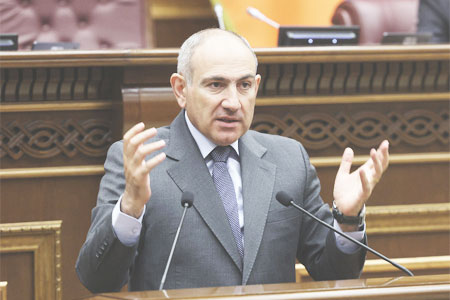 It`s time for South Caucasus countries to think of South Caucasus as single, unified region - RA premier
  Pashinyan: Armenia and Azerbaijan should leave each other alone
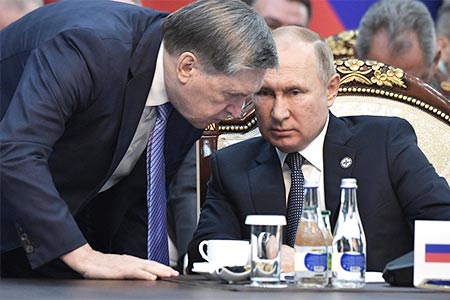 Moscow sees situation with Armenia as attempt to attack Russia-involving integration associations - Russian presidential aid
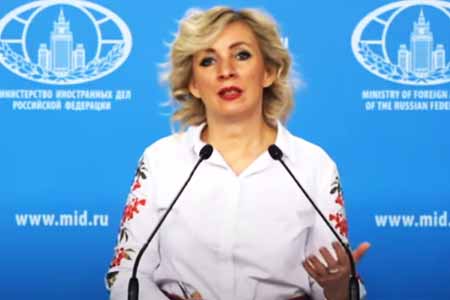 Zakharova: Armenia views relations with Russia as tool for financially securing reorientation toward EU
 The Armenian Minister of Justice and the EU Ambassador discussed visa liberalization issues for Yerevan.
 Azerbaijan`s aggressive plans against Armenia became possible in wake of Pashinyan`s decisions on Artsakh - expert
  Zakharova: Russia sent a note of protest to Armenia over the act of vandalism at the "Mother Armenia" memorial in Gyumri
 Samvel Karapetyan proposes creating a post-election opposition coalition