

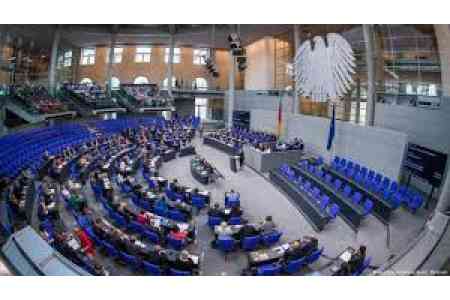
ArmInfo. A group of German human rights organizations sent a joint appeal to German Chancellor Friedrich Merz asking him to raise the issue of violations of the universal rights of Armenians in both Armenia and Azerbaijan at his upcoming meeting with Armenian Prime Minister Nikol Pashinyan, who will be in Germany on December 9-10.
The statement, signed by the Society for Threatened Peoples, the Working Group Recognition - Against Genocide and for International Understanding, the Central Council of Armenians in Germany, and Christian Solidarity International Germany, reads as follows:
"On the occasion of today's reception of Prime Minister Nikol Pashinyan at the Federal Chancellery, we would like to express our urgent request and expectation that, in your discussion with the Armenian head of government, the pressing human rights and humanitarian issues in the region should not remain merely a side topic but instead receive equal consideration alongside bilateral cooperation and economic policy. In doing so, we explicitly refer to our joint appeal of 21 August 2025 issued by six human rights organizations (Society for Threatened Peoples, International Society for Human Rights, Christian Solidarity International (CSI), Stephanus Foundation for Persecuted Christians, the Working Group Recognition - Against Genocide, for International Understanding e.V., Central Council of Armenians in Germany).
With this appeal, we approached the Foreign Minister at the time to promote a just and sustainable peace between Armenia and Azerbaijan. Among the confidence-building measures that are essential for this is the immediate release of the prisoners detained in Azerbaijan-detentions that the European Parliament also considers unlawful-as well as the release of the former political leadership of the de facto Republic of Artsakh (Nagorno-Karabakh). Their immediate release remains an indispensable prerequisite for any credible peace process.
It must also be ensured without fail that the detention conditions for the Armenian prisoners meet international standards and agreements, particularly the international standards of the United Nations High Commissioner for Refugees. The family of the prisoner Viken Euljekian, for example, accuses Azerbaijan of withholding essential medical care while his condition in the Baku prison continues to deteriorate. His family points out that Azerbaijani authorities denied him adequate treatment for months, leaving him unable to walk.
At the same time, there is justified concern that the Armenian government is not advocating comprehensively or vigorously enough for the Armenian detainees in Azerbaijan, nor for the legal, political, and social concerns of the population unlawfully expelled from Nagorno-Karabakh under international law. Prime Minister Pashinyan apparently views these displaced persons as a disruptive factor in both domestic and foreign policy.
Given Mr. Pashinyan's visit, it is especially important for us to address the extremely worrying developments within Armenia itself, as they are destabilizing the already tense situation of the small country: the restriction of freedom of expression, the politically motivated imprisonment of dissenters and critics of the government, as well as the arrest of now four archbishops-thus one third of all archbishops active in Armenia-raise serious questions about the rule of law and the protection of religious and civil society freedoms. Although the Armenian Constitution grants the Armenian Apostolic Church a special status due to its historical significance, Pashinyan's recent actions create the impression that he seeks to divide the church or bring it under state control. International organizations such as the Council of Europe have repeatedly criticized the existence of political prisoners in Armenia, though the definition of "political prisoner" is often contested, as the government cites charges such as "terrorism" or "coup d'etat."
It is also alarming that Armenians living in Germany who publicly criticize the erosion of the rule of law in Armenia increasingly fear they may no longer be allowed to enter Armenia."



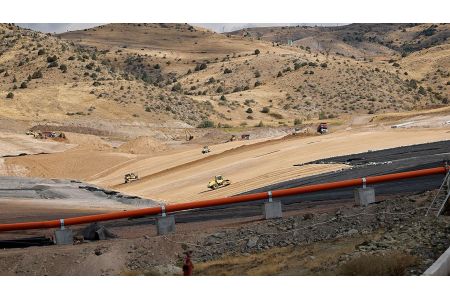


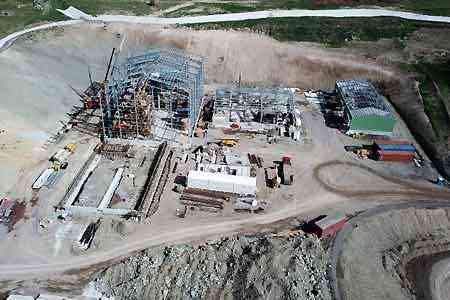




 Opinion: The development of the Amulsar mine near the resort town of Jermuk is the beginning of an environmental disaster in Armenia
 Expert: The arrest of opposition figures in Armenia for social media posts is a systematic attempt to intimidate the public and suppress dissent.
 Azerbaijani Studies Expert: While Azerbaijan Prepares Its Generation for War, Aliyev’s Aide Calls on Armenia to Prepare Armenian Society for “Peace”
 Lukashenko called for Armenia to assume the CIS presidency in 2029
 Dmitry Medvedev predicted a Ukrainian-like fate for Armenia amid the country`s shift in foreign policy
 Russian Security Council: In Armenia, they want to force Russian asset owners to dispose of their assets
 Zakharova: Russia ready to discuss with Armenia the prospects for expanding military cooperation as part of a review of bilateral ties
 Tevanyan: Armenia, like Ukraine and Moldova, is being drawn into the EU’s global war
 Yerevan City Hall is considering introducing a valet parking system in the city
 Expert: The circus surrounding the “Albanization” of Armenian culture in the presence of foreign ambassadors in occupied Artsakh is genocide
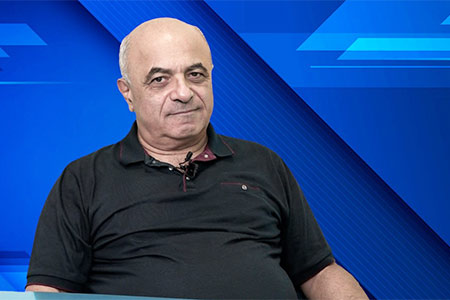 Political scientist: If Russian-Armenian relations are destroyed, Turkey will take Russia`s place
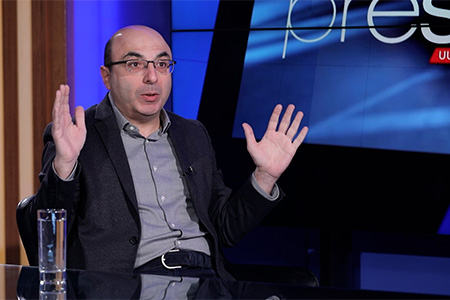 Political scientist: The Armenian public is simply obliged to significantly change the entire content of public discourse and struggle
 Cross tattoos are being removed from the skin of Christian prisoners in Azerbaijan by fire, according to a human rights activist.
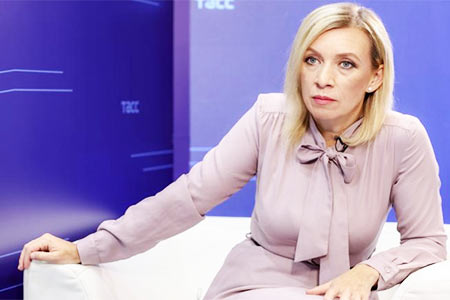 Zakharova: Armenia`s likely introduction of visas with Russia will be a step against Yerevan itself
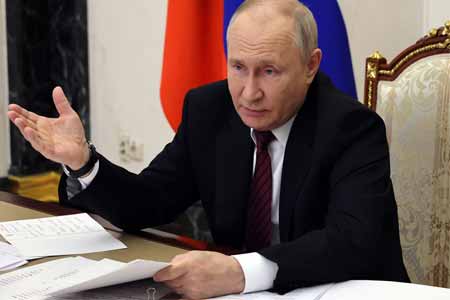 Putin: Armenia`s recognition of Karabakh as part of Azerbaijan in Prague has given Russia`s position on this issue an ambivalent character
 Putin: Armenia`s adoption of the law on EU accession means an announcement of its withdrawal from the Eurasian Economic Union