

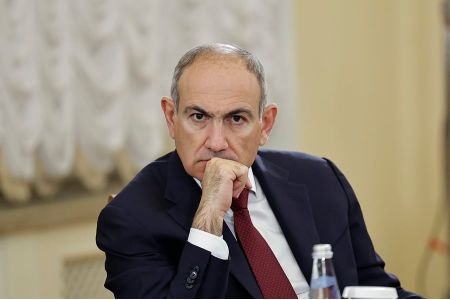
ArmInfo. Prime Minister Nikol Pashinyan chaired a meeting of the National Commission on Disability Issues, which was also attended by civil society representatives. According to the press service of the Cabinet of Ministers of the Republic of Armenia, Nikol Pashinyan noted in his speech that they traditionally meet every year on the occasion of the International Day of Persons with Disabilities.
"We see enormous development potential in people with disabilities, which we are unable to adequately and properly include in the development agenda of the Republic of Armenia," Nikol Pashinyan said.
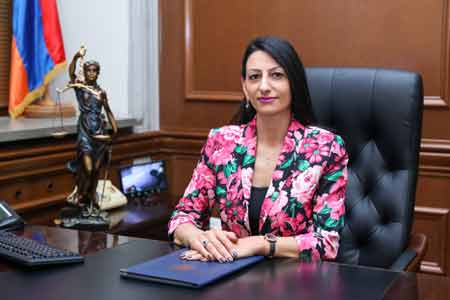
Labor and Social Affairs Minister Arsen Torosyan presented his political vision and programmatic initiatives on issues affecting people with disabilities. The Minister noted that the National Assembly adopted the laws "On the Rights of Persons with Disabilities" and "On the Assessment of Human Functional Capabilities," which enabled the transition from a medical model to a rights and inclusion model. As of November 1, the previous and new systems covered 197,046 persons with disabilities, including 9,356 children. Of these, 24.4%, or 48,211 people, including 4,600 children, have already undergone a functional assessment.
According to Arsen Torosyan, the new assessment system ensures data-driven policies, enabling the development of targeted services based on age, disability type, and actual needs. It was noted that the "Personal Assistant" service, which is currently used by 204 citizens, was introduced in 2024. Arsen Torosyan also announced the expansion of Small Group Homes, which provide temporary care services replacing large institutions. Currently, 70 people with mental and intellectual disabilities receive 24-hour care in five small group homes in a family-like environment.
The head of the Ministry of Social Labor noted that opportunities to live in community are also being expanded through home care services. Starting in 2025, home care services will also be provided to children with disabilities (at a rate of 170 children per month). According to Arsen Torosyan, these services are also planned to be expanded. A total of 1,325 citizens use home care services, with 624 of them being people with disabilities.
Over the past three years, the state budget allocated for support measures has also increased. Expenditures for these purposes in 2025 will amount to approximately 2.5 billion drams, and over 3 billion drams are planned for 2026. In 2025, 33,000 support measures will be provided to more than 15,000 citizens. "These aren't separate programs; they're our strategy for the complete transformation of services, the goal of which is clear: services should reach people, not people reach services," Arsen Torosyan concluded.













 Expert: The arrest of opposition figures in Armenia for social media posts is a systematic attempt to intimidate the public and suppress dissent.
 Azerbaijani Studies Expert: While Azerbaijan Prepares Its Generation for War, Aliyev’s Aide Calls on Armenia to Prepare Armenian Society for “Peace”
 Turkologist: Azerbaijan will never, under any circumstances, stop pressuring the Armenian people
 Political scientist: We need to move away from the question of "when" and replace it with more important questions
 Lukashenko called for Armenia to assume the CIS presidency in 2029
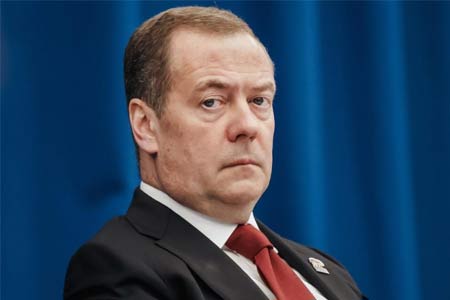 Dmitry Medvedev predicted a Ukrainian-like fate for Armenia amid the country`s shift in foreign policy
 Russian Security Council: In Armenia, they want to force Russian asset owners to dispose of their assets
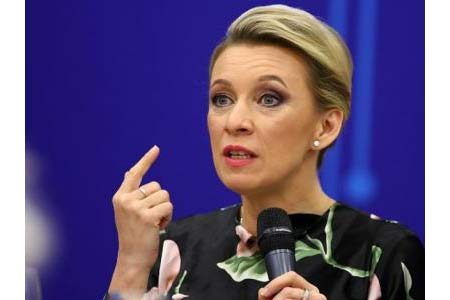 Zakharova: Russia ready to discuss with Armenia the prospects for expanding military cooperation as part of a review of bilateral ties
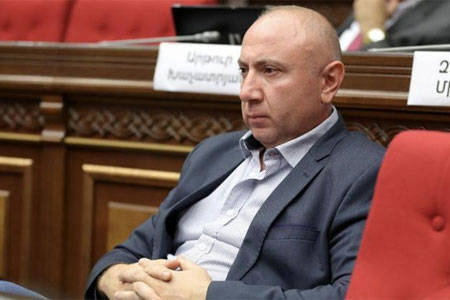 Tevanyan: Armenia, like Ukraine and Moldova, is being drawn into the EU’s global war
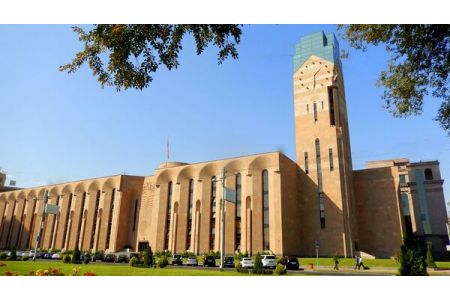 Yerevan City Hall is considering introducing a valet parking system in the city
 Expert: The circus surrounding the “Albanization” of Armenian culture in the presence of foreign ambassadors in occupied Artsakh is genocide
 Political scientist: If Russian-Armenian relations are destroyed, Turkey will take Russia`s place
 Political scientist: The Armenian public is simply obliged to significantly change the entire content of public discourse and struggle
 Cross tattoos are being removed from the skin of Christian prisoners in Azerbaijan by fire, according to a human rights activist.
 Zakharova: Armenia`s likely introduction of visas with Russia will be a step against Yerevan itself
 Putin: Armenia`s recognition of Karabakh as part of Azerbaijan in Prague has given Russia`s position on this issue an ambivalent character
 Putin: Armenia`s adoption of the law on EU accession means an announcement of its withdrawal from the Eurasian Economic Union