

ArmInfo. The possibility of collective mourning and an open demand for justice for the Armenians who survived the 1915 Genocide, remains taboo, making April 24th a day of unceasing mourning that has lasted 109 years. This is how an Armenian from Istanbul named Aren answered the question of what April 24th means to him in an interview with Turkish journalist and editor of the Bianet newspaper, Tugce Yilmaz, in 2024.
ArmInfo previously reported that a criminal case has been initiated against Y?lmaz for a publication titled "The Turkish Army Tells Armenian Youth: 109 Years of Continued Mourning." The Istanbul Public Prosecutor's Office has charged her with "insulting the Turkish nation, the Turkish Republic, and state bodies and institutions." Her court hearing took place on December 2, but was postponed until April 21, 2026.
In an interview with a journalist, Aren described the difficulties he faced while living in Turkey. He said that from an early age, it became clear to him that in this country, he would have to defend himself and even hide his identity. Childhood memories, such as the ban on using Armenian words, began to surface in his mind. "Sometimes you have to hide, sometimes you have to open up. It's like walking on water, leaving no trace. Sometimes someone might find a name interesting or beautiful, but if I feel it's a risk, I say it's not Armenian, but, say, Persian or Jewish," Aren said. According to Aren, he could only communicate freely with the Kurds-they would always stand up for him if someone tried to offend him. Armenian was only spoken at home, and only because it was still spoken by the older generation. Aren recalls that his grandmother spoke exclusively Armenian with them, and if someone addressed her in Turkish, she wouldn't respond. "She even once said, 'I don't want to speak the language of pain,'" Aren recalls.
He believes it's nearly impossible to describe April 24th in a single word, though he says that for him, the day primarily connotes anxiety. "For me, this is one of the most important days in the struggle for the survival of Armenians in Turkey. Perhaps January 19th (the anniversary of Hrant Dink's assassination) can also be added to it. Even in the most difficult times, we come out and say: we are here-with our bodies, our language, our culture. We can at least light a candle and remember our ancestors," Aren notes.
Meanwhile, 27-year-old Zepyur from Istanbul faced a slightly different reality. According to her, no one forbade her from speaking Armenian, and her name only aroused interest. And therefore, she did not want to leave, believing that Armenians should "maintain their presence in Turkey." "April 24th is one of the most important events in our lives. Just as truth is one and universal, so what happened on April 24th is a truth that cannot be changed: These are events from the not-so-distant past. Our stories and pains are still fresh. They cannot be forgotten; they are worthy of remembrance," Zepyur said.. She says the trauma of their ancestors who survived the Genocide is passed on to them today. And so she hopes there will be no further losses, and that Armenian families will not be torn apart by another tragedy.




















 Expert: Economic pressure on Armenia may be virtually painless for other EAEU members, but not for Armenia itself
 Expert on protests in France: Civilizations fade when society loses a vision of the future
 Turkologist: Azerbaijan is not all-powerful—its vulnerabilities should become part of Armenia’s security strategy
 Opinion: The development of the Amulsar mine near the resort town of Jermuk is the beginning of an environmental disaster in Armenia
 Expert: The arrest of opposition figures in Armenia for social media posts is a systematic attempt to intimidate the public and suppress dissent.
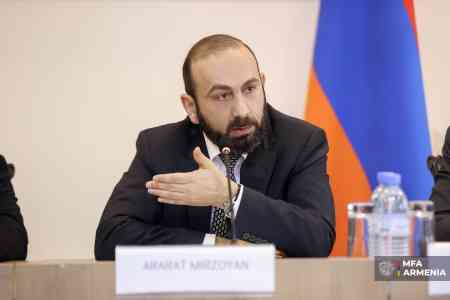 The Armenian Foreign Minister commented on the country`s return to work within the CSTO.
 The Artsakh Public Council expressed outrage at the UN Secretary-General`s behavior
 Lukashenko called for Armenia to assume the CIS presidency in 2029
 Dmitry Medvedev predicted a Ukrainian-like fate for Armenia amid the country`s shift in foreign policy
 Russian Security Council: In Armenia, they want to force Russian asset owners to dispose of their assets
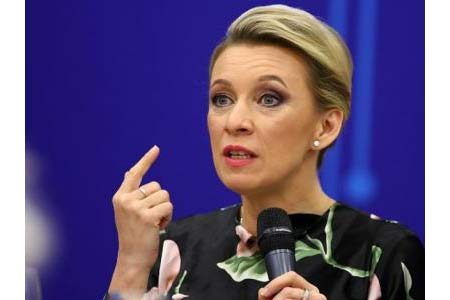 Zakharova: Russia ready to discuss with Armenia the prospects for expanding military cooperation as part of a review of bilateral ties
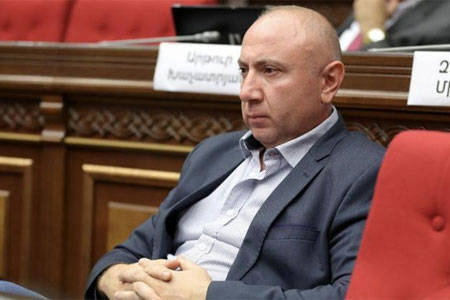 Tevanyan: Armenia, like Ukraine and Moldova, is being drawn into the EU’s global war
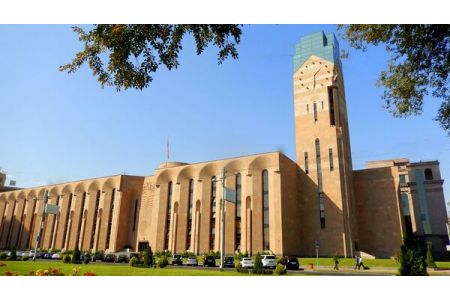 Yerevan City Hall is considering introducing a valet parking system in the city
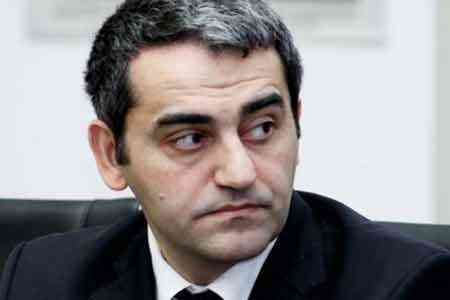 Expert: The circus surrounding the “Albanization” of Armenian culture in the presence of foreign ambassadors in occupied Artsakh is genocide
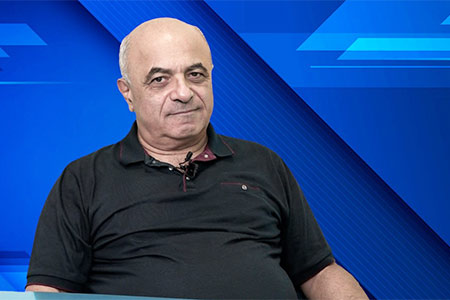 Political scientist: If Russian-Armenian relations are destroyed, Turkey will take Russia`s place
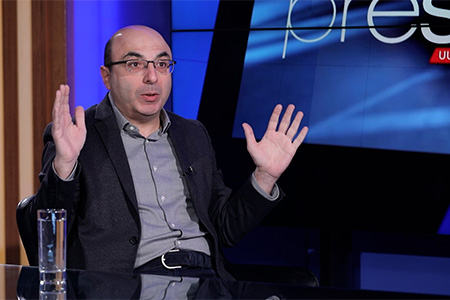 Political scientist: The Armenian public is simply obliged to significantly change the entire content of public discourse and struggle
 Cross tattoos are being removed from the skin of Christian prisoners in Azerbaijan by fire, according to a human rights activist.
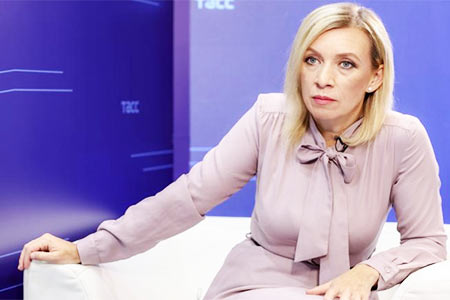 Zakharova: Armenia`s likely introduction of visas with Russia will be a step against Yerevan itself
 Putin: Armenia`s recognition of Karabakh as part of Azerbaijan in Prague has given Russia`s position on this issue an ambivalent character
 Putin: Armenia`s adoption of the law on EU accession means an announcement of its withdrawal from the Eurasian Economic Union