


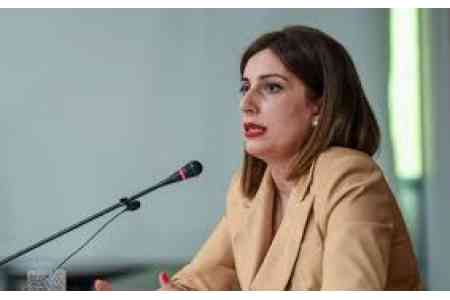
ArmInfo. Payments to the compulsory health insurance system will be made automatically. This was announced by RA Minister of Health Anahit Avanesyan on December 2 from the podium of the National Assembly, where she presented the draft law "On Universal Health Insurance" and a package of related documents in the first reading.
According to her, the subsidy system through payments to the Zinapa Fund will also operate in the same manner, that is, automatically. Therefore, the minister assured, citizens will not have to waste energy and effort on this issue. As for Armenian residents who work for international organizations and already voluntarily contribute to their policies, they will be required to pay 129,600 drams annually or 10,800 drams per month. If the amount of contributions exceeds this amount, the remainder can be used for voluntary health insurance. This category of citizens will also be able to take advantage of the subsidy system provided by the Zinapa Fund.
Responding to a question about why the system includes citizens aged 65 and older, rather than the retirement age of 63, Avanesyan noted that careful calculations were conducted during the development of the document, and as the state budget grows, it is entirely possible that the 65+ threshold will be lowered to 63. The minister noted that 400,000 people fall into the category of citizens aged 65 and older. Their medical care services are classified into various categories.
The minister also noted that children under 18 will also be included in the system, and their insurance payments will be made from the state budget. A total of 700,000 people who have previously used the state-provided system fall into this category. With the adoption of the package, their medical care services will once again be fully assumed by the state; only the service categories and subsidized rates will change. The Minister noted that, when developing the package, the experience of other countries was also considered, in particular South Korea and Thailand, countries that have recorded very good results.
Overall, Avanesyan noted, the implementation of the universal health insurance system in Armenia will be carried out in stages and will take three years. The first stage will begin on January 1, 2026. The system will automatically screen individuals and enroll beneficiaries. They will then receive an invitation to become beneficiaries of the system through the Armed eHealth e-health system (or through their primary care physician). By 2029, the entire population of Armenia should be covered by this system. The state- provided system will gradually transition to compulsory health insurance. In the first stage, the system will include children under 18, individuals aged 65 and older (even if they are employed), individuals with disabilities aged 18 to 65, and members of socially vulnerable families. The state will fully cover the health insurance policies of these categories of citizens. Regarding insurance payments for individuals earning over 200,000 drams, the document's developers opted for fixed payments, abandoning the salary deduction model. Individuals with salaries of up to 200,000 drams will be enrolled in the system beginning January 1, 2027. Overall, the program's beneficiaries are expected to approach 1.6 million during the first stage. The base cost of an insurance policy in 2026 will be 129,600 drams, or 10,800 drams per month. However, since the payment amount to the Military Insurance Fund (Zinapa) will change, beneficiaries will no longer have to make the additional 10,800 drams monthly. Specifically, individuals with salaries between 200,000 and 500,000 drams will be able to reduce their monthly Zinapa contribution from 5,500 to 1,000 drams. The 4,500 drams saved can be used to pay for health insurance. Additionally, when filing their income tax return in 2026, they will be able to receive an additional 6,000 drams monthly (as a tax deduction). For citizens with salaries between 500,000 and 1 million drams, the Zinapa premium will also be reduced to 1,000 drams instead of 7,500, allowing them to redirect 6,500 drams toward insurance. When filing their income tax return in 2027, they will be able to receive a 4,000 drams monthly refund. Those earning over 1 million drams will be able to file their income tax return in 2027 and receive a 4,000 drams monthly refund. The insurance payment will be made by a tax agent, meaning it will be withheld from wages in the same way as income tax, social security contributions, and other taxes.
In 2026, the insurance will cover the most in-demand services, including outpatient and clinic visits, family doctor visits, emergency room visits, specialist consultations, and laboratory tests. The list of services will be expanded and refined, encompassing certain surgical procedures, including ophthalmological (cataracts), cardiovascular, and other procedures. The list of diseases will be approved by government decisions. A single package of services will apply to all age groups. Annual medical examinations will be mandatory under the system, effective in 2029. The 2026 budget allocates 127 billion drams for the implementation of the health insurance system.
The funds will be managed by the state-run Health Insurance Fund, whose director will be required to submit an annual report to parliament on the work performed and the flow of funds. The fund will also present a program of activities for the following year. The Minister also stated that during the transition period, both public and private medical institutions will invest in development, which will allow them to expand their existing capabilities.





















 Political analyst: In light of new realities, Yerevan may propose advancing peace process with Baku without constitutional referendum
 Present-day geopolitical competition shifts from territorial control to infrastructure flows
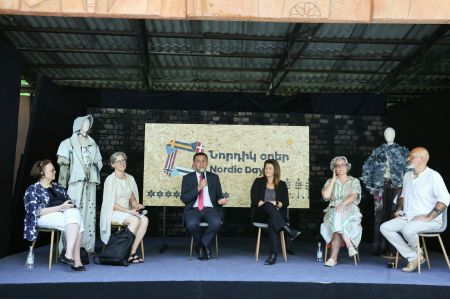 Expert: Public participation in decision-making essential for sustainable urban development
 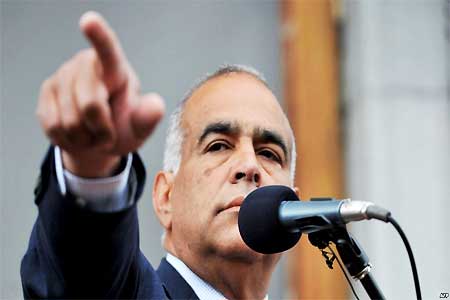 Heritage: It`s time for Armenia`s opposition to present people with legitimate alternative to power
 RA Security Council Sec, Assistant to President of Azerbaijan hold negotiations in Dilijan
 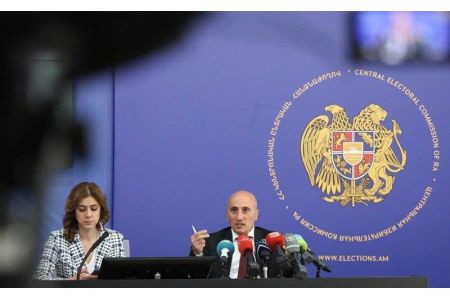 CEC Neutralizes PAP: Three Political Forces to Enter Armenian Parliament Following Election Vote
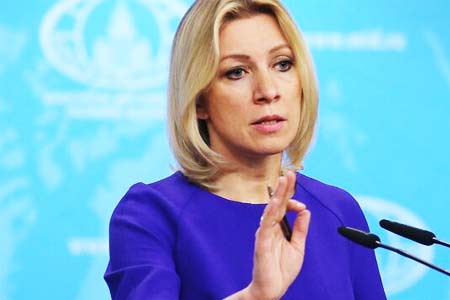 Elections in Armenia were accompanied by unprecedented pressure on opposition, RF MFA spokesperson claims
  Expert: Even OSCE observers recorded numerous violations during elections in Armenia
  Moscow to await official results of Armenian elections - Peskov
 Antonio Costa: EU to deepen its partnership with Armenia, expanding cooperation in energy, trade, and digitalization
 Israeli MFA congratulates Pashinyan
 Turkish MFA comments on results of Armenian elections
  Zakharova: International observers cannot ignore `flagrant violations` in Armenian elections
 Strong Armenia to issue statement after vote count completed - Narek Karapetyan
 Russian Senator: Opposition complaints regarding election violations by ruling party remain unanswered
 RA premier receiving congratulations on his victory in parliamentary elections
