

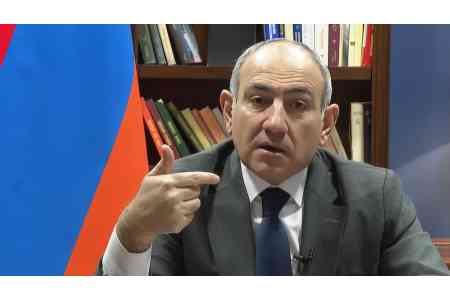
ArmInfo. By decision of the board of Armenia's ruling Civil Contract party, the party's Code of Ethics has been adopted. Prime Minister Nikol Pashinyan wrote about this on his Facebook page.
"The Civil Contract party, as the ruling force, feels a special responsibility for the development of the political environment, atmosphere, and culture in the country.
Also, bearing this responsibility, the Civil Contract board has adopted a Code of Ethics, setting standards for ourselves, thereby declaring our refusal to engage in obscenity, personal attacks, and insults, as well as our commitment to the highest standards of integrity.
Therefore, if we choose not to respond to insult with insult, please perceive this not as weakness or cowardice, but rather as a commitment to the Code of Ethics we have adopted.
"Our socio-political life must gradually become more fact-based, more reasoned, based on mutual respect, courtesy, transparency, and responsibility," Pashinyan wrote, sharing a link to the State Duma Code of Ethics.
The language of both the Prime Minister and members of his team on social media and in public spaces has repeatedly provoked negative public reactions. The Prime Minister was even forced to apologize for one of his social media posts. Thus, on June 2 of this year, the Commission for the Prevention of Corruption of Armenia opened proceedings in connection with posts from May 30 and June 2 ("Your Holiness, keep having sex with your uncle's wife, what do you care about me?" - ed.). The Commission concluded that the Prime Minister's Facebook post on May 30 contained elements of a violation of Article 48 of the Code of Conduct. The commission believes the problem is that Pashinyan used the crude, colloquial word "dompel" (to have sex - ed.), which refers to sexual intercourse, which is not in line with ethical standards for a person holding public office. Pashinyan subsequently noted on social media that "although he does not entirely agree with some of the assessments of the decisions, he apologizes."
At the end of June, Pashinyan proposed vetoing offensive statements during public debates from July 1 to 5.















 Expert: Armenia should soberly assess the risks surrounding TRIPP
 Expert: In Armenia, 43% of families with three or more young children are poor—almost twice the national average
 Vardevanyan: The international community has reached a consensus on political persecution in Armenia
 Armenia’s Deputy Minister of Justice Refused to Comment on Azerbaijan and Turkey’s Reaction to the Draft New Constitution
 In several Russian cities, screenings of the film “Monte” have been canceled under pressure from the Azerbaijani lobby.
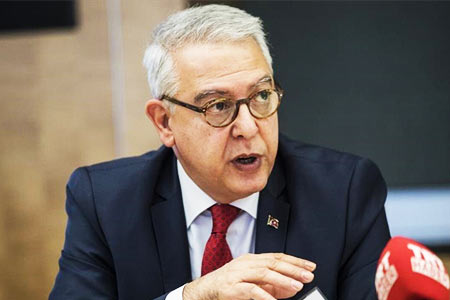 Turkish diplomat calls removal of references to the Armenian Genocide from Armenia’s draft new constitution historic
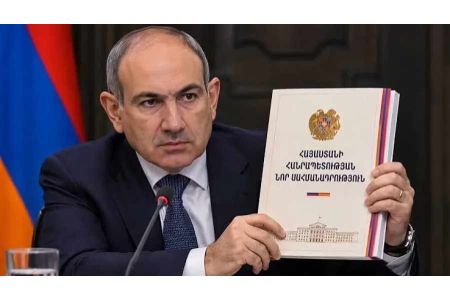 Prime Minister: The Constitution is our collective agreement on the fundamental principles of our internal and external relations
 Ultra-Orthodox Jews continue to desecrate Armenian holy sites in Jerusalem’s Armenian Quarter
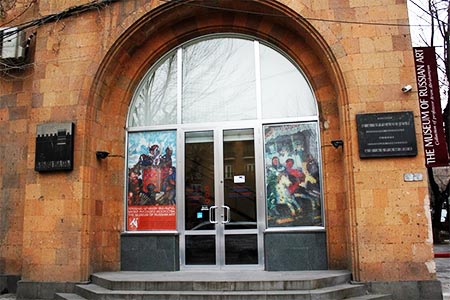 The Yerevan Museum of Russian Art Turns 42
 Armenia and Germany held consultations on defense issues
 Armenia wants to host COP-34 in 2029
 Speaker: Armenia has never approached the CSTO regarding the Karabakh issue
 Lavrov: Armenia will not be expelled from the CSTO
 Orientalist: In 2026, Baku made special efforts to achieve greater diplomatic effect on the issue of victory over Artsakh
 Drmeyan: The ECHR rejected Azerbaijan`s appeal in the case of Artsakh Defense Army Major Hayk Toroyan