
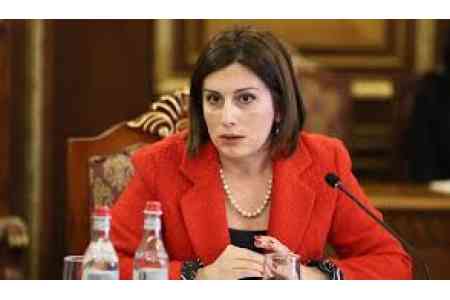
ArmInfo. The implementation of a universal health insurance system in Armenia will be carried out in stages and will take three years. This was announced by RA Minister of Health Anahit Avanesyan on November 28 at a meeting of the RA National Assembly Committee on Healthcare, where she presented the draft law and amendments to 22 related legislative acts in the first reading.
According to the minister, the first stage will begin on January 1, 2026. The system will automatically screen people and enroll them as beneficiaries. They will then receive an invitation to become beneficiaries of the system through the Armed eHealth e-health system (or through their primary care physician). By 2028, the entire population of Armenia should be covered by this system. The state procurement system will gradually transition to compulsory health insurance. Until then, those who used the state procurement system will continue to do so.
In the first stage, the compulsory health insurance system will include children under 18, individuals aged 65 and older (even if employed), individuals with disabilities aged 18 to 65, and members of socially vulnerable families. The state will fully cover the health insurance policies of these categories of citizens. Regarding insurance payments for individuals earning over 200,000 drams, the document's developers opted for fixed payments, abandoning the salary deduction model. Individuals with salaries of up to 200,000 drams will be included in the system starting January 1, 2027. Overall, the first stage plans to reach 1.6 million beneficiaries. The base cost of an insurance policy in 2026 will be 129,600 drams, or 10,800 drams per month. However, since the payment amount to the Military Insurance Fund (Zinapa) will change, beneficiaries will not have to pay the additional 10,800 drams monthly. Specifically, those with salaries between 200,000 and 500,000 drams will be able to reduce their monthly Zinapa contribution from 5,500 to 1,000 drams. The saved 4,500 drams can be used to pay for health insurance. Furthermore, when filing their income tax return in 2026, they will be able to claim back an additional 6,000 drams monthly (as a tax deduction). For citizens with salaries between 500,000 and 1 million drams, the Zinapa contribution will also be reduced to 1,000 drams instead of 7,500, allowing 6,500 drams to be redirected toward insurance. When filing a tax return in 2027, they will be eligible for a refund of 4,000 drams per month. Individuals earning over 1 million drams will be able to receive a refund of 4,000 drams per month by filing an income tax return in 2027. The insurance payment will be made by a tax agent, meaning it will be withheld from wages in the same way as income tax, social security contributions, and other taxes.
In 2026, the most in-demand services will be included in the insurance system, including outpatient and clinic visits, family doctor visits, emergency room visits, specialist consultations, and laboratory tests (a certain number per year). The list of services will be expanded and refined, covering certain surgical procedures, including ophthalmological (cataracts), cardiovascular, and other procedures. The list of diseases will be approved by government decisions. A single package of services will apply to all age groups. The system will require mandatory annual medical examinations, which will be implemented starting in 2029. The 2026 budget allocates 127 billion drams for the implementation of the health insurance system.
The funds will be managed by the state-run Health Insurance Fund, whose director will be required to submit an annual report to parliament on the work performed and the flow of funds. The fund will also present a program of activities for the following year. The minister also stated that during the transition period, both public and private medical institutions will invest in development, allowing them to expand their existing capacities.
The commission issued a positive opinion on the proposed package and recommended that the National Assembly include the bill on the agenda of the plenary session of parliament.







 Expert: Economic pressure on Armenia may be virtually painless for other EAEU members, but not for Armenia itself
 Expert on protests in France: Civilizations fade when society loses a vision of the future
 Turkologist: Azerbaijan is not all-powerful—its vulnerabilities should become part of Armenia’s security strategy
 Opinion: The development of the Amulsar mine near the resort town of Jermuk is the beginning of an environmental disaster in Armenia
 Expert: The arrest of opposition figures in Armenia for social media posts is a systematic attempt to intimidate the public and suppress dissent.
 The Armenian Foreign Minister commented on the country`s return to work within the CSTO.
 The Artsakh Public Council expressed outrage at the UN Secretary-General`s behavior
 Lukashenko called for Armenia to assume the CIS presidency in 2029
 Dmitry Medvedev predicted a Ukrainian-like fate for Armenia amid the country`s shift in foreign policy
 Russian Security Council: In Armenia, they want to force Russian asset owners to dispose of their assets
 Zakharova: Russia ready to discuss with Armenia the prospects for expanding military cooperation as part of a review of bilateral ties
 Tevanyan: Armenia, like Ukraine and Moldova, is being drawn into the EU’s global war
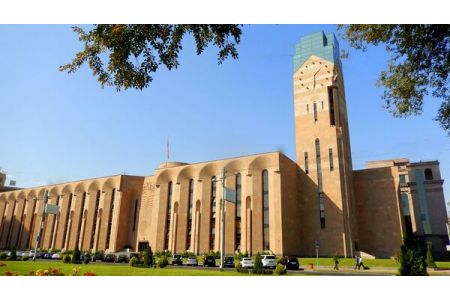 Yerevan City Hall is considering introducing a valet parking system in the city
 Expert: The circus surrounding the “Albanization” of Armenian culture in the presence of foreign ambassadors in occupied Artsakh is genocide
 Political scientist: If Russian-Armenian relations are destroyed, Turkey will take Russia`s place
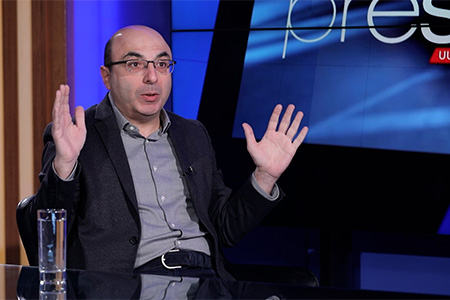 Political scientist: The Armenian public is simply obliged to significantly change the entire content of public discourse and struggle
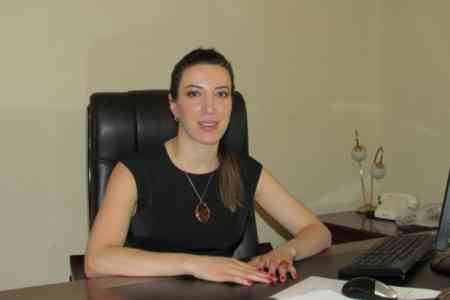 Cross tattoos are being removed from the skin of Christian prisoners in Azerbaijan by fire, according to a human rights activist.
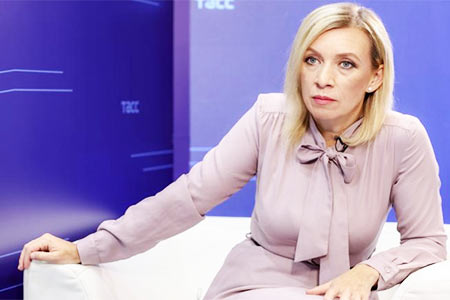 Zakharova: Armenia`s likely introduction of visas with Russia will be a step against Yerevan itself
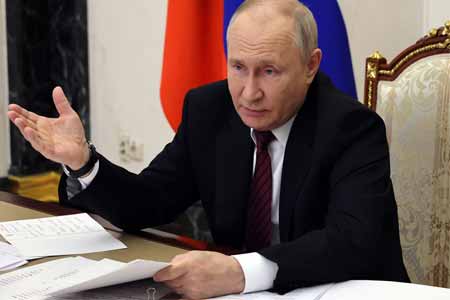 Putin: Armenia`s recognition of Karabakh as part of Azerbaijan in Prague has given Russia`s position on this issue an ambivalent character
 Putin: Armenia`s adoption of the law on EU accession means an announcement of its withdrawal from the Eurasian Economic Union