

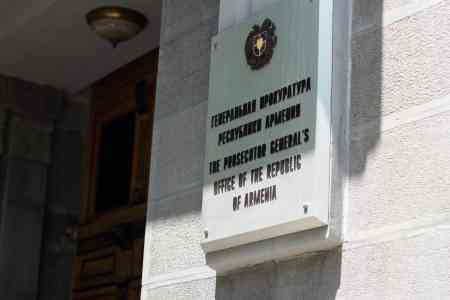
ArmInfo. A group of citizens who had been victims of cyberfraud held a protest outside the Armenian Prosecutor General's Office, demanding that appropriate measures be taken to prevent such crimes. The citizens gathered outside the office insist that the Prosecutor General's Office accept the criminal complaint, initiate a criminal case, and recognize them as victims.
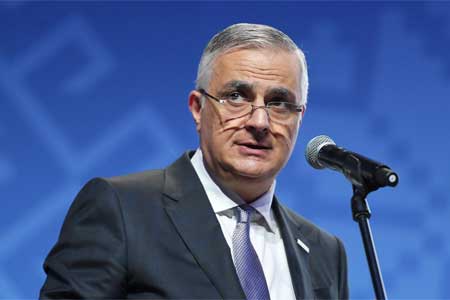
Mher Karagyozyan, chairman of the Public Control NGO, told reporters that the total number of victims, according to their estimates, could reach 17,000 people, yet only about 250 have reached out to them. He also noted that the police have only received a few dozen reports so far. However, he believes that citizens' reluctance to contact law enforcement and the small number of complaints are due to a lack of trust in government agencies, rather than a narrow circle of victims.
As an example, the organization's chairman cited typical responses citizens receive from authorized bodies: "Where was your head?" or "You voluntarily handed over the money, now what are you demanding of us?" According to Karagezyan, such responses only serve to conceal crimes and increase mistrust of government agencies, which should be cause for concern. He expressed the belief that if such crimes had been prevented at an early stage, the number of victims could have been significantly lower.
Regarding the number of victims, Karagezyan clarified that they had been contacted by citizens who had suffered damage from various platforms, most recently the online service "Hellobit." He noted that "Hellobit" victims claim that between 18,000 and 19,000 people were online on the platform. "Considering that only one in twenty of them made a real profit, that's approximately 17,000 victims," the organization's chairman explained. Karagezian, however, declined to specify the amounts involved, noting that many victims' losses ranged from $1,000 to $167,000.
Recall, in February of this year, it was reported that two call centers were shut down in Yerevan after reports of fraudulent activities in Europe and Kazakhstan. The members of the transnational criminal group were engaged in online fraud against citizens of Kazakhstan and European countries, offering victims the opportunity to invest in supposedly large investment companies. During the special operation, 41 members of the criminal group, including citizens of Armenia, Georgia, Iran, Syria, and Lebanon, were detained.











 Opinion: The development of the Amulsar mine near the resort town of Jermuk is the beginning of an environmental disaster in Armenia
 Expert: The arrest of opposition figures in Armenia for social media posts is a systematic attempt to intimidate the public and suppress dissent.
 Azerbaijani Studies Expert: While Azerbaijan Prepares Its Generation for War, Aliyev’s Aide Calls on Armenia to Prepare Armenian Society for “Peace”
 Turkologist: Azerbaijan will never, under any circumstances, stop pressuring the Armenian people
 Political scientist: We need to move away from the question of "when" and replace it with more important questions
 Lukashenko called for Armenia to assume the CIS presidency in 2029
 Dmitry Medvedev predicted a Ukrainian-like fate for Armenia amid the country`s shift in foreign policy
 Russian Security Council: In Armenia, they want to force Russian asset owners to dispose of their assets
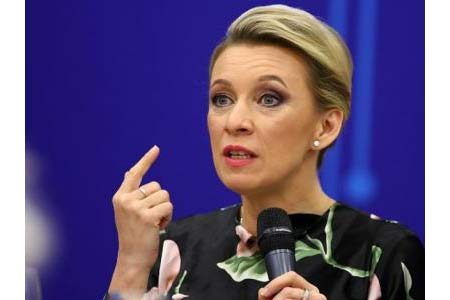 Zakharova: Russia ready to discuss with Armenia the prospects for expanding military cooperation as part of a review of bilateral ties
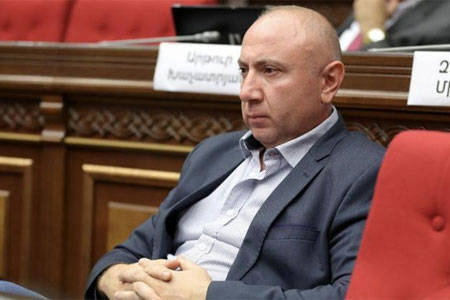 Tevanyan: Armenia, like Ukraine and Moldova, is being drawn into the EU’s global war
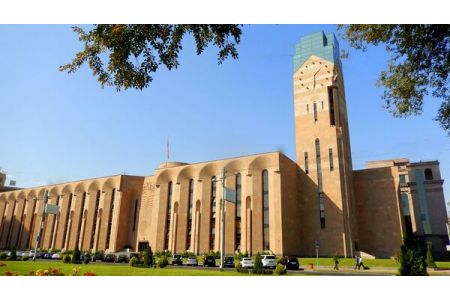 Yerevan City Hall is considering introducing a valet parking system in the city
 Expert: The circus surrounding the “Albanization” of Armenian culture in the presence of foreign ambassadors in occupied Artsakh is genocide
 Political scientist: If Russian-Armenian relations are destroyed, Turkey will take Russia`s place
 Political scientist: The Armenian public is simply obliged to significantly change the entire content of public discourse and struggle
 Cross tattoos are being removed from the skin of Christian prisoners in Azerbaijan by fire, according to a human rights activist.
 Zakharova: Armenia`s likely introduction of visas with Russia will be a step against Yerevan itself
 Putin: Armenia`s recognition of Karabakh as part of Azerbaijan in Prague has given Russia`s position on this issue an ambivalent character
 Putin: Armenia`s adoption of the law on EU accession means an announcement of its withdrawal from the Eurasian Economic Union
 Aram Vardevanyan: Public demands solutions, not apology scandals in Parliament