
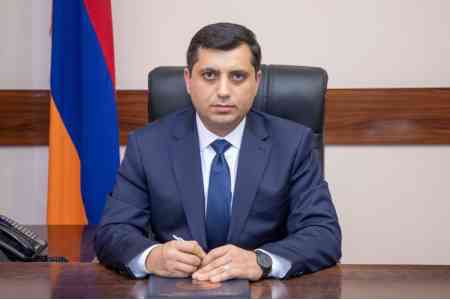
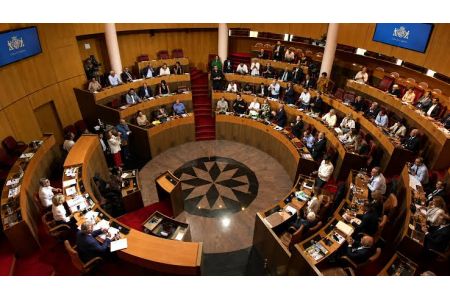
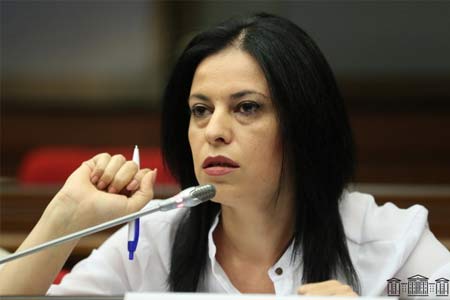
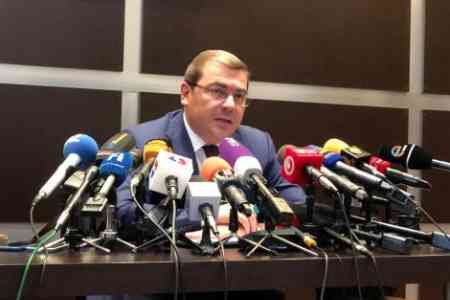
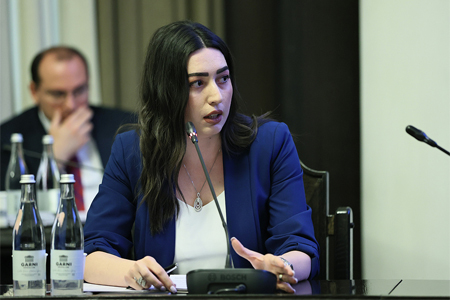
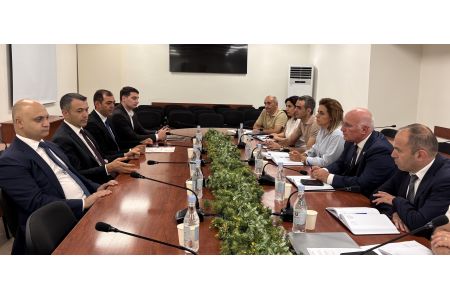
ArmInfo.On November 18, during parliamentary hearings on "Reconsidering the March 1 Case," Prosecutor General Anna Vardapetyan described the actions taken by the Prosecutor's Office in this case from 2022 to the present, as part of the criminal prosecution and protection of state interests.
As a reminder, on March 1, 2008, following the February 19 presidential elections won by Serzh Sargsyan, unrest erupted in Yerevan, culminating in clashes with law enforcement. The Armenian opposition, led by first President Levon Ter-Petrosyan, who also ran in the election, held rallies in central Yerevan beginning February 20, expressing dissatisfaction with the election results. On March 1-2, protests erupted into riots and clashes between protesters and law enforcement, resulting in 10 deaths, including police officers, and over 200 injuries of varying severity. On August 17, 2018, Nikol Pashinyan declared that the case surrounding the events of March 1-2, 2008, in Yerevan had been fully resolved. However, to date, none of those responsible have been held accountable for that crime.
Vardapetyan recalled that by a March 26, 2021, Constitutional Court ruling, Article 300.1 of the Criminal Code (overthrow of the constitutional order) was declared invalid and contrary to Articles 78 and 79 of the Constitution. Based on this decision, on April 6, 2021, the court of first instance terminated the criminal prosecution of the defendants Robert Kocharyan (second President of the Republic of Armenia), Seyran Ohanyan (former Minister of Defense of the Republic of Armenia), and Yuri Khachaturov (former Deputy Head of the Ministry of Defense of the Republic of Armenia) under Part 1 of Article 300.1 of the previous Criminal Code, and Armen Gevorgyan (former Deputy Prime Minister of the Republic of Armenia) under Article 38-300.1 of the Criminal Code due to lack of corpus delicti, and the criminal proceedings were therefore terminated. All appeals against this decision were dismissed, and the decision of the court of first instance of April 6, 2021, was upheld.
The Prosecutor General filed a cassation appeal against the Court of Appeal's decision, requesting that the lower courts' decisions be overturned and the criminal case remanded for a new trial. By a ruling of the Court of Cassation dated March 18, 2022, the Prosecutor General's cassation appeal was accepted for proceedings. By a ruling of January 19, 2024, the Court of Cassation asked the Constitutional Court to determine the constitutionality of several articles of the former Criminal Procedure Code.
Furthermore, by a ruling of the Constitutional Court dated July 22, 2024, Part 3 of Article 309.1 of the former Criminal Procedure Code was found to be constitutional in that the prosecutor has the right to amend the charges brought against the defendant (the legal classification of the act with which he is charged) before the court leaves the deliberation room if the defendant's actions contain elements of another act provided for by criminal law, regardless of the examination of evidence during the trial. Based on the decision of the Supreme Judicial Council on September 2, 2024, the powers of the judge hearing the case were terminated, and the criminal case was transferred to another judge of the Yerevan City Court of First Instance of General Jurisdiction.
On September 12, 2024, the Court of Cassation overturned the April 16, 2021, decision of the Yerevan City Court of First Instance of General Jurisdiction and the November 26, 2021, decision of the Criminal Court of Appeals, upholding it, and referred the case to the Anti-Corruption Court for a new trial. Among other things, the Court of Cassation noted that, in light of the Constitutional Court's decision of July 22, 2024, if the prosecutor deems the act committed to be qualified under another article of the Criminal Code, they are authorized to take steps to supplement or amend the charges.
On October 11, 2024, the state prosecutor issued a ruling amending the legal assessment of the acts imputed to Robert Kocharyan, Seyran Ohanyan, Yuri Khachaturov, and Armen Gevorgyan under Part 1 of Article 300.1 of the Criminal Code adopted on April 18, 2003, and charging them under the new Part 3 of Article 309 of the Criminal Code adopted on April 18, 2003 (corresponding to Clause 5 of Part 2 of Article 441 of the current Criminal Code).
The court granted the state prosecutor a deadline of November 24, 2025, to prepare and submit the aforementioned rulings in accordance with the requirements of the Criminal Procedure Code. The amended charges will be presented to the court shortly.
On August 11, 2025, the Prosecutor General's Office filed a retrospective lawsuit with the Anti-Corruption Court against Robert Kocharyan, Armen Gevorgyan, Seyran Ohanyan, and Yuri Khachaturov, demanding the recovery of 670 million drams reimbursed by the Republic of Armenia as a share of their compensation.
Simultaneously, the Prosecutor General's Office filed a motion for interim relief, requesting the seizure of the property of the defendants Robert Kocharyan, Armen Gevorgyan, Seyran Ohanyan, and Yuri Khachaturov in the amount of the claimed value of 670 million drams. By a decision of the Anti-Corruption Court on August 13, 2025, the lawsuit was accepted for proceedings, and the motion for interim relief was granted.
On the same day, Anna Vardapetyan continued, August 11, 2025, the January 30, 2020 decision to terminate the criminal prosecution against Sasha Afyan, who had served as Deputy Chief of Police since March 1, 2008, was overturned.
"In the March 1 case, it has been substantiated that Sasha Afyan, appointed Deputy Chief of Police under the Government of the Republic of Armenia on February 12, 2008, exceeded his official authority on March 1, 2008, and, in collusion with others, organized the actions of various police units, involving the use of violence and special means, to disperse peaceful demonstrators holding a sit-in in Freedom Square in Yerevan, and subsequently to prevent their gatherings, potential demonstrations, and gatherings in central parts of the city, thereby causing significant harm to the rights and legitimate interests of citizens, as well as the legitimate interests of society and the state," she noted.
According to her, the Prosecutor General's decree states: "On the evening of February 29, 2008, Chief of Police Hayk Harutyunyan convened a meeting at which he ordered unit commanders to disperse peaceful demonstrators in Yerevan's Freedom Square and to prohibit any further gatherings there. Following the meeting, on the night of February 29-March 1, Deputy Chief of Police Sasha Afyan, in a tense atmosphere, assembled the officers of the said regiment at the Special Operations Department of the Yerevan Police Department. He then ordered the regiment's leadership to arm its personnel with riot gear and transfer them to the said square to disperse the peaceful demonstrators holding a sit-in in Freedom Square."
Around 6:30 AM, approximately 1,200 police officers, including officers from the Special Police Regiment of the Yerevan Police Department, were deployed in the streets adjacent to Freedom Square. Following this, officers from the Special Police Regiment of the Yerevan Police Department, organized by Sasha Afyan, entered the square. Without grounds for the use of physical force and special means, as stipulated by Article 29 of the RA Law "On Police," clearly exceeding their authority, which was accompanied by the illegal use of violence (physical force) and special means, dispersed hundreds of peaceful protesters holding a sit-in and forcibly removed them from the square. Simultaneously, other police units, in order to prevent further gatherings and gatherings of citizens in the square, blocked Freedom Square and prevented citizens from entering. Following the forcible evacuation of protesters from Freedom Square, police forces organized by Sasha Afian and others continued to pursue citizens in central districts of the city using violence and riot gear, suppressing gatherings, potential demonstrations, and rallies. As a result of police actions in Freedom Square and adjacent streets, more than three dozen citizens sustained minor and moderate injuries, causing significant harm to the rights and legitimate interests of citizens, as well as the legitimate interests of society and the state. On October 26, 2019, a decision was made to charge Sasha Afian under Part 2 of Article 38-309 of the Criminal Code, and he was charged the same day. Article 309 of the Criminal Code, adopted on April 18, 2003, provides for criminal liability for intentional actions of an official that clearly exceed the scope of his authority and cause significant damage to the rights and legitimate interests of citizens, organizations, or the legitimate interests of society or the state (in the case of property damage, an amount exceeding five hundred minimum wages established at the time the crime was committed, or its value). Part 2 of the article provides for the qualification of the crime , that is, the same act accompanied by the use of violence, weapons, or special means. The Prosecutor General's resolution also stated:
Having established that the exercise of official powers by the accused Sasha Afyan with the use of violence, weapons or special means ceased on March 1, 2008, in connection with which the statute of limitations for bringing Sasha Afyan to criminal responsibility, established by paragraph 3 of Part 1 of Article 75 of the Criminal Code adopted on April 18, 2003, expired, the investigator in charge of the proceedings, Deputy Head of the Department for the Investigation of Corruption, Organized and Official Crimes of the Special Investigative Service Hrachya Mushegyan, on January 30, 2020, issued a ruling to terminate the criminal prosecution initiated against Sasha Afyan in the criminal case under Articles 38-309 of Part 2 of the Criminal Code adopted on April 18, 2003, due to the expiration of the statute of limitations for bringing Sasha Afyan to criminal responsibility. The prosecutor overseeing the legality of the preliminary investigation in this criminal case did not overturn the aforementioned decision, thereby confirming its legality.
"According to the Prosecutor General's decision, the investigator in charge of the proceedings, on January 30, 2020, to terminate the public criminal prosecution initiated against Sasha Afyan under Part 2 of Article 309 of the Criminal Code of the Republic of Armenia, adopted on April 18, 2003, and the procedural act of the supervising prosecutor refusing to terminate it, are unlawful and unfounded and subject to cancellation," Vardapetyan emphasized.
According to her, the Prosecutor General's decision, in addition to national legislation, international documents, and the European Court of Human Rights' decision in the case of Mushegh Saghatelyan v. Armenia, is based on the Court of Cassation's ruling of December 23, 2023, which held that, since at least August 1, 2003, the effective date of the Criminal Code of the Republic of Armenia, adopted on April 18, 2003, there has been a legislative prohibition on the application of statutes of limitations to cases of torture or similar treatment, including abuse of office.
Therefore, the Prosecutor General noted, Sasha Afyan was charged with an act amounting to torture, and, therefore, the public criminal prosecution initiated against Sasha Afyan could not be suspended due to the legislative prohibition on the application of statutes of limitations. "This incident will soon be sent to court with an indictment," Vardapetyan concluded.

















 Iranologist: Baku`s propaganda of might masks the country`s inability to provide water to its own population
 Analyst: Continued tensions between Yerevan and Moscow could entail new restrictive measures from Russia
 Political analyst: Russia intends to determine which "Camp" Armenia will choose through a referendum
 Armenia and France discuss further development of strategic partnership and EU cooperation
  To overcome risks Armenia must reduce domestic escalation - expert
  Zatulin: Pashinyan was eager to get back to Russia because he actually lost the elections
 Human rights activist Ruben Melikyan dismissed from YSU
 Pashinyan removed from INNOPROM guest list
 Zakharova: Armenia`s pro-EU pivot poses economic security risks to EAEU member states
 It`s time for South Caucasus countries to think of South Caucasus as single, unified region - RA premier
  Pashinyan: Armenia and Azerbaijan should leave each other alone
 Moscow sees situation with Armenia as attempt to attack Russia-involving integration associations - Russian presidential aid
 Zakharova: Armenia views relations with Russia as tool for financially securing reorientation toward EU
 The Armenian Minister of Justice and the EU Ambassador discussed visa liberalization issues for Yerevan.
 Azerbaijan`s aggressive plans against Armenia became possible in wake of Pashinyan`s decisions on Artsakh - expert
  Zakharova: Russia sent a note of protest to Armenia over the act of vandalism at the "Mother Armenia" memorial in Gyumri