
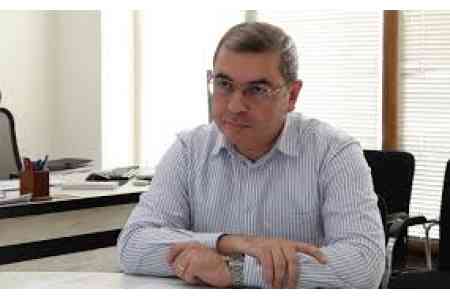
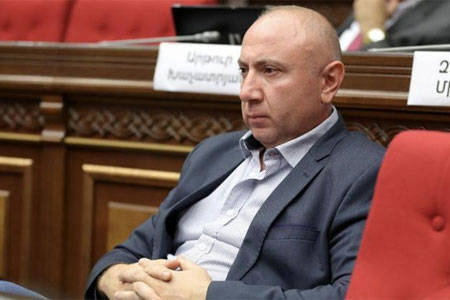
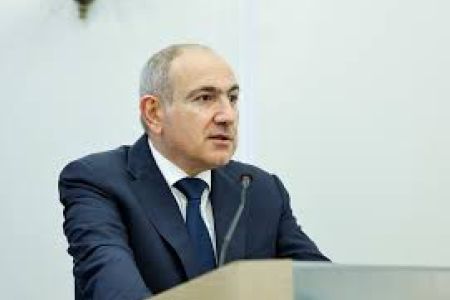
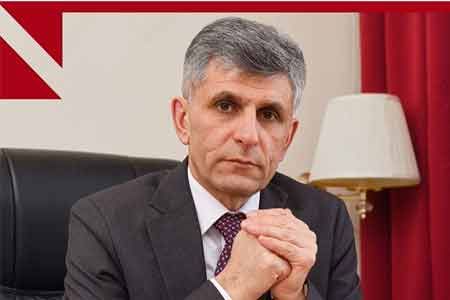
ArmInfo. The results of the Council of Elders elections in the enlarged Vagharshapat community of the Armavir region reveal the structural contradictions of the current electoral system for local government in Armenia. The ruling party is declared the winner not based on a public majority, but on electoral mathematics. David Ananyan, politician and former head of the State Revenue Committee, wrote on social media.
Ananyan notes that the ruling Civil Contract party only received 21.8% of the vote (15,298 votes out of 69,866 voters). However, after squeezing out the votes of those forces that didn't pass the threshold, it formed a 58% majority in the Council of Elders, holding 19 seats out of 33.
What actually occurred?
This electoral system (proportional + D'Hondt method + high thresholds) replaces real representation with the formation of an artificial majority. As a result, opposition forces, which garnered more votes collectively, end up with less representation.
This is not a precedent; it is a warning
"The Vagharshapat model may be repeated in the 2026 national elections. If the opposition remains fragmented, self-sufficient, unstable, and unconsolidated, then the electoral system will once again reproduce power, according to the same mathematical logic, even in the absence of a public majority," the expert notes. And then, in the national elections (the next parliamentary elections are scheduled for June - ed.), thousands of votes received by small parties will be "wasted" without crossing the threshold. Electoral resources will be squandered, and power will be preserved by "dismembering the losers."
The elections in Vagharshapat should be seen as a signal
"If broad coalitions, real political alliances, and a common strategy are not formed by 2026, even the votes of the majority could turn into minority representation, and public expectations could once again reach another dead end," David Ananyan concludes.
















 Analyst: The primary issue with Armenia`s new Parliament Speaker`s speech lies is its one-sided interpretation of the causes of the political crisis
 Expert: Gagik Tsarukyan embodies post-Soviet model of big business-state relations; this model is used in many other post-Soviet countries
 Expert: Azerbaijan promoting aggressive plans against Armenia at state level
 Iranologist: Baku`s propaganda of might masks the country`s inability to provide water to its own population
 NA Vice Speaker candidate believes his wife`s salary as director of HayPost is the lowest in the company`s history
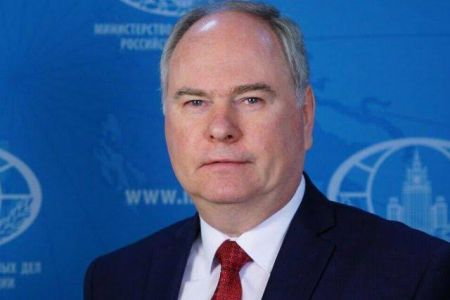 RF Permanent Representative: There is no CSTO-Armenia conflict
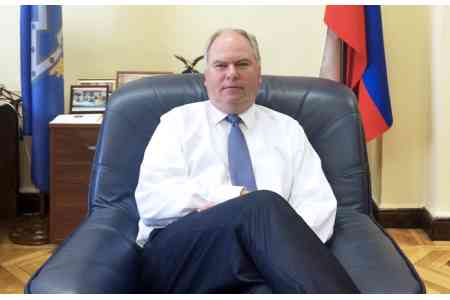 Moscow: NATO seeking to "Pull" Armenia away from CSTO Allies
 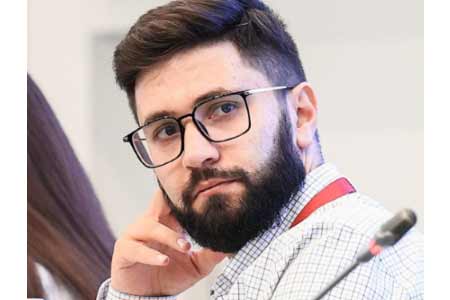 Political analyst: Russia intends to determine which "Camp" Armenia will choose through a referendum
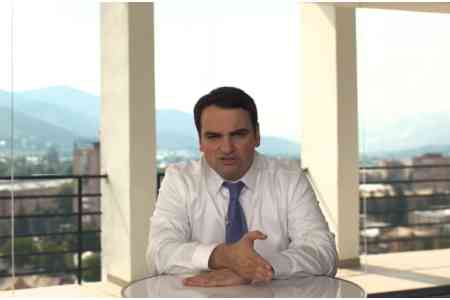 Narek Karapetyan will give up his parliamentary salary in favor of charitable contributions.
 Armenia and France discuss further development of strategic partnership and EU cooperation
  To overcome risks Armenia must reduce domestic escalation - expert
  Zatulin: Pashinyan was eager to get back to Russia because he actually lost the elections
 Human rights activist Ruben Melikyan dismissed from YSU
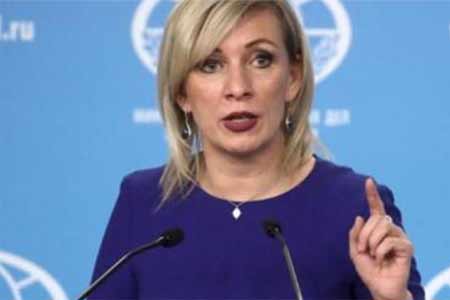 Zakharova: Armenia`s pro-EU pivot poses economic security risks to EAEU member states
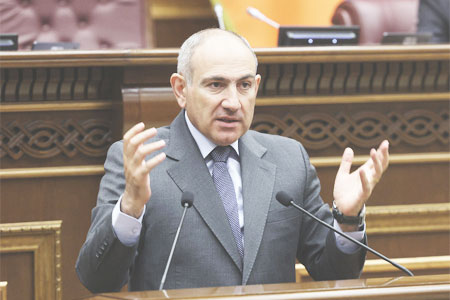 It`s time for South Caucasus countries to think of South Caucasus as single, unified region - RA premier
  Pashinyan: Armenia and Azerbaijan should leave each other alone
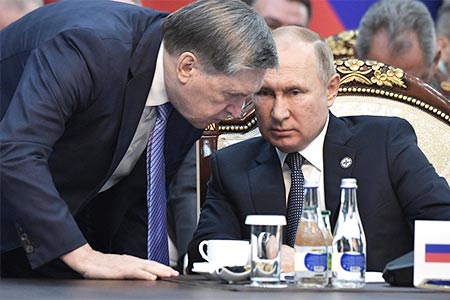 Moscow sees situation with Armenia as attempt to attack Russia-involving integration associations - Russian presidential aid