
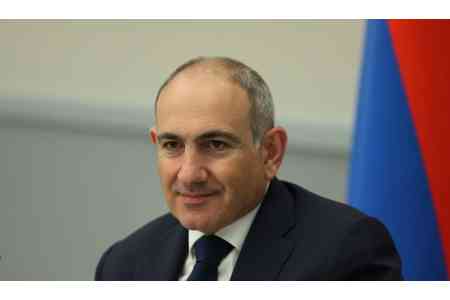
ArmInfo. Armenian Prime Minister Nikol Pashinyan cited the need for an extraordinary delimitation of certain sections of Syunik as a pretext for advancing the "Trump Route" project.
"Let's imagine that a gas pipeline is to pass through here, but this section has not been delimited, and our delimitation commissions had already made a joint decision before August 8 that the delimitation process should proceed from north to south (from the northern section - from the junction of the borders of Armenia, Azerbaijan, and Georgia, and further south - from north to south, to the border of Armenia and Azerbaijan with Iran - ed.). On the other hand, the need for infrastructure construction has arisen," he said on November 14 at a conference titled "Crossroads of Peace: Developing Regional Communications and Cooperation."
For example, to begin construction of a railway, power line, etc., the appropriate infrastructure must be in place. This, first and foremost, requires defining the country's jurisdiction so that the builder knows what part of the country they are working on, the Prime Minister explained.
As a reminder, on August 8, Armenian Prime Minister Nikol Pashinyan and Azerbaijani President Ilham Aliyev signed a seven-point joint "Declaration of Peace" in Washington. It includes a joint appeal to the Organization for Security and Cooperation in Europe (OSCE) to terminate the OSCE Minsk Process and related structures, as well as the creation of a transport corridor through Armenian territory that will connect Azerbaijan with its Nakhchivan exclave, surrounded by Armenia, Turkey, and Iran. The TRIPP (Trump Route for International Peace and Prosperity) project (a 42-kilometer road in southern Armenia that will hand over management to the United States for 99 years) project, according to experts, has the potential to significantly change the geopolitical situation in the South Caucasus.


















 Iranologist: Baku`s propaganda of might masks the country`s inability to provide water to its own population
 Analyst: Continued tensions between Yerevan and Moscow could entail new restrictive measures from Russia
 Political analyst: Russia intends to determine which "Camp" Armenia will choose through a referendum
 Armenia and France discuss further development of strategic partnership and EU cooperation
  To overcome risks Armenia must reduce domestic escalation - expert
  Zatulin: Pashinyan was eager to get back to Russia because he actually lost the elections
 Human rights activist Ruben Melikyan dismissed from YSU
 Pashinyan removed from INNOPROM guest list
 Zakharova: Armenia`s pro-EU pivot poses economic security risks to EAEU member states
 It`s time for South Caucasus countries to think of South Caucasus as single, unified region - RA premier
  Pashinyan: Armenia and Azerbaijan should leave each other alone
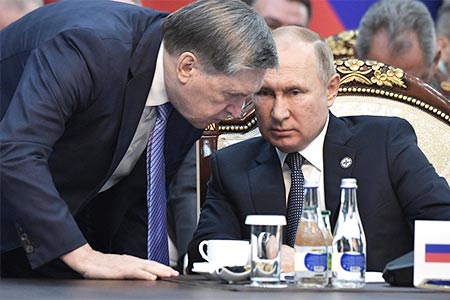 Moscow sees situation with Armenia as attempt to attack Russia-involving integration associations - Russian presidential aid
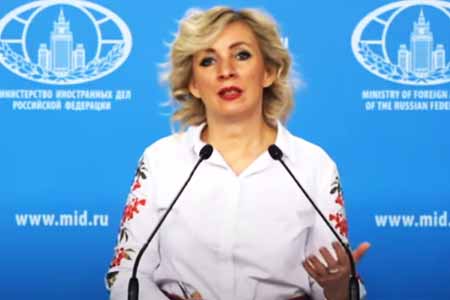 Zakharova: Armenia views relations with Russia as tool for financially securing reorientation toward EU
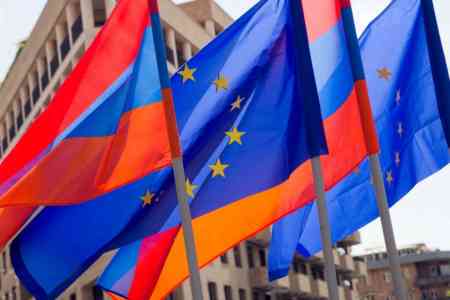 The Armenian Minister of Justice and the EU Ambassador discussed visa liberalization issues for Yerevan.
 Azerbaijan`s aggressive plans against Armenia became possible in wake of Pashinyan`s decisions on Artsakh - expert
 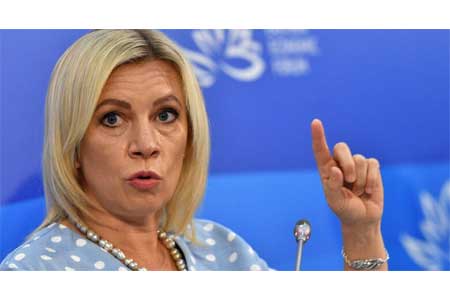 Zakharova: Russia sent a note of protest to Armenia over the act of vandalism at the "Mother Armenia" memorial in Gyumri