

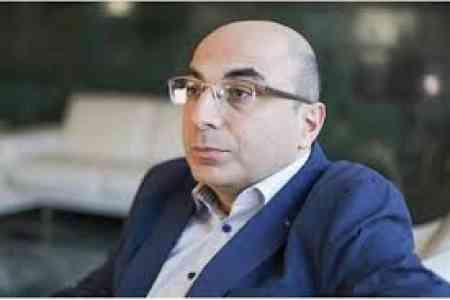
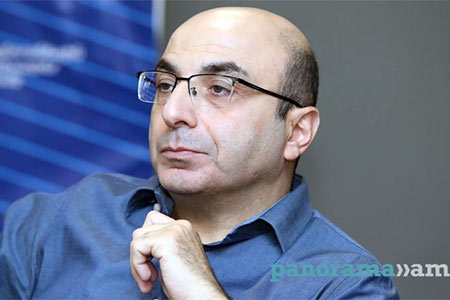
ArmInfo. Opponents of the current Armenian government must conduct extensive voter education ahead of the 2026 parliamentary elections scheduled for June 7, and convey to voters that this is not a choice between one candidate or another, but a matter of the continued existence of the Republic of Armenia on the world map, as stated by Vahe Hovhannisyan, political scientist and co-founder of the Alternative Projects Group, during a discussion on the "Long- Term Consequences of the Upcoming Elections."
The expert is confident that a choice must be made today, as the results of these electoral processes will determine what will be conditionally written on the map-Armenia's "Sevan" or Azerbaijan's "Geycha." He also dismissed the notion that the upcoming elections pose only foreign policy risks as a mistake, expressing his conviction that they primarily concern Armenia's domestic processes. "It is extremely important to understand this. It is necessary to ensure that citizens clearly understand the consequences of their choice when voting," the political scientist believes. Hovhannisyan regretfully noted that many citizens in Armenia are not yet considering the consequences, and that their choice will determine their way of life in Armenia.
At the same time, the expert acknowledged that during these electoral processes, one must be prepared for the current Armenian authorities to resort to every possible manipulation to secure popular support and ensure their own survival. According to him, one compelling argument will be that their reproduction "guarantees peace," while if other forces win, there will be "war." He noted that the authorities have been particularly manipulating this after the Washington Accords of August 8.
"An important task today is to convey to voters the simple reality: Armenia is now beyond war and beyond peace. And the main task of the next government will be to competently manage this situation in the interests of the Armenian people." Therefore, voters need to be explained that the reproduction of the current government will lead to new concessions," Hovhannisyan added. In this regard, he pointed out that the constant concessions by the Armenian authorities do not soften Azerbaijan's rhetoric, but, on the contrary, only lead to its hardening. He noted that after August 8, even the strategic calculations of the Azerbaijani authorities have not changed.
Regarding grain supplies through Azerbaijani territory, Hovhannisyan suggested that in the near future, the Azerbaijani leadership will begin to use this route as another lever of pressure on Armenia to advance its interests regarding the route through Syunik. As support for his assumptions, he pointed to the recent harshening of rhetoric among Azerbaijani parliamentarians regarding the so-called corridor through Syunik, with threats to seize it by force. Thus, the political scientist expressed the conviction that, if necessary, Azerbaijan would easily abandon the Trump route and other road formats if faced with further inaction of Armenian authorities. "In this sense, it's important to explain to voters that their choice will also affect Azerbaijan's behavior. Therefore, before the elections, it's important to conduct extensive work and explain to voters that these elections concern Armenia's existence and, in general, the ability of Armenians to live on their own land," Hovhannisyan concluded.


















 Russian political scientist: Moscow`s reaction to the TRIPP project will largely depend on the trend in Russian-American relations
 Armenian Political Scientist: The approaches, methods, rmphases and content of today’s struggle in Armenia Cannot Remain the Same
 Political scientist: Armenians will live peacefully in their homeland only when they can once again set national goals for themselves, such as Artsakh
 Russian Security Council: In Armenia, they want to force Russian asset owners to dispose of their assets
 Zakharova: Russia ready to discuss with Armenia the prospects for expanding military cooperation as part of a review of bilateral ties
 Tevanyan: Armenia, like Ukraine and Moldova, is being drawn into the EU’s global war
 Yerevan City Hall is considering introducing a valet parking system in the city
 Expert: The circus surrounding the “Albanization” of Armenian culture in the presence of foreign ambassadors in occupied Artsakh is genocide
 Political scientist: If Russian-Armenian relations are destroyed, Turkey will take Russia`s place
 Political scientist: The Armenian public is simply obliged to significantly change the entire content of public discourse and struggle
 Cross tattoos are being removed from the skin of Christian prisoners in Azerbaijan by fire, according to a human rights activist.
 Zakharova: Armenia`s likely introduction of visas with Russia will be a step against Yerevan itself
 Putin: Armenia`s recognition of Karabakh as part of Azerbaijan in Prague has given Russia`s position on this issue an ambivalent character
 Putin: Armenia`s adoption of the law on EU accession means an announcement of its withdrawal from the Eurasian Economic Union
 Medvedev: Yerevan will never become an EU member, but it will permanently damage relations with the Eurasian Economic Union, including with Moscow.
 Aram Vardevanyan: Public demands solutions, not apology scandals in Parliament
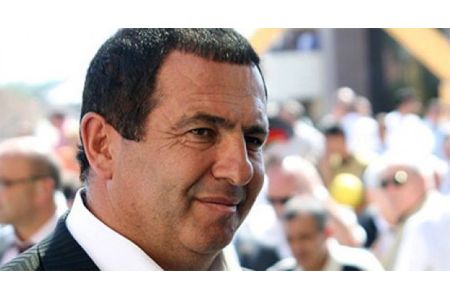 Arrested Armenian oligarch on economy and new jobs
 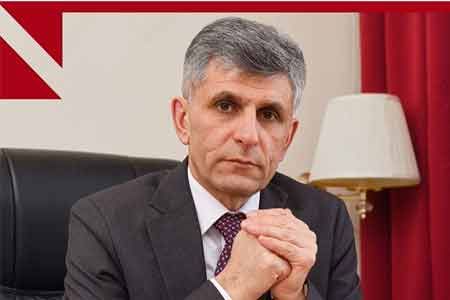 "In Baku, we gave a worthy rebuff to the false claims regarding the past and present of our people" – Former Artsakh Parliament Speaker from Baku captivity
