

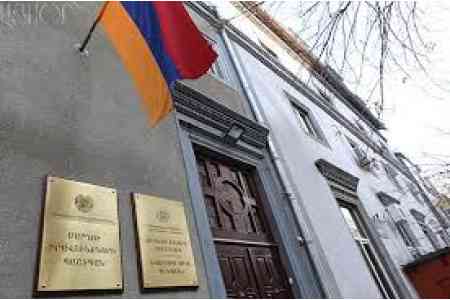
ArmInfo. Representatives of the Department for the Prevention of Torture and Cruel Treatment of the Office of the Human Rights Defender conducted a two- day unscheduled monitoring visit to the Armavir Penitentiary Institution of the RA Ministry of Justice in September and October 2025.
According to the Ombudsman's Office, during the visit, the following were examined, in particular, the state of nutrition, medical care, and services for inmates in the penitentiary institution, the staffing level and working conditions of the institution's staff, the inmates' contacts with the outside world, issues of psychological work and resocialization, etc. The Ombudsman welcomes the renovations carried out at the Armavir Penitentiary Institution in 2025, which resulted in the complete renovation of the medical building and quarantine cells located in the penitentiary institution. At the same time, problems were identified, some of which were systemic. For example, not all inmates were provided with necessary bedding, dishes, and hygiene items upon arrival at the correctional facility. Video recording and surveillance systems installed in the buildings did not cover the entire area of the correctional facility and often had technical issues with image playback, which poses challenges for preventing torture and cruel treatment, as well as ensuring security. The punishment cell building, including the cells, is in urgent need of repair. Problems were also recorded with the placement of inmates, including foreign nationals, in a medical facility providing licensed outpatient medical care and services.
Difficulties were also identified in organizing medical examinations and specialized consultations for individuals deprived of their liberty, including foreign citizens, in a timely and uninterrupted manner. In many cases, this was also due to a lack of security and transportation. A number of individuals deprived of their liberty were effectively held in solitary confinement for extended periods in violation of established legal procedures. Problems were also recorded with the initial medical examination of individuals deprived of liberty newly admitted to the correctional facility. In particular, the examination continues to be conducted improperly: a full medical examination is not conducted; it is conducted in a room designated for searches in the quarantine department, along with searches conducted by correctional facility staff. Furthermore, this room is neither designed nor equipped for medical examinations. A preliminary medical examination was conducted upon initial admission to the penitentiary institution. In other cases, such as when being brought to court or participating in other procedural or evidentiary proceedings, a medical examination upon admission was not conducted. Expired medical supplies, including rapid hepatitis C test strips, were recorded. The presence of insects and rodents was recorded in the premises, including cells. Information was received regarding cruel treatment of inmates, requiring an appropriate investigation. Issues with providing food to individuals brought to court were noted. A shortage of psychologists remains.
The Ombudsman's Office also noted problems with clothing provision for detained foreign citizens and recorded problems with food provision for foreign citizens imprisoned for religious reasons. The Office believes that it is necessary to improve working relationships between the medical staff of the Penitentiary Medicine Center, the State Non-Governmental Organization (SNCO), and representatives of the penitentiary administration.
Representatives of the Ombudsman's Office discussed the above issues with the penitentiary administration and medical staff. The issues discussed will be summarized, and a document reflecting them, along with proposals for addressing the identified problems, will be sent to the competent authorities at the local level. The Ombudsman also pays close attention to ensuring adequate working conditions for penitentiary staff, which will also be the subject of special discussions during interactions with the competent authorities.















 Opinion: The development of the Amulsar mine near the resort town of Jermuk is the beginning of an environmental disaster in Armenia
 Expert: The arrest of opposition figures in Armenia for social media posts is a systematic attempt to intimidate the public and suppress dissent.
 Azerbaijani Studies Expert: While Azerbaijan Prepares Its Generation for War, Aliyev’s Aide Calls on Armenia to Prepare Armenian Society for “Peace”
 Turkologist: Azerbaijan will never, under any circumstances, stop pressuring the Armenian people
 Political scientist: We need to move away from the question of "when" and replace it with more important questions
 Lukashenko called for Armenia to assume the CIS presidency in 2029
 Dmitry Medvedev predicted a Ukrainian-like fate for Armenia amid the country`s shift in foreign policy
 Russian Security Council: In Armenia, they want to force Russian asset owners to dispose of their assets
 Zakharova: Russia ready to discuss with Armenia the prospects for expanding military cooperation as part of a review of bilateral ties
 Tevanyan: Armenia, like Ukraine and Moldova, is being drawn into the EU’s global war
 Yerevan City Hall is considering introducing a valet parking system in the city
 Expert: The circus surrounding the “Albanization” of Armenian culture in the presence of foreign ambassadors in occupied Artsakh is genocide
 Political scientist: If Russian-Armenian relations are destroyed, Turkey will take Russia`s place
 Political scientist: The Armenian public is simply obliged to significantly change the entire content of public discourse and struggle
 Cross tattoos are being removed from the skin of Christian prisoners in Azerbaijan by fire, according to a human rights activist.
 Zakharova: Armenia`s likely introduction of visas with Russia will be a step against Yerevan itself
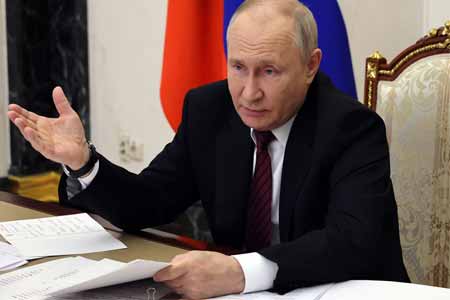 Putin: Armenia`s recognition of Karabakh as part of Azerbaijan in Prague has given Russia`s position on this issue an ambivalent character
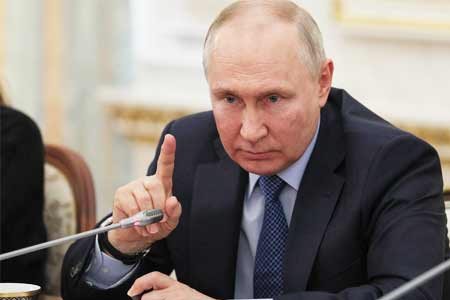 Putin: Armenia`s adoption of the law on EU accession means an announcement of its withdrawal from the Eurasian Economic Union
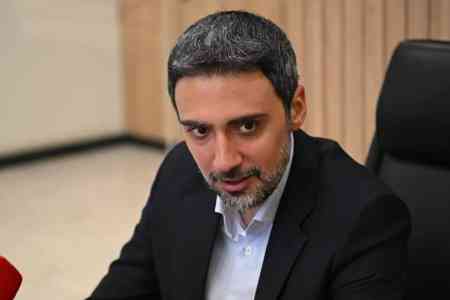 Aram Vardevanyan: Public demands solutions, not apology scandals in Parliament