
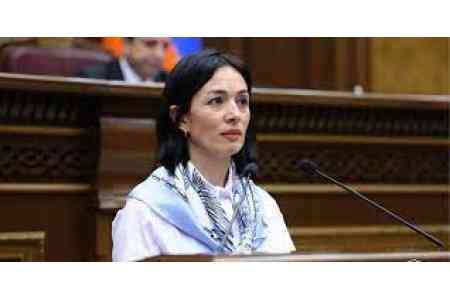
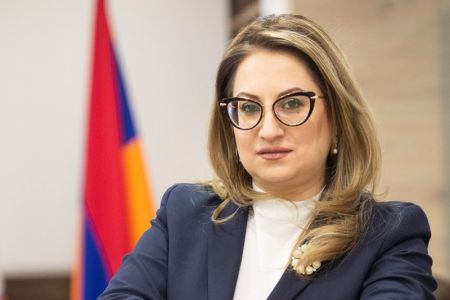
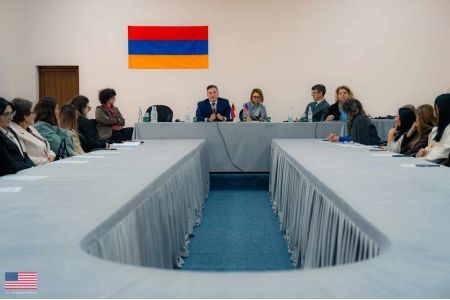
ArmInfo. The Ministry of Education, Science, Culture, and Sports (MESCS) encourages the study of regional languages, including Azerbaijani, in Armenian schools, as knowledge of them will help us better understand our region. Zhanna Andreasyan, head of the MESCS, stated this in a conversation with journalists, referring to the project adopted in 2021 to introduce regional languages in Armenian schools.
As Andreasyan noted, a great deal of work has been done since the project's adoption, including conducting research in the country's schools. "At that time, 400 schools expressed interest in this program, most of which chose Turkish as the regional language to study. However, due to staffing shortages, only about 30 schools were able to organize instruction in various regional languages," Andreasyan clarified.
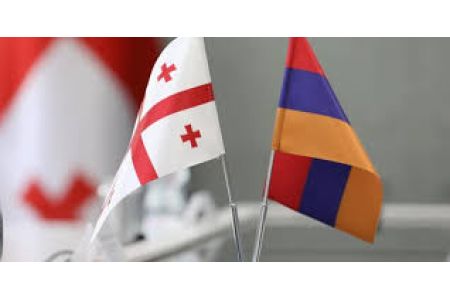
According to her, Persian is currently the most actively taught language. Andreasyan pointed out that this is due to close cooperation with the Iranian Embassy, which helps improve the skills of Persian teachers. "Today, we also have three schools teaching Georgian and three schools teaching Azerbaijani. And I can only encourage our schools to show greater interest in studying regional languages," Andreasyan emphasized.
The Minister, however, did not deny that information about the teaching of Azerbaijani and Turkish was perceived differently in the country than expected. According to her, this is due to the lack of proper publicity for such programs, which is why language learning is perceived not as an opportunity, but as a threat. "It's unfortunate that this information is being perceived in this context. We recognize that public debate is necessary for this information to be properly understood. Journalists also play a vital role in this matter, particularly in disseminating accurate information," the Minister added.
The head of the Ministry of Education, Science, and Youth Affairs also addressed concerns about the fact that language assignments are being made without regard for the students' own preferences. According to her, the problem stems from a shortage of relevant specialists. In this regard, Andreasyan men tioned that during the visit of the Georgian Minister of Education, Science, and Youth Affairs, the possibilities of training specialists in the Georgian language were discussed. "Just imagine how it will facilitate communication between people living in border communities. This could also contribute to strengthening economic and cultural ties," the Minister concluded.








 Expert: The arrest of opposition figures in Armenia for social media posts is a systematic attempt to intimidate the public and suppress dissent.
 Azerbaijani Studies Expert: While Azerbaijan Prepares Its Generation for War, Aliyev’s Aide Calls on Armenia to Prepare Armenian Society for “Peace”
 Turkologist: Azerbaijan will never, under any circumstances, stop pressuring the Armenian people
 Political scientist: We need to move away from the question of "when" and replace it with more important questions
 International Law Specialist: Azerbaijan intends to initiate legal proceedings against Armenia by sentencing Armenian prisoners
 Lukashenko called for Armenia to assume the CIS presidency in 2029
 Dmitry Medvedev predicted a Ukrainian-like fate for Armenia amid the country`s shift in foreign policy
 Russian Security Council: In Armenia, they want to force Russian asset owners to dispose of their assets
 Zakharova: Russia ready to discuss with Armenia the prospects for expanding military cooperation as part of a review of bilateral ties
 Tevanyan: Armenia, like Ukraine and Moldova, is being drawn into the EU’s global war
 Yerevan City Hall is considering introducing a valet parking system in the city
 Expert: The circus surrounding the “Albanization” of Armenian culture in the presence of foreign ambassadors in occupied Artsakh is genocide
 Political scientist: If Russian-Armenian relations are destroyed, Turkey will take Russia`s place
 Political scientist: The Armenian public is simply obliged to significantly change the entire content of public discourse and struggle
 Cross tattoos are being removed from the skin of Christian prisoners in Azerbaijan by fire, according to a human rights activist.
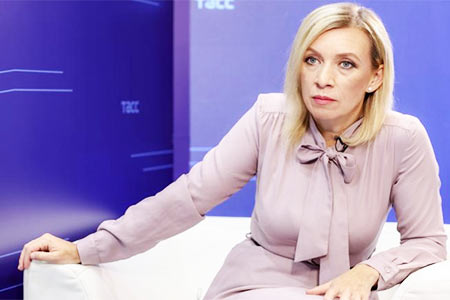 Zakharova: Armenia`s likely introduction of visas with Russia will be a step against Yerevan itself
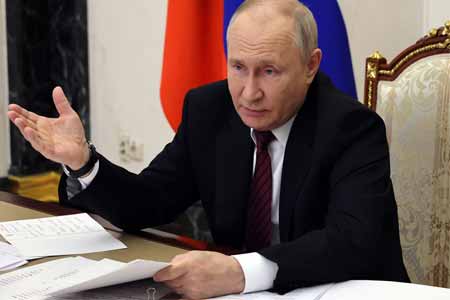 Putin: Armenia`s recognition of Karabakh as part of Azerbaijan in Prague has given Russia`s position on this issue an ambivalent character
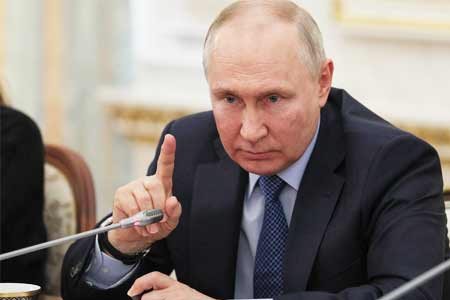 Putin: Armenia`s adoption of the law on EU accession means an announcement of its withdrawal from the Eurasian Economic Union
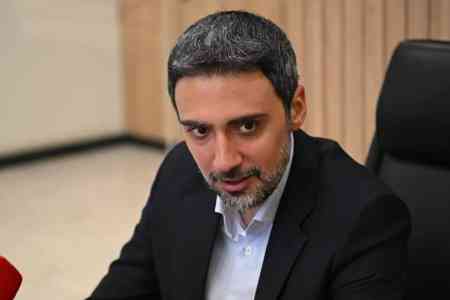 Aram Vardevanyan: Public demands solutions, not apology scandals in Parliament