

ArmInfo. The Armenian Criminal Court of Appeals has recorded a violation by the penitentiary institution of Archbishop Mikael Ajapahyan's right to defense, guaranteed by the Constitution of Armenia and the Criminal Procedure Code of the Republic, as stated by Ara Zohrabyan, the lawyer representing the Archbishop.
According to him, as revealed during the course of representing Archbishop Mikael, vicious practices are widespread in penitentiary institutions. "Penitentiary staff examine (censor) documents handed over by lawyers to detained clients. Moreover, if the handed over materials, in the opinion of penitentiary staff, are not directly related to the criminal case, they confiscate them from the detainee," Zohrabyan wrote on his Facebook page.
The lawyer added that he raised this issue after learning that the materials he provided to Archbishop Michael had been examined by penitentiary staff. Zohrabyan noted that he has filed a complaint with the court of first instance regarding this matter. It is assigned to Judge Masis Melkonyan, who arrested the archbishop. "As expected from Masis Melkonyan, he found no violations and dismissed my complaint. Meanwhile, Judge Lusine Abgaryan of the Criminal Court of Appeals of Armenia upheld the complaint in her decision of October 6, 2025, overturning Judge Masis Melkonyan's decision and confirming the violation of Mikael Ajapahyan's rights and legitimate interests. Furthermore, the Court of Appeals has ordered the head of the Yerevan-Kentron penitentiary institution to take measures to eliminate the documented violations," the lawyer emphasized.
Zohrabyan also cited several examples from the court's response. The lawyer specifically pointed out that court had cited guarantees that include the defendant's right to unimpeded confidential meetings with their defense attorney and the right to possess documents and records related to the criminal proceedings or the protection of their rights and legitimate interests. "In this context, the Court of Appeal considers it logical that the lawyer and his client have the right to protect attorney-client privilege and communicate with each other freely, whether through correspondence or any other means. The prison administration and its staff are responsible for providing separate, unhindered, and private conditions for their interactions," the court's response stated. Furthermore, it noted that the administration and staff of the penal institution didn't have the authority to inspect the documents that the lawyer provided to his client, Mikael Ajapahyan.













 Expert: Current process is not about peace, but implementing Azerbaijan`s wishlist
 Expert: Real peace unattainable until Armenia-Azerbaijan agreement is signed and ratified
 TRIPP`s proximity to Iranian border could slow its implementation - expert
  Who and why is sacrificing RA National Security Service`s reputation? - expert
  Tehran creating security environment in which sustainable shipping in Strait of Hormuz difficult to imagine without its direct participation - expert
  Arrested Armenian oligarch on economy and new jobs
  NA Vice Speaker candidate believes his wife`s salary as director of HayPost is the lowest in the company`s history
 RF Permanent Representative: There is no CSTO-Armenia conflict
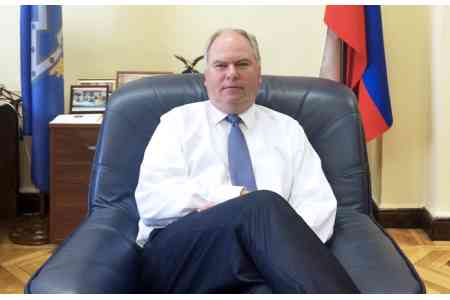 Moscow: NATO seeking to "Pull" Armenia away from CSTO Allies
 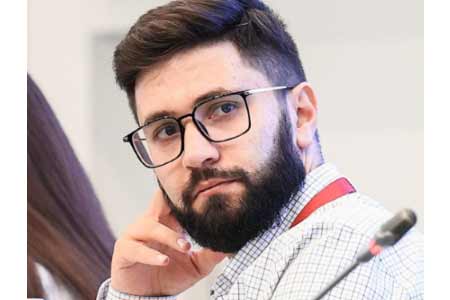 Political analyst: Russia intends to determine which "Camp" Armenia will choose through a referendum
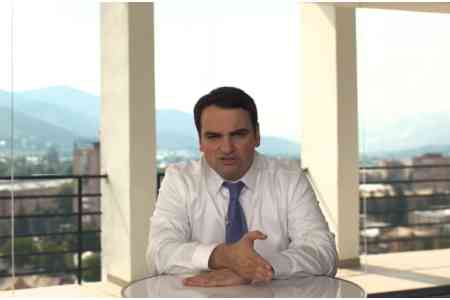 Narek Karapetyan will give up his parliamentary salary in favor of charitable contributions.
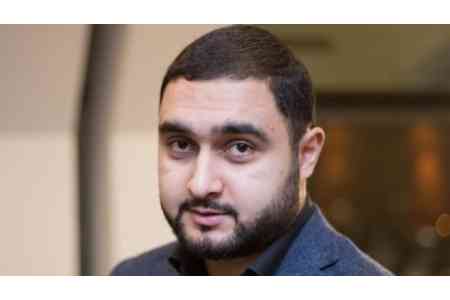 Armenian analyst: Developing relations with Europe and the U.S. must not jeopardize relations with regional powers
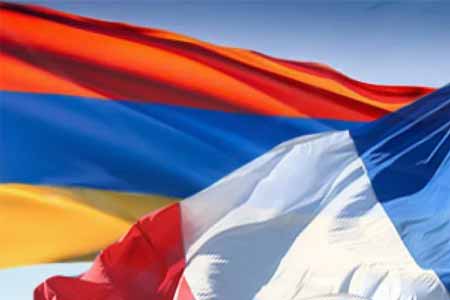 Armenia and France discuss further development of strategic partnership and EU cooperation
  To overcome risks Armenia must reduce domestic escalation - expert
  Zatulin: Pashinyan was eager to get back to Russia because he actually lost the elections
 Human rights activist Ruben Melikyan dismissed from YSU
 Pashinyan removed from INNOPROM guest list
 Zakharova: Armenia`s pro-EU pivot poses economic security risks to EAEU member states
 It`s time for South Caucasus countries to think of South Caucasus as single, unified region - RA premier
  Pashinyan: Armenia and Azerbaijan should leave each other alone