
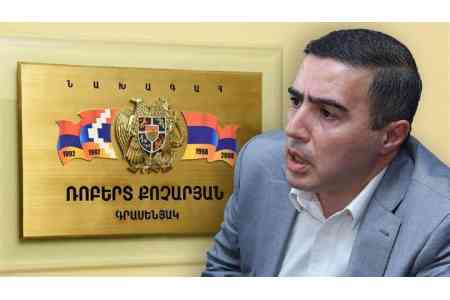
ArmInfo. Commenting on the European Court of Human Rights (ECHR) ruling in the "March 1" case at a press conference on October 7, Armenia's second president, Robert Kocharyan, noted that the key point of the ECHR's decision is the state's failure to make sufficient efforts to solve these deaths. Bagrat Mikoyan, head of the second president's office, told Yerevan.
Today this in response to a "fact-check" conducted by a media outlet following Kocharyan's statement that the main point of the ruling is that the state failed to make sufficient efforts to solve the deaths, and that the second president's statement misled the public. "I've read the latest 'fact-check.' Has anyone ever claimed that the right to life of those killed on March 1 wasn't violated or that a tragedy didn't occur? The ECHR's decision essentially documented circumstances that were already obvious, and no 'fact-check' was required to see them," Mikoyan said.
According to him, the former president noted that the key point of the ECHR's decision is the state's failure to make sufficient efforts to solve these deaths.
"The European Court even suggested that the circumstances of one of the demonstrators' deaths could have been linked to violent actions by non-peaceful protesters, while also noting the lack of an effective investigation." "All this proves that if the circumstances of the deaths were revealed, it would become clear who exactly violated the right to life and under what circumstances-it's all extremely simple," he noted.
Mikoyan noted that the ECHR decision clearly demonstrates that, beginning in 2018, the state concealed from the court facts contained in the criminal case and known to the entire public, such as the use of grenades and firearms by protesters.
"These facts could have been directly related to the deaths of the first person killed that day-a police captain who died from a grenade explosion, and another police officer who died from a gunshot wound. Unlike previous decisions, this one explicitly states that the demonstrations cannot be considered entirely peaceful; there were protesters who used violence, throwing stones, Molotov cocktails, and other objects at police, causing serious damage to public and private property."
It's clear that the state failed to provide adequate protection, as the president stated directly at the press conference. It's important to note that the ECHR itself has repeatedly stated that the court was not provided with sufficient information. Without these facts, the ECHR's decision becomes highly questionable and vulnerable and will sooner or later require review. And yes, the government led by Nikol Pashinyan has made no effort whatsoever to solve the cases of the March 1 deaths for over seven years. "The fact is this, and it doesn't require verification," Mikoyan concluded.
On September 18, the ECHR published its decision in the case of Farmanyan v. Armenia, concerning the deaths of people during mass protests in Yerevan in 2008 as a result of the indiscriminate and disproportionate use of force by the police. The verdict identified a number of violations by the Republic of Armenia, including violations of the right to life.
15 years ago, following the presidential elections held on February 19, which were won by Serzh Sargsyan, unrest broke out in Yerevan, culminating in clashes with law enforcement. The Armenian opposition, led by first president Levon Ter-Petrosyan, who also ran in the election, held rallies in central Yerevan from February 20, expressing dissatisfaction with the election results. The protests culminated in riots and clashes between protesters and law enforcement on March 1-2, resulting in 10 deaths. Over 200 people, including police officers, were injured to varying degrees of severity.
On August 17, 2018, Nikol Pashinyan announced that the case surrounding the events of March 1-2, 2008, in Yerevan had been fully resolved.




















 Expert: Current process is not about peace, but implementing Azerbaijan`s wishlist
 Expert: Real peace unattainable until Armenia-Azerbaijan agreement is signed and ratified
 TRIPP`s proximity to Iranian border could slow its implementation - expert
  Who and why is sacrificing RA National Security Service`s reputation? - expert
  Tehran creating security environment in which sustainable shipping in Strait of Hormuz difficult to imagine without its direct participation - expert
  Arrested Armenian oligarch on economy and new jobs
 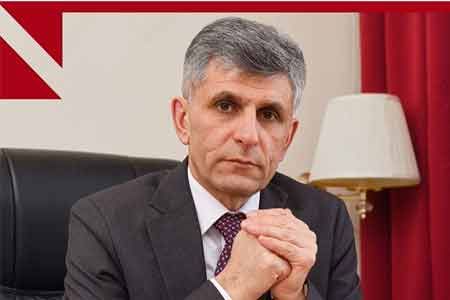 "In Baku, we gave a worthy rebuff to the false claims regarding the past and present of our people" – Former Artsakh Parliament Speaker from Baku captivity
  NA Vice Speaker candidate believes his wife`s salary as director of HayPost is the lowest in the company`s history
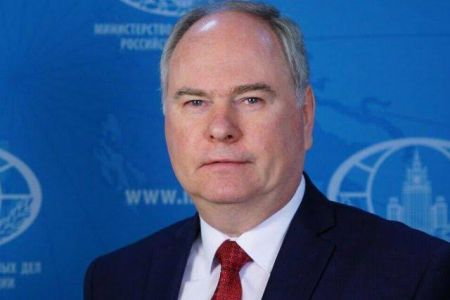 RF Permanent Representative: There is no CSTO-Armenia conflict
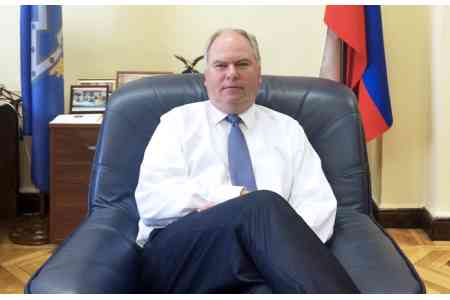 Moscow: NATO seeking to "Pull" Armenia away from CSTO Allies
  Political analyst: Russia intends to determine which "Camp" Armenia will choose through a referendum
 Narek Karapetyan will give up his parliamentary salary in favor of charitable contributions.
 Armenian analyst: Developing relations with Europe and the U.S. must not jeopardize relations with regional powers
 Armenia and France discuss further development of strategic partnership and EU cooperation
  To overcome risks Armenia must reduce domestic escalation - expert
  Zatulin: Pashinyan was eager to get back to Russia because he actually lost the elections
 Human rights activist Ruben Melikyan dismissed from YSU
 Pashinyan removed from INNOPROM guest list
 Zakharova: Armenia`s pro-EU pivot poses economic security risks to EAEU member states