
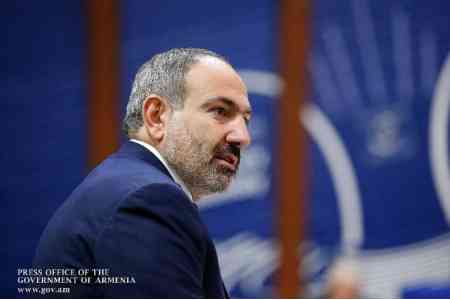
ArmInfo. Since the 2018 popular revolution in Armenia, the government has not even attempted to falsify the elections, RA Prime Minister Nikol Pashinyan assured the Parliamentary Assembly of the Council of Europe.
According to Pashinyan, during this period, two parliamentary elections and local self-government elections have been held in Armenia. "The 2018 and 2021 parliamentary elections were assessed by the international community as free, competitive, and in line with democratic standards, which was, in fact, unprecedented in our history. There were no protests related to the local elections results; opposition parties won in a number of communities, which was essentially impossible before the 2018 revolution," the Prime Minister stated.
Furthermore, he noted, the concept of a "post-electoral process" has disappeared from Armenia's political life, where people associated change with post-electoral processes, knowing that the elections would be rigged by the authorities.
Additionally, he emphasized that electoral democracy in Armenia is not without its challenges. "The practice of distributing electoral bribes by certain forces in Armenia continues. The problem here is not only that law enforcement agencies have to expend enormous effort to detect such cases, but also the lack of practical mechanisms to determine the extent to which electoral bribes influence election results. As a result, practical mechanisms for excluding forces distributing electoral bribes from the political and electoral process are either absent or unclear, and the implementation of such mechanisms could be perceived as an attempt to control the elections," Pashinyan noted. According to the Prime Minister, in this case, the presence in parliament or local government bodies of individuals who obtained mandates through electoral bribes is perceived as democracy's vulnerability.










 Opinion: Following Berlin talks, Baku gains expanded influence within EU and strengthens cooperation ties with main European powerhouse
 Armenian expert: Could modern Azerbaijan even exist without Russian and Soviet modernization?
 Zatulin: Pashinyan was eager to get back to Russia because he actually lost the elections
 Human rights activist Ruben Melikyan dismissed from YSU
 Pashinyan removed from INNOPROM guest list
 Zakharova: Armenia`s pro-EU pivot poses economic security risks to EAEU member states
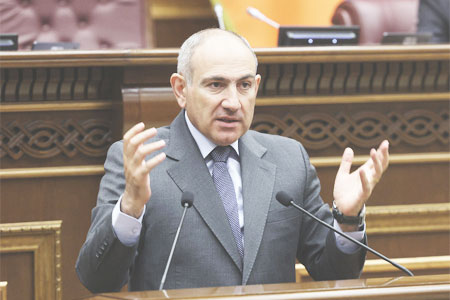 It`s time for South Caucasus countries to think of South Caucasus as single, unified region - RA premier
  Pashinyan: Armenia and Azerbaijan should leave each other alone
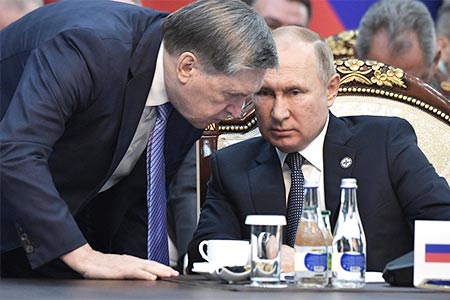 Moscow sees situation with Armenia as attempt to attack Russia-involving integration associations - Russian presidential aid
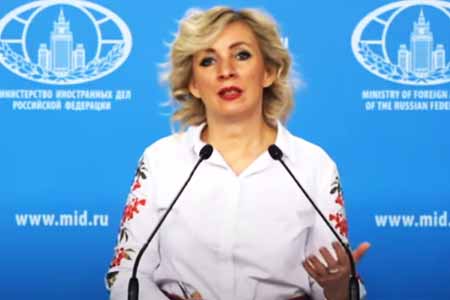 Zakharova: Armenia views relations with Russia as tool for financially securing reorientation toward EU
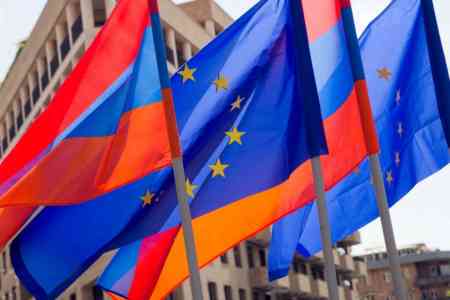 The Armenian Minister of Justice and the EU Ambassador discussed visa liberalization issues for Yerevan.
 Azerbaijan`s aggressive plans against Armenia became possible in wake of Pashinyan`s decisions on Artsakh - expert
  Zakharova: Russia sent a note of protest to Armenia over the act of vandalism at the "Mother Armenia" memorial in Gyumri
 Samvel Karapetyan proposes creating a post-election opposition coalition