
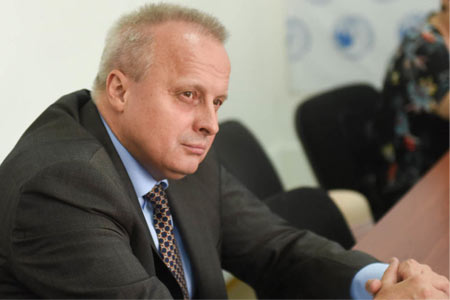
ArmInfo.Strengthening peace and stability in the South Caucasus is one of the fundamental priorities of Russia's foreign policy, as stated by Russian Ambassador to Armenia Sergey Kopyrkin in an interview with the "Syunyats Yerkir" newspaper.
According to him, within this framework, Moscow naturally supports any efforts aimed at normalizing relations between Armenia and Azerbaijan.
"Regarding the so-called 'Trump Route,' Russia's position will be formulated once we have a detailed understanding of how this transport project will be implemented. As far as we know, this work is only just beginning. Details regarding cargo and passenger transit regimes and traffic safety have yet to be agreed upon. Efforts to unblock transport links in the region will require consideration of the circumstances surrounding Armenia's membership in the EAEU, as well as the presence of Russian border guards on the Armenian-Iranian border, based on bilateral documents. I would also like to add that the Russian side is open to consultations on these issues with both Armenian partners and other interested parties, including Tehran," the Russian Ambassador said.
When asked whether the statement of November 9, 2020, and the Washington Declaration of August 8, 2025 could function jointly, Kopyrkin recalled that Russia and President Vladimir Putin had personally laid the foundation for the Armenian-Azerbaijani reconciliation process. According to him, the trilateral agreements reached by the leaders of Russia, Armenia, and Azerbaijan in 2020-2022 not only stopped the bloodshed on the ground but also defined the main directions for the normalization process between Yerevan and Baku, including the development of a peace treaty, the unblocking of economic and transport communications, the delimitation and demarcation of the border, and the development of civil society contacts.
"The provisions of these agreements remain relevant today. None of the leaders has withdrawn their signatures from the relevant statements. How they will correlate in practice with the Washington Declaration of August 8, 2025, is a subject of discussion among the parties involved. We proceed from the assumption that mutually acceptable solutions will be found by mutual agreement and on terms that meet the interests of both Azerbaijan and Armenia, as well as all regional powers, including Russia and Iran, which are actively cooperating within the EAEU," the Ambassador stated. He hastened to mention the "3+3" regional cooperation platform, involving the countries of the South Caucasus and their immediate neighbors, a platform that provides an opportunity for substantive discussions on pressing regional issues. He noted that the Russian side expects their Armenian and Azerbaijani partners to determine the order in which to host the next meeting at the level of foreign ministers in this format as soon as possible.
"Separating Russia from the South Caucasus is a clearly senseless undertaking. Neither geography, shared history, nor the depth of Russia's multifaceted ties with the Transcaucasian states allow this. Nevertheless, certain external players express such absurd ideas, only revealing their own aspirations and a lack of understanding of regional realities. I reiterate: Russia's inextricable link with the South Caucasus predetermines our vital interest in lasting peace and stability in the region, in its prosperity and the unleashing of its transport potential," Kopyrkin concluded.















 Expert: The arrest of opposition figures in Armenia for social media posts is a systematic attempt to intimidate the public and suppress dissent.
 Azerbaijani Studies Expert: While Azerbaijan Prepares Its Generation for War, Aliyev’s Aide Calls on Armenia to Prepare Armenian Society for “Peace”
 Turkologist: Azerbaijan will never, under any circumstances, stop pressuring the Armenian people
 Political scientist: We need to move away from the question of "when" and replace it with more important questions
 International Law Specialist: Azerbaijan intends to initiate legal proceedings against Armenia by sentencing Armenian prisoners
 Lukashenko called for Armenia to assume the CIS presidency in 2029
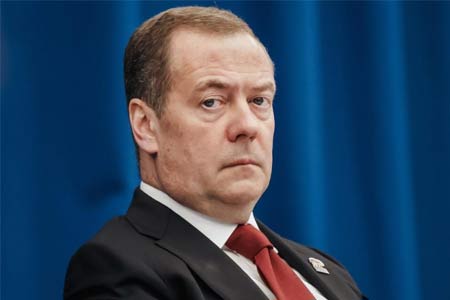 Dmitry Medvedev predicted a Ukrainian-like fate for Armenia amid the country`s shift in foreign policy
 Russian Security Council: In Armenia, they want to force Russian asset owners to dispose of their assets
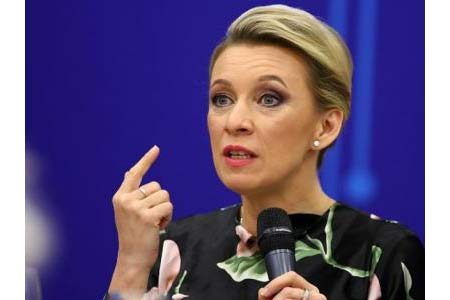 Zakharova: Russia ready to discuss with Armenia the prospects for expanding military cooperation as part of a review of bilateral ties
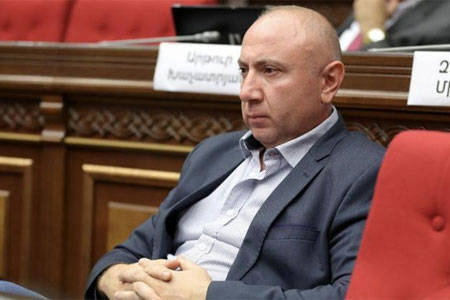 Tevanyan: Armenia, like Ukraine and Moldova, is being drawn into the EU’s global war
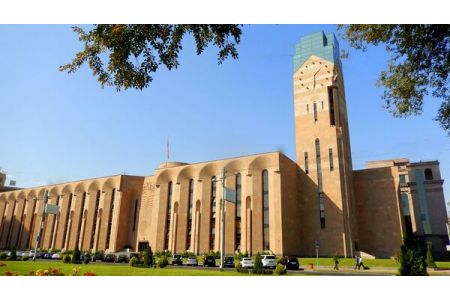 Yerevan City Hall is considering introducing a valet parking system in the city
 Expert: The circus surrounding the “Albanization” of Armenian culture in the presence of foreign ambassadors in occupied Artsakh is genocide
 Political scientist: If Russian-Armenian relations are destroyed, Turkey will take Russia`s place
 Political scientist: The Armenian public is simply obliged to significantly change the entire content of public discourse and struggle
 Cross tattoos are being removed from the skin of Christian prisoners in Azerbaijan by fire, according to a human rights activist.
 Zakharova: Armenia`s likely introduction of visas with Russia will be a step against Yerevan itself
 Putin: Armenia`s recognition of Karabakh as part of Azerbaijan in Prague has given Russia`s position on this issue an ambivalent character
 Putin: Armenia`s adoption of the law on EU accession means an announcement of its withdrawal from the Eurasian Economic Union
 Aram Vardevanyan: Public demands solutions, not apology scandals in Parliament