
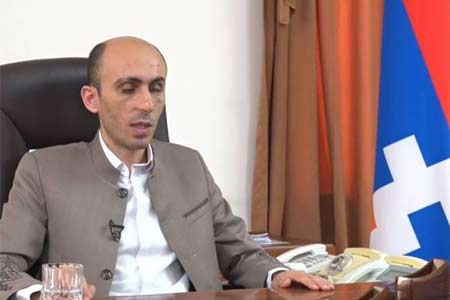
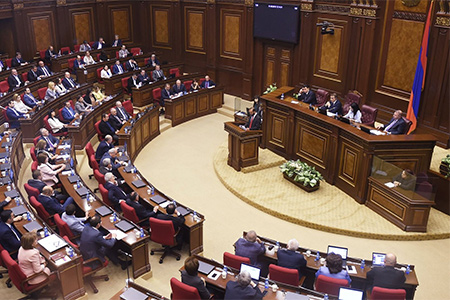
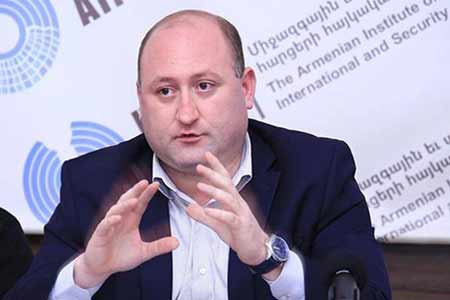
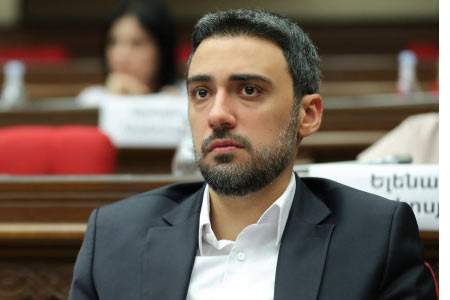
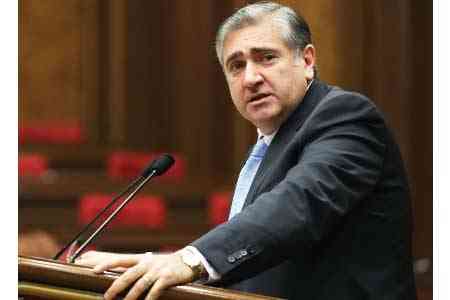
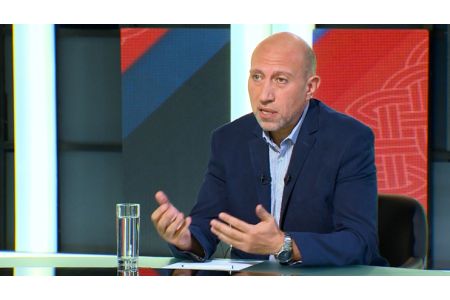
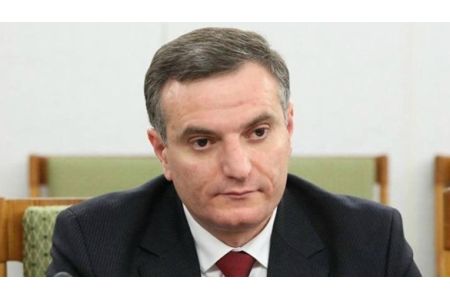
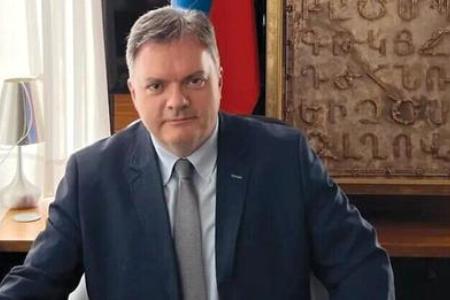
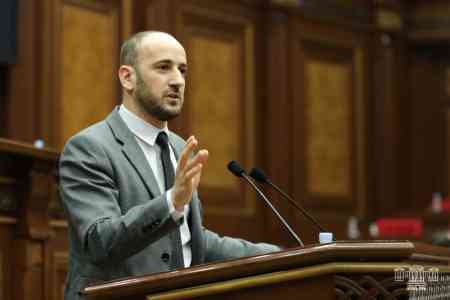
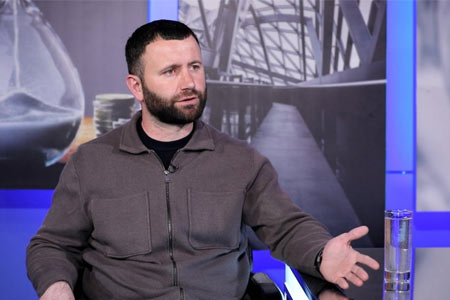
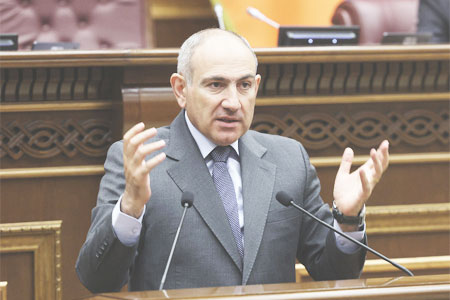
ArmInfo. Artak Beglaryan, head of the Artsakh Union NNGO and former NKR Ombudsman, presented the results of the Armenian authorities' policy in ensuring the rights of the Artsakh people during a parliamentary hearing on the draft law "On the National Crisis and Failure of Governance."
The head of the Union noted that it is precisely as a result of the ruling regime's actions that Artsakh is temporarily under Azerbaijani occupation. Regarding the current situation, he noted that it can be viewed in three ways.
Firstly, as Beglaryan noted, after the forced displacement, that people of Artsakh are not perceived as citizens by the authorities; moreover, they are denied their inherent right to return.
In this vein, the former NKR Ombudsman mentioned that this inherent right is essentially being denied by the ruling regime, despite the International Court of Justice ruling that the forcibly displaced population of Artsakh has the right to return. "Therefore, with this ruling, the Republic of Armenia has assumed an additional obligation to implement this right," the former Artsakh Ombudsman noted.
Beglaryan noted that in the negotiation process, it is not Azerbaijan, but Armenia, that should dictate its terms, demanding international security guarantees for return. However, as the head of the Artsakh Union NGO continued, the draft peace treaty does not contain a single clause regarding either ethnic cleansing or the right of return.
Secondly, the Armenian authorities have failed to resolve the humanitarian issues of the Artsakh people, as they have deprived the NKR population of financial assistance. This has resulted in poverty levels among the Artsakh population exceeding 80%. "And this is at a time when the average poverty rate in Armenia is around 23%," Beglaryan noted, adding that this has ultimately led to increased emigration.
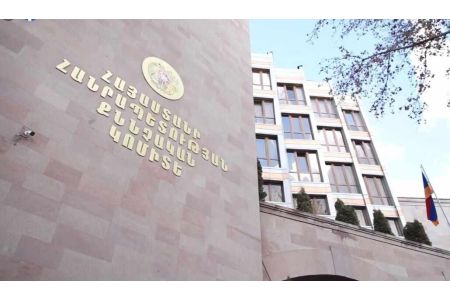
This, as the head of the Artsakh Union noted, is a consequence of the failure of the Armenian government's programs, particularly in regards to housing and employment. Beglaryan also highlighted the issue of hate speech spread directed towards the Artsakh population. "When the people of Artsakh raised their voices to be heard, hate speech against them increased. However, neither the Investigative Committee nor the Prosecutor's Office did anything to stop such situations. Meanwhile, when representatives of the ruling party were affected, immediate action was taken," Beglaryan concluded.








 Analyst: The primary issue with Armenia`s new Parliament Speaker`s speech lies is its one-sided interpretation of the causes of the political crisis
 Expert: Gagik Tsarukyan embodies post-Soviet model of big business-state relations; this model is used in many other post-Soviet countries
 NA Vice Speaker candidate believes his wife`s salary as director of HayPost is the lowest in the company`s history
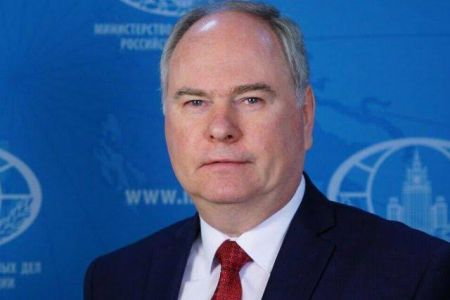 RF Permanent Representative: There is no CSTO-Armenia conflict
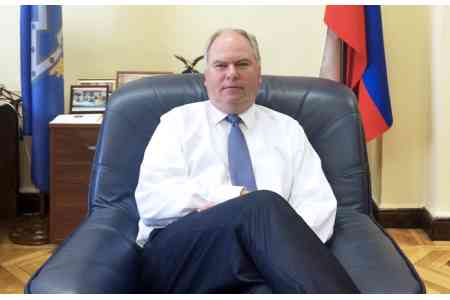 Moscow: NATO seeking to "Pull" Armenia away from CSTO Allies
 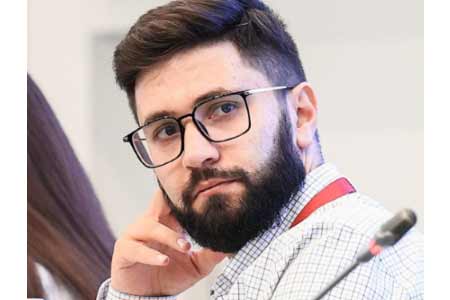 Political analyst: Russia intends to determine which "Camp" Armenia will choose through a referendum
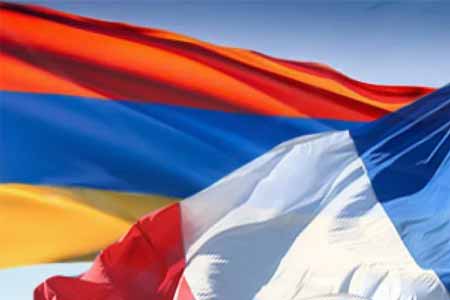 Armenia and France discuss further development of strategic partnership and EU cooperation
  To overcome risks Armenia must reduce domestic escalation - expert
  Zatulin: Pashinyan was eager to get back to Russia because he actually lost the elections
 Human rights activist Ruben Melikyan dismissed from YSU
 Zakharova: Armenia`s pro-EU pivot poses economic security risks to EAEU member states
 It`s time for South Caucasus countries to think of South Caucasus as single, unified region - RA premier
  Pashinyan: Armenia and Azerbaijan should leave each other alone