


ArmInfo. From January to August of this year, tacit refusals by government agencies to provide information increased by 10.5%. This was stated in a statement by the Freedom of Information Center.
On the occasion of International Freedom of Information Day, celebrated annually on September 28, the non-governmental organization presented key issues in this area that require immediate solutions.
The Freedom of Information Center identified incomplete and unsubstantiated responses as one of the key problems. "In some cases, government agencies holding information provide incomplete or general responses to information requests. Although applicants receive responses within the legally established timeframes, the requested information is not actually received. In many cases, refusals are unsubstantiated or inadequately substantiated. This year, the number of tacit refusals has increased significantly - 10.5%, according to data for January-August 2025," the statement reads. Another problem raised by the NGO is the failure to provide information on time. "At least half of requests for information are responded to after the deadline has passed. There have been cases where responses to requests were provided several months later. Furthermore, government agencies sometimes abuse the right to redirect information, as well as the right to delay responses established by law, without proper justification. Almost every other request receives a response within an additional 30 days, which is a serious obstacle, especially for the professional activities of journalists," the Center emphasized.
Insufficient proactive advertising is also cited as a problem. It is noted that many government agencies fail to publish information required by law in a timely and complete manner, or publish it incompletely, while the format, timing, and content of publications make the information unclear, inaccessible, or unusable.
The Freedom of Information Center also noted the ineffective use of digital tools (e-request.am), the lack of unified statistics, and the absence of an independent authorized body or freedom of information commissioner.
"Citizens lack a fast and effective mechanism for extrajudicial protection, and court appeals are time- consuming and expensive. The importance of an extrajudicial mechanism is also mentioned in the 5th report of the Council of Europe's Group of States against Corruption (GRECO), in which recommendations for Armenia include an independent assessment of the implementation of freedom of information legislation, the publication of statistics on refusals, and the creation of an independent oversight body. The government's passivity exacerbates systemic problems and hinders the full implementation of the RA Law on Freedom of Information," the Center stated.



























 Expert: Economic pressure on Armenia may be virtually painless for other EAEU members, but not for Armenia itself
 Expert on protests in France: Civilizations fade when society loses a vision of the future
 Turkologist: Azerbaijan is not all-powerful—its vulnerabilities should become part of Armenia’s security strategy
 Opinion: The development of the Amulsar mine near the resort town of Jermuk is the beginning of an environmental disaster in Armenia
 Expert: The arrest of opposition figures in Armenia for social media posts is a systematic attempt to intimidate the public and suppress dissent.
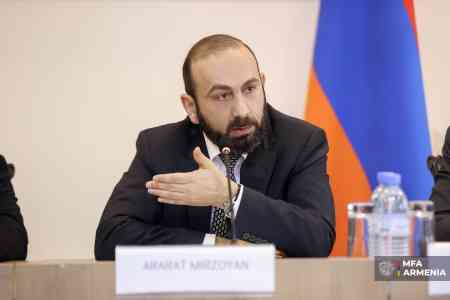 The Armenian Foreign Minister commented on the country`s return to work within the CSTO.
 The Artsakh Public Council expressed outrage at the UN Secretary-General`s behavior
 Lukashenko called for Armenia to assume the CIS presidency in 2029
 Dmitry Medvedev predicted a Ukrainian-like fate for Armenia amid the country`s shift in foreign policy
 Russian Security Council: In Armenia, they want to force Russian asset owners to dispose of their assets
 Zakharova: Russia ready to discuss with Armenia the prospects for expanding military cooperation as part of a review of bilateral ties
 Tevanyan: Armenia, like Ukraine and Moldova, is being drawn into the EU’s global war
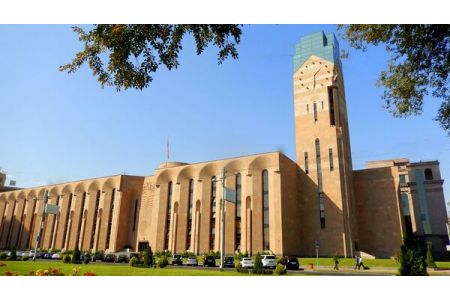 Yerevan City Hall is considering introducing a valet parking system in the city
 Expert: The circus surrounding the “Albanization” of Armenian culture in the presence of foreign ambassadors in occupied Artsakh is genocide
 Political scientist: If Russian-Armenian relations are destroyed, Turkey will take Russia`s place
 Political scientist: The Armenian public is simply obliged to significantly change the entire content of public discourse and struggle
 Cross tattoos are being removed from the skin of Christian prisoners in Azerbaijan by fire, according to a human rights activist.
 Zakharova: Armenia`s likely introduction of visas with Russia will be a step against Yerevan itself
 Putin: Armenia`s recognition of Karabakh as part of Azerbaijan in Prague has given Russia`s position on this issue an ambivalent character
 Putin: Armenia`s adoption of the law on EU accession means an announcement of its withdrawal from the Eurasian Economic Union