
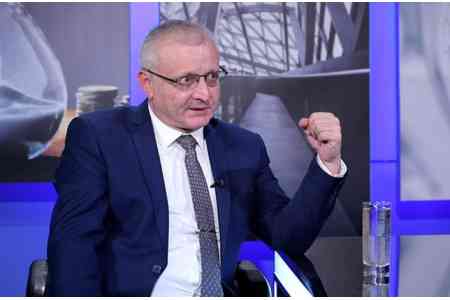
ArmInfo. According to political scientist Suren Surenyants, Prime Minister Nikol Pashinyan has escalated the domestic political debate to a level that could threaten Armenia's national security, with his question to former presidents of the Republic of Armenia.
"His words, 'If I dragged Armenia into war, why was an 18-year-old Armenian soldier outside the sovereign territory of the Republic of Armenia in 2018,' sounded like a direct repetition of Baku propaganda, disguised within domestic political arguments. This formulation essentially confirms Azerbaijan's main thesis that Armenia 'forcibly occupied Azerbaijani territories.' Essentially, Pashinyan not only distorts the essence of the Nagorno-Karabakh issue but also speaks out against Armenia on international platforms, portraying us as an 'aggressor' and 'occupier.' This is not only politically dangerous but could also have legal consequences," the political scientist believes.
He added that every word the Armenian leader says is perceived as an official position and can be used against Armenia. Surenyants noted that Pashinyan's words distort the essence of the Nagorno-Karabakh conflict. "The Armenian soldier stationed in Artsakh was not on 'foreign territory.' He was defending the security of the Armenian people and the right of the people of Artsakh to self-determination, which is a fundamental principle of international law. The Nagorno-Karabakh issue is based on the right to self- determination, outlined in several important international documents, including the UN Charter (Article 1.2)-the principle of equal rights and self-determination of peoples; UN General Assembly Resolution No. 1514 (1960)-the Declaration on the Liberation of Peoples from Colonialism, which enshrines the right of peoples to freely choose their future; and the Helsinki Final Act (1975), according to which equal rights and self-determination of peoples are an integral foundation of international relations.
These documents prove that the struggle of the Armenians of Artsakh can under no circumstances be considered an 'occupation,' but rather a legitimate right to ensure their own existence and future," the political scientist emphasized. Surenyants believes that Pashinyan has set an extremely dangerous precedent, as such statements, made within the context of domestic political disputes, are transformed into external threats. Azerbaijan has long been trying to convince the world that this is a matter of "occupation." "When the Armenian leader uses such language, he unwittingly reinforces this propaganda, effectively speaking out against Armenia on international platforms. Nikol Pashinyan's remarks demonstrate that words used in domestic political discussions can become a factor threatening national security. Armenian society and the opposition must clearly state that the Nagorno-Karabakh issue was never a matter of "occupation." It was about the right to self-determination and the security of the people," the expert concluded.








 Expert: Current process is not about peace, but implementing Azerbaijan`s wishlist
 Expert: Real peace unattainable until Armenia-Azerbaijan agreement is signed and ratified
 TRIPP`s proximity to Iranian border could slow its implementation - expert
  Who and why is sacrificing RA National Security Service`s reputation? - expert
  Tehran creating security environment in which sustainable shipping in Strait of Hormuz difficult to imagine without its direct participation - expert
  Arrested Armenian oligarch on economy and new jobs
 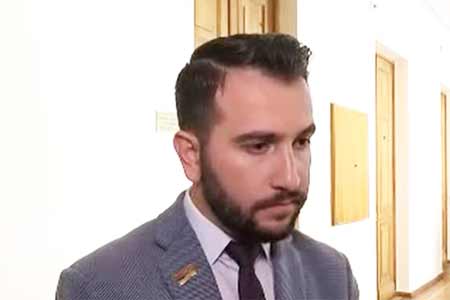 NA Vice Speaker candidate believes his wife`s salary as director of HayPost is the lowest in the company`s history
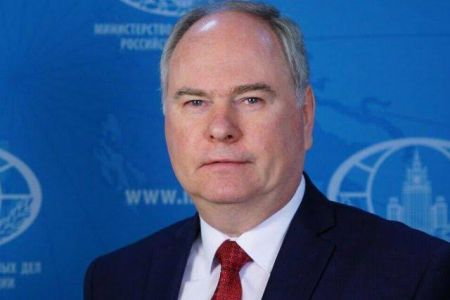 RF Permanent Representative: There is no CSTO-Armenia conflict
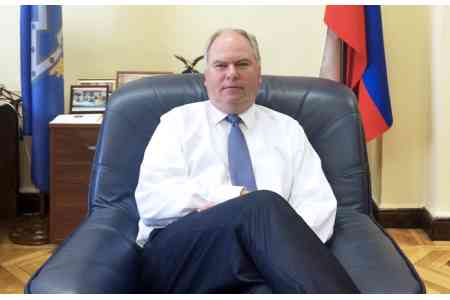 Moscow: NATO seeking to "Pull" Armenia away from CSTO Allies
 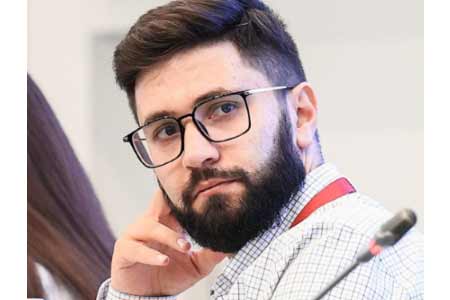 Political analyst: Russia intends to determine which "Camp" Armenia will choose through a referendum
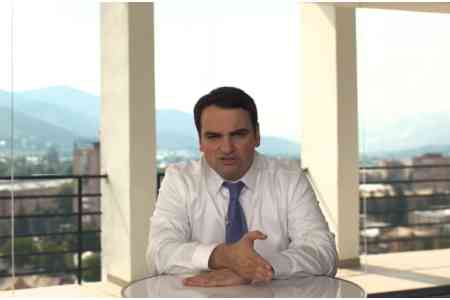 Narek Karapetyan will give up his parliamentary salary in favor of charitable contributions.
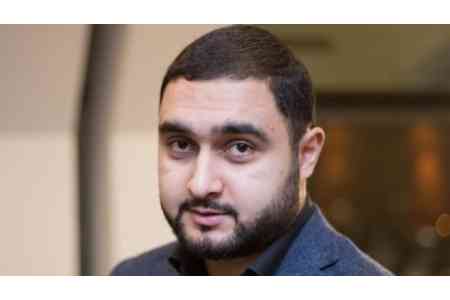 Armenian analyst: Developing relations with Europe and the U.S. must not jeopardize relations with regional powers
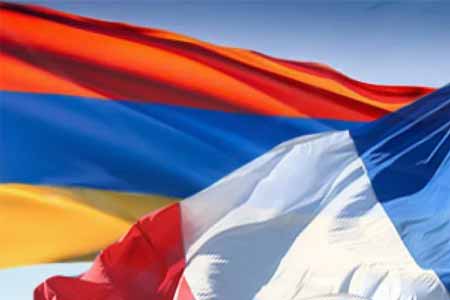 Armenia and France discuss further development of strategic partnership and EU cooperation
 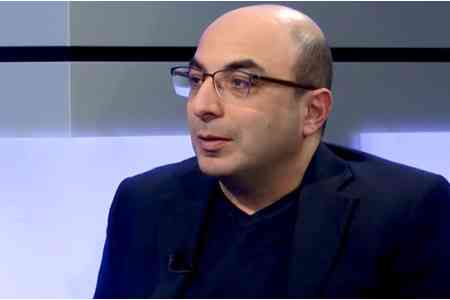 To overcome risks Armenia must reduce domestic escalation - expert
 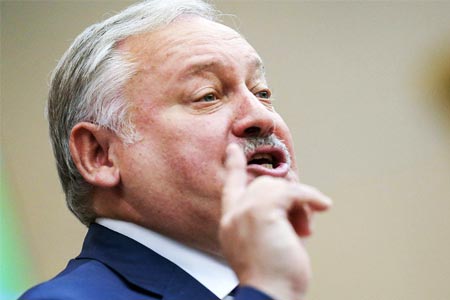 Zatulin: Pashinyan was eager to get back to Russia because he actually lost the elections
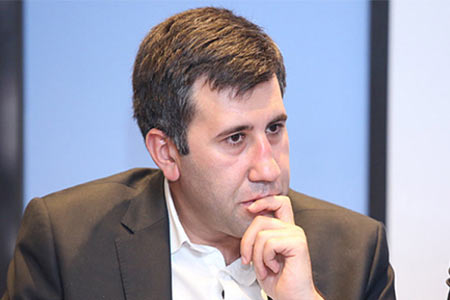 Human rights activist Ruben Melikyan dismissed from YSU
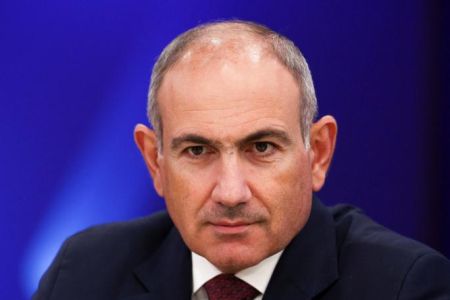 Pashinyan removed from INNOPROM guest list
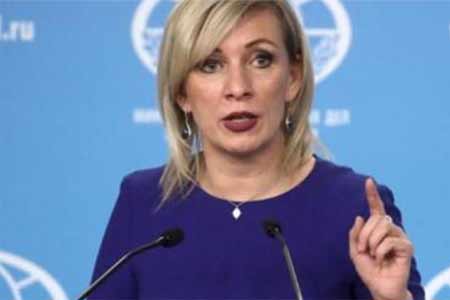 Zakharova: Armenia`s pro-EU pivot poses economic security risks to EAEU member states
 It`s time for South Caucasus countries to think of South Caucasus as single, unified region - RA premier
  Pashinyan: Armenia and Azerbaijan should leave each other alone