


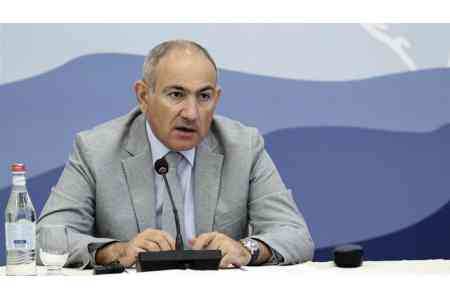
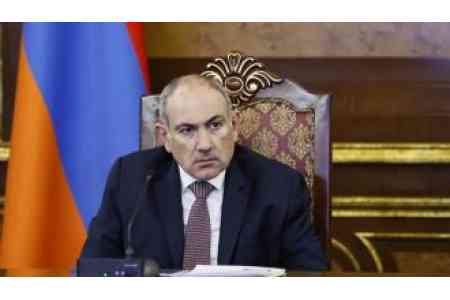
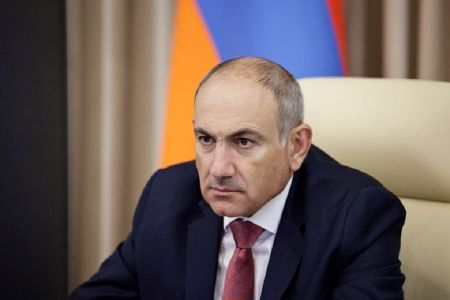
ArmInfo. For many years, Armenia has been convinced that military-political alliances and the army are of primary importance in reducing the country's vulnerability in terms of security. However, history has shown that this formula has failed on either the first or second point. This was stated by RA Prime Minister Nikol Pashinyan on September 15 at the opening of the international conference "Comprehensive Security and Confrontation - 2025" in Yerevan.
On the first point, he noted, the CSTO even recorded that it "considers Azerbaijan the same fraternal country as Armenia" and "recognizes the territorial integrity of Azerbaijan". The latter statement, including regarding the fact that Nagorno-Karabakh is part of Azerbaijan, was confirmed by the Russian President on November 18 and December 17, 2020, when he stated that the territory of Nagorno-Karabakh is part of Azerbaijan from the standpoint of international law, Pashinyan added.
"That is, this primary security concept - a military-political alliance in the context of the Nagorno-Karabakh conflict, did not work," he pointed out, noting that if the RA had been more attentive, they would have been able to foresee these developments long before these events.
The events of May 2021 and September 2022 also speak in favor of the ineffectiveness of this formula. Then Armenia turned to the CSTO for help due to the violation of its territorial integrity, but the organization questioned the fact of the invasion of the sovereign territory of the RA, citing "the still undivided borders of the RA." At the same time, the Armenian Prime Minister continued, the question arose as to whether the CSTO countries - RA's partners in the organization - recognize the territorial integrity of Armenia.
"But we did not even have time to answer this question or try to find an answer to it, when suddenly, unexpectedly for us, another, seemingly unimaginable question arose: do we recognize our own territorial integrity or not? There is something to talk about here. Of course, we recognize how a country can not recognize its territorial integrity, but what kind of territorial integrity is this that we recognize and expect recognition from our CSTO partners?," Pashinyan emphasized.
Meanwhile, the Prime Minister noted that among the main instruments for ensuring security, if not the most important, then at least one of the most important institutions, is legitimacy, which has become one of the axes of the security strategy of the RA authorities.
"First, we needed to determine what our territorial integrity is, and we decided to rely on indisputable legitimacy. We relied on the Alma-Ata Declaration and set a task: we are ready to recognize the territorial integrity of Azerbaijan based on the Alma-Ata Declaration, because we ourselves are ready to recognize our territorial integrity based on this declaration," Pashinyan said, noting that in Prague, Armenia and Azerbaijan reached a political agreement on their readiness to recognize each other's territorial integrity and sovereignty based on the Alma-Ata Declaration.
"This was a turning point that changed our entire strategy. This was our first attempt to turn legitimacy into a security tool. From that moment on, this tool began to work. Its formulation is as follows: "Based on the Alma-Ata Declaration, the inviolability of 29,743 square kilometers of the internationally recognized sovereign territory of Armenia and the borders covering this territory, both from the outside and from the inside," Nikol Pashinyan said.
The conference <Comprehensive Security and Confrontation - 2025> is also attended by the Prime Minister of Armenia Nikol Pashinyan, who will deliver a speech. The event is attended by the Secretary of the Security Council of Armenia Armen Grigoryan, the head of the Foreign Intelligence Service Kristine Grigoryan, the head of the EU mission to Armenia Markus Ritter, ambassadors accredited in the country, and international experts.


















 Political analyst: In light of new realities, Yerevan may propose advancing peace process with Baku without constitutional referendum
 Present-day geopolitical competition shifts from territorial control to infrastructure flows
 Expert: Public participation in decision-making essential for sustainable urban development
  Politician: Statement by Armenia`s third president may deprive opposition of only political basis for ousting Pashinyan
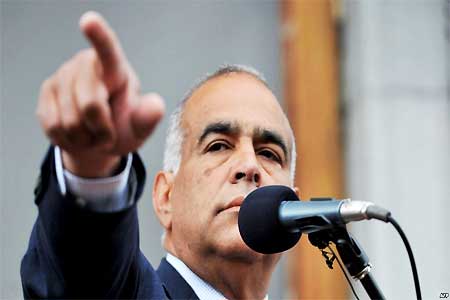 Heritage: It`s time for Armenia`s opposition to present people with legitimate alternative to power
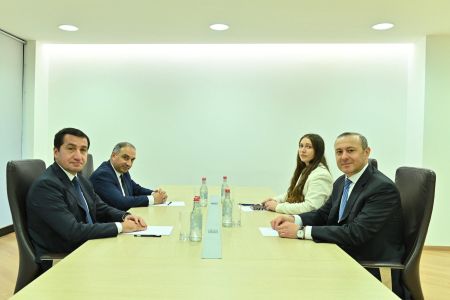 RA Security Council Sec, Assistant to President of Azerbaijan hold negotiations in Dilijan
 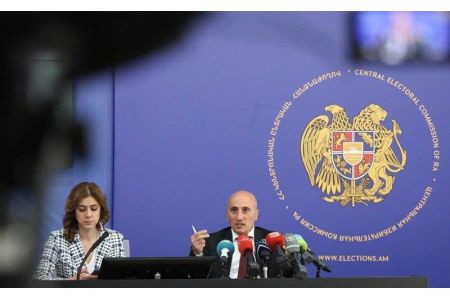 CEC Neutralizes PAP: Three Political Forces to Enter Armenian Parliament Following Election Vote
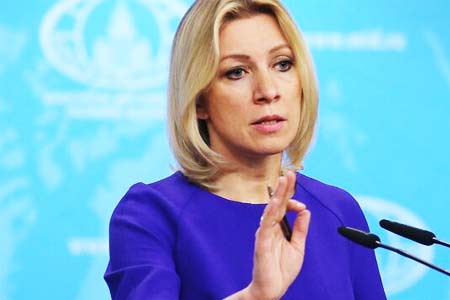 Elections in Armenia were accompanied by unprecedented pressure on opposition, RF MFA spokesperson claims
  Expert: Even OSCE observers recorded numerous violations during elections in Armenia
  Moscow to await official results of Armenian elections - Peskov
 Antonio Costa: EU to deepen its partnership with Armenia, expanding cooperation in energy, trade, and digitalization
 Israeli MFA congratulates Pashinyan
 Turkish MFA comments on results of Armenian elections
  Zakharova: International observers cannot ignore `flagrant violations` in Armenian elections
 Strong Armenia to issue statement after vote count completed - Narek Karapetyan
 Russian Senator: Opposition complaints regarding election violations by ruling party remain unanswered
 RA premier receiving congratulations on his victory in parliamentary elections