


ArmInfo. Four public councils will operate throughout Armenia to address the needs of refugees displaced from Nagorno-Karabakh. They will be located in Yerevan, Yeghegnadzor, Gyumri and Dilijan, thus ensuring a broad geographic coverage for those forcibly displaced from Nagorno-Karabakh.
According to a message received by ArmInfo, the public councils are being created by the Estonian Refugee Council within the framework of the EU-funded project "Human Rights for and with Refugees". The process of forming public councils for refugees was launched in early September.
"The Refugee Community Councils are a long-awaited initiative and we are pleased to introduce them to Armenia. We hope that these councils will have a long-term positive impact on both refugees and their host communities," Tatevik Khudinyan, Director of the Estonian Refugee Council's Armenian Office, stated at a meeting with representatives of partner organizations while discussing further steps to form the councils. It is noted that the main goal of the community councils is to provide IDPs from Nagorno-Karabakh with the necessary knowledge, skills and resources to independently solve the problems they face, effectively represent their interests and actively participate in decision-making processes affecting their lives. The activities of the public councils will be carried out by the following organizations: in Yerevan -" Union for Protection of Interests and Rights of Artsakh People" NGO, in Gyumri - "Socio-Psychological Center Kanani" NGO, in Yeghegnadzor - "Labor and Homeland" NGO and in Dilijan - "Dilijan Youth Cooperation Center" NGO.
Community councils will hold monthly meetings, where elected members will discuss the problems and needs of refugees and present options for their solutions. Membership in public councils is voluntary, providing an effective way to develop local democracy and ensure that the voices of refugees are heard. Additionally, capacity building meetings, thematic trainings and consultations are planned as needed, contributing to more targeted and scientifically based development of solutions to the problems raised.
Each council also has the opportunity to receive financial support, intended for the implementation of various initiatives and the solution of public problems. The term of council office is two years, with membership being voluntary and designed for one year. Activities should be carried out on a politically neutral basis. The programme also covers travel costs, allowing participants to attend meetings even if they live outside the designated locations.
The Human Rights for and with Refugees programme is supported by the European Union, the Democracy Development Foundation, the Estonian Refugee Council, the Coalition to Stop Violence against Women and the Commit Global. The goal of the project is to ensure that NK refugees residing in Armenia are empowered to uphold their fundamental rights, and there are accessible mechanisms for addressing and identifying the specific human rights vulnerabilities of different groups within the refugee population.














 Politician: With high voter turnout, current government to no chance
 Political analyst: Relatively high turnout indicates that Armenian citizens are actively and consciously shaping the country`s future
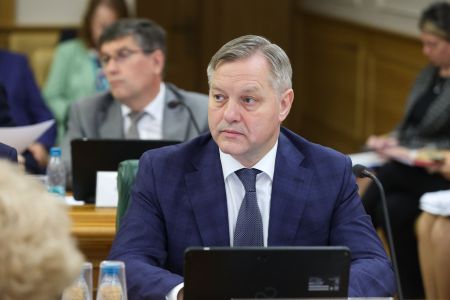 Head of IPA CIS Council Secretariat: Extremely difficult atmosphere during parliamentary elections campaign in Armenia accompanied by mass arrests
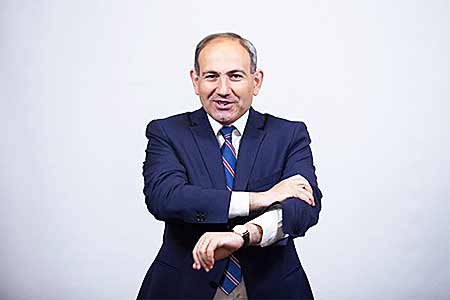 Pashinyan`s party leads with 51.13% based on vote counts from 533 polling stations
 Voting in parliamentary elections in Armenia ends
 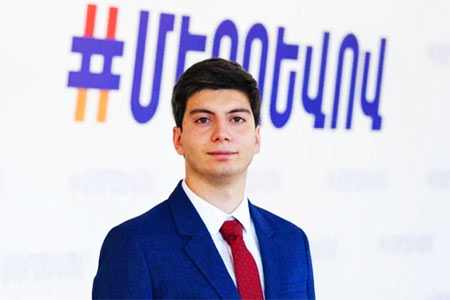 Strong Armenia: Administrative Court not providing judicial decisions to citizens wishing to vote in parliamentary elections
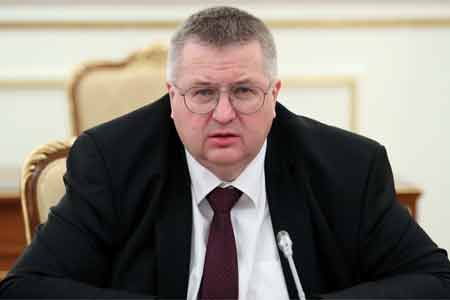 Russia trying to convey to Armenia that the EU has effectively transformed into a military-political union – Overchuk
 Armenian FM: Relations between Armenia and Russia need " a certain degree of healing"