


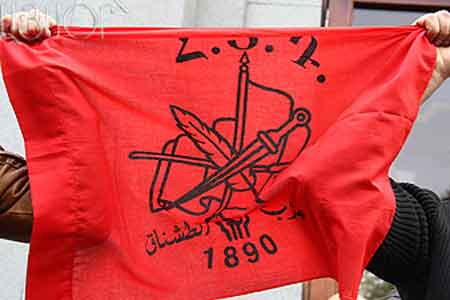
ArmInfo.Armenia's consent to the "joint statement" on the dissolution of the OSCE Minsk Group under the conditions of the use of force and the threat of force is considered invalid under international law, as noted in a statement issued by the Central Office of "Hay Dat" of the Armenian Revolutionary Federation "Dashnaktsutyun" (ARF) in response to the official statement of the OSCE on the closing of the Minsk Group - the only international structure mandated to resolve the Nagorno-Karabakh conflict.
The ARF statement reads as follows: " Today, the OSCE Ministerial Council adopted a "silent procedure" decision to dissolve the OSCE Minsk Group structures and suspend their funding. This decision follows a joint statement by the Foreign Ministers of Armenia and Azerbaijan dated August 8, 2025, which was circulated on August 11. This "joint application" was not an expression of free will. It was one of the preconditions imposed by Azerbaijan for signing the so-called "Peace Treaty," which was finalized in March 2025 and published on August 11, but has not yet been signed due to Azerbaijan's ever-increasing demands, including forcing Armenia to change its Constitution. Armenia agreed to this "joint application" under the conditions of the use of force and the threat of force, which makes it invalid under international law.
The Armenian government's policy of constant concessions to Azerbaijan, driven by a desire to maintain power, does not serve the interests of the Armenian state and the national interest and seriously undermines the right of the people of Artsakh to self-determination. Upon coming to power in 2021, this government promised a different path, presenting a program to the National Assembly that was the exact opposite of what is currently being implemented. By adopting the Azerbaijan-Armenia "joint application," the OSCE legitimizes the use of force as a means of resolving disputes. This comes after Azerbaijan carried out ethnic cleansing in Artsakh in September- October 2023, expelling 120,000 Armenians from their homeland through blockade, siege, and armed attacks against the civilian population. These actions, which are widely documented and established, constitute crimes under international law.
The issue that served as the basis for the establishment of the OSCE Minsk Group in 1992 - the rights and security of the Armenians of Artsakh - remains unresolved to this day. Azerbaijan's wars of 2020 and 2023 and ongoing genocidal steps forced more than 150,000 Armenians to flee their homes, but did not eliminate the problem. On the contrary, the people of Artsakh continue to be deprived of their most basic rights. It would be a serious mistake for the OSCE and the international community not to address these issues. Lasting peace requires principles: international law, justice, and diplomacy, not coercion. A key component of this is the right of safe and dignified return of Armenians forcibly displaced from Nagorno-Karabakh, as upheld by the International Court of Justice in its November 17, 2023, judgment.
Equally urgent is the immediate release of Armenian prisoners held by Azerbaijan and the protection of cultural heritage. Although the OSCE Minsk Group is no longer operational, the principles it embodied - genuine multilateralism and international mediation - remain indispensable. Its rejection now sends a dangerous message that disputes are resolved not by law but by force. Such a precedent will only fuel new episodes of violence and undermine the foundations of peace and security. "Closing the page of hostility," as proclaimed in the Washington Declaration of August 8, cannot be achieved through enforced silence. It requires truth, justice, and reconciliation. Victims must be heard, suffering must be acknowledged, and justice must be served. Therefore, we call on the OSCE and the wider international community to continue their engagement, remain committed to human rights and their humanitarian missions, and take effective steps to protect the rights of forcibly displaced Armenians, release prisoners, and preserve cultural heritage. Only through consistent, impartial, and principled engagement can the rights and dignity of the people of Artsakh be ensured and real and lasting peace in the South Caucasus be made possible."






















 Political scientist: Real recount will deprive Pashinyan of any constitutional majority
 Expert: Even OSCE observers recorded numerous violations during elections in Armenia
  Armenia`s ex-minister of justice calls on opposition to honestly answer questions troubling Armenian citizens
 Elections in Armenia were accompanied by unprecedented pressure on opposition, RF MFA spokesperson claims
  Moscow to await official results of Armenian elections - Peskov
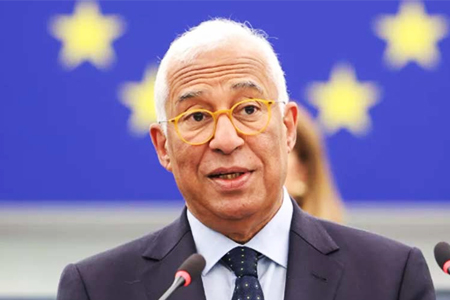 Antonio Costa: EU to deepen its partnership with Armenia, expanding cooperation in energy, trade, and digitalization
 Israeli MFA congratulates Pashinyan
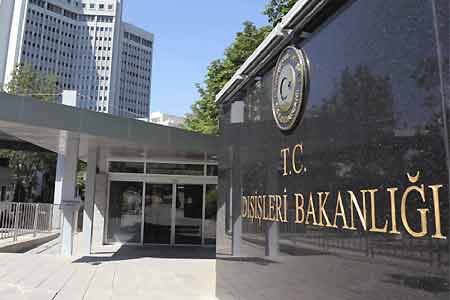 Turkish MFA comments on results of Armenian elections
 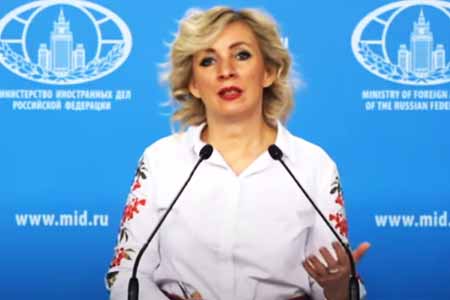 Zakharova: International observers cannot ignore `flagrant violations` in Armenian elections
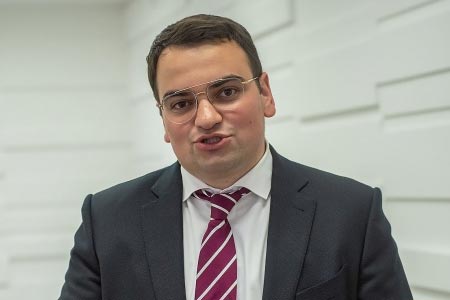 Strong Armenia to issue statement after vote count completed - Narek Karapetyan
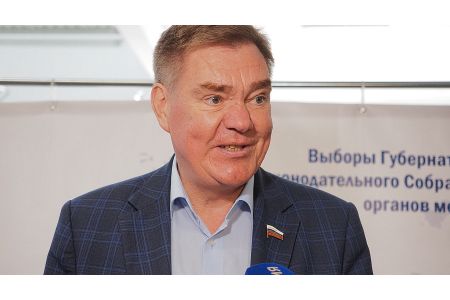 Russian Senator: Opposition complaints regarding election violations by ruling party remain unanswered
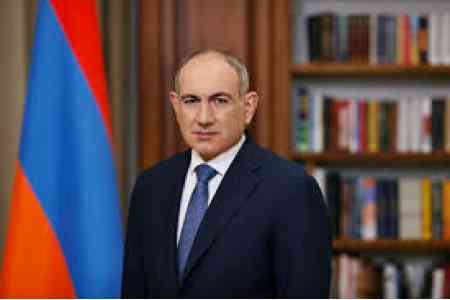 RA premier receiving congratulations on his victory in parliamentary elections
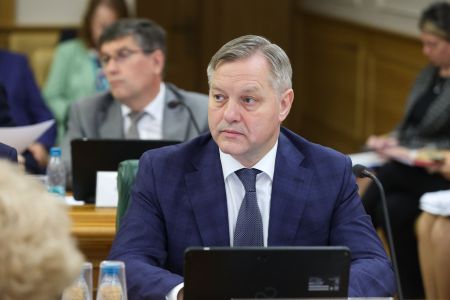 Head of IPA CIS Council Secretariat: Extremely difficult atmosphere during parliamentary elections campaign in Armenia accompanied by mass arrests
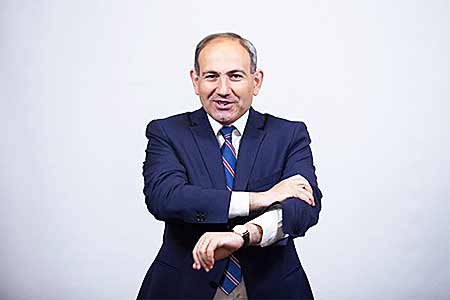 Pashinyan`s party leads with 51.13% based on vote counts from 533 polling stations
 Voting in parliamentary elections in Armenia ends
  Strong Armenia: Administrative Court not providing judicial decisions to citizens wishing to vote in parliamentary elections
