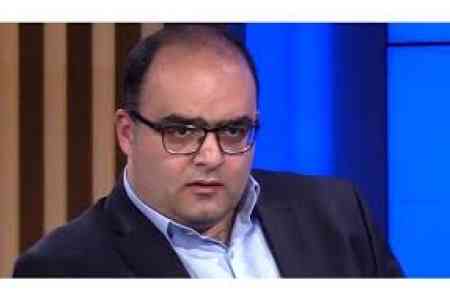
ArmInfo. History shows that the West's attempts to strengthen its position in the South Caucasus have always been situational. Political scientist and Doctor of Political Sciences Vahe Davtyan writes in a post on his Facebook page.
According to him, in the 18th century the Caucasus was the battleground for Russian-Turkish and Russian- Iranian conflicts. "As a result of these wars, Russia's position noticeably strengthened, and the Adrianople and Turkmenchay Treaties actually shaped the geopolitical landscape of the region. The Crimean War of 1853-1856 allowed the West and the Ottoman Empire to limit Russia's influence in the Black Sea, without losing sight of the Caucasus. However, the Russo-Turkish War of 1877-1878 reestablished Russia's military and diplomatic presence. Britain's intervention in the South and North Caucasus in 1918-1920, and prior to that, in 1917, the Anglo-French Convention recognizing the region as London's sphere of influence, as well as the US attempts to take control of the mandate of Armenia after World War I demonstrated the limitations of the West's Caucasian policy. Western calculations eventually gave way to the Soviet mega- project," the political scientist noted.
He added that the current West's initiatives, including those of US President Donald Trump, appear to be more like PR campaigns. The West's actual resources of influence in the South Caucasus are limited, while the main external actors in the region - Russia, Turkey and Iran - continue to shape the agenda. "The reason is simple: the geopolitical fate of any nation is largely determined by geography. Geopolitics in this sense is more of a natural science discipline based on the landscape and natural conditions of a territory. This was clearly understood by Prime Minister of Great Britain Robert Salisbury, who declared in the House of Lords in 1896: "English ships will not be able to climb the Taurus Mountains." From the historical perspective, the West can only exert situational influence in the South Caucasus, as is evident in the current situation," the political scientist emphasized.
















 Analyst: The primary issue with Armenia`s new Parliament Speaker`s speech lies is its one-sided interpretation of the causes of the political crisis
 Expert: Gagik Tsarukyan embodies post-Soviet model of big business-state relations; this model is used in many other post-Soviet countries
 Expert: Azerbaijan promoting aggressive plans against Armenia at state level
 Iranologist: Baku`s propaganda of might masks the country`s inability to provide water to its own population
 NA Vice Speaker candidate believes his wife`s salary as director of HayPost is the lowest in the company`s history
 RF Permanent Representative: There is no CSTO-Armenia conflict
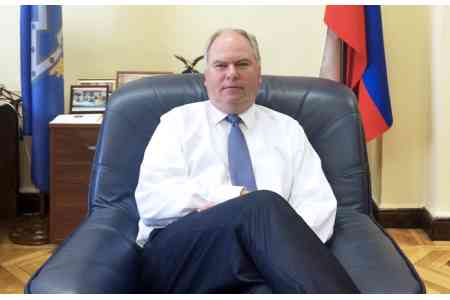 Moscow: NATO seeking to "Pull" Armenia away from CSTO Allies
  Political analyst: Russia intends to determine which "Camp" Armenia will choose through a referendum
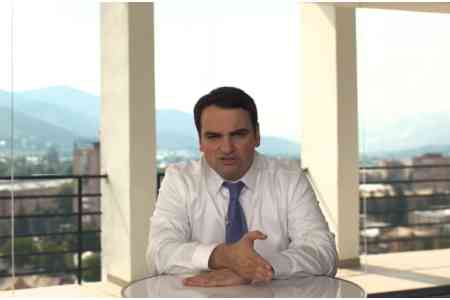 Narek Karapetyan will give up his parliamentary salary in favor of charitable contributions.
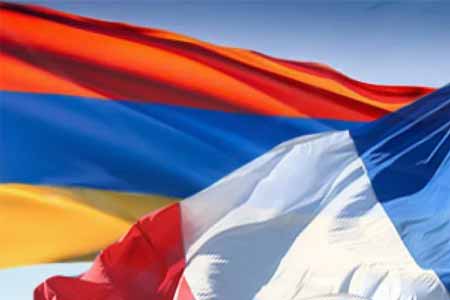 Armenia and France discuss further development of strategic partnership and EU cooperation
 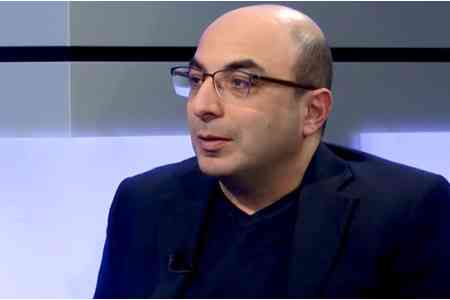 To overcome risks Armenia must reduce domestic escalation - expert
 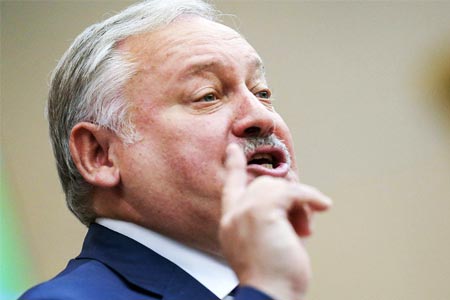 Zatulin: Pashinyan was eager to get back to Russia because he actually lost the elections
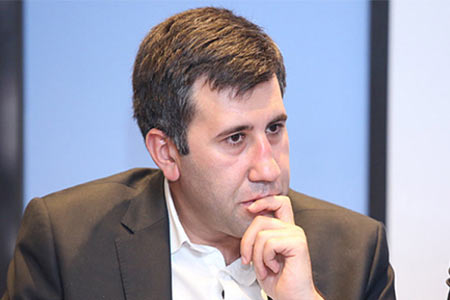 Human rights activist Ruben Melikyan dismissed from YSU
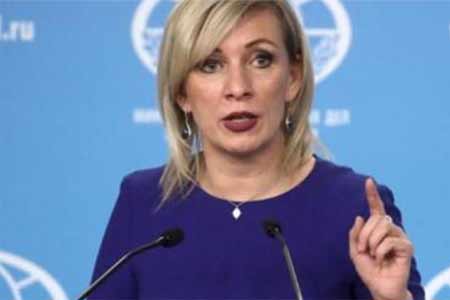 Zakharova: Armenia`s pro-EU pivot poses economic security risks to EAEU member states
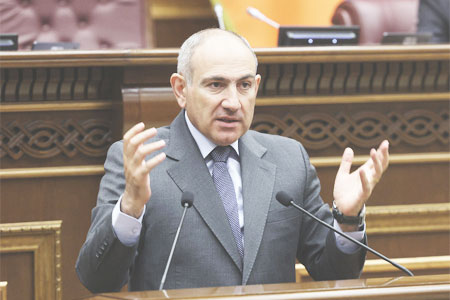 It`s time for South Caucasus countries to think of South Caucasus as single, unified region - RA premier
  Pashinyan: Armenia and Azerbaijan should leave each other alone
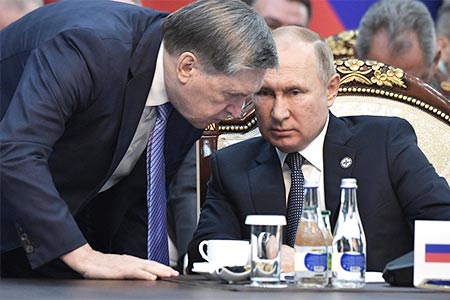 Moscow sees situation with Armenia as attempt to attack Russia-involving integration associations - Russian presidential aid