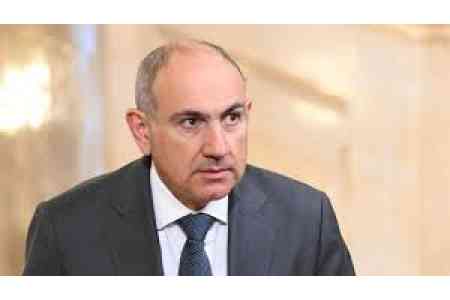
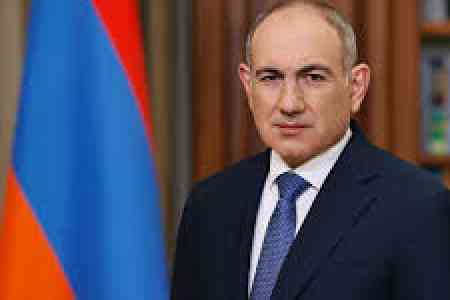
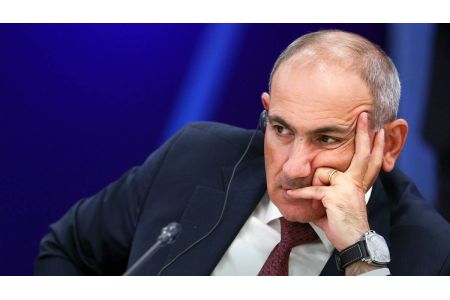
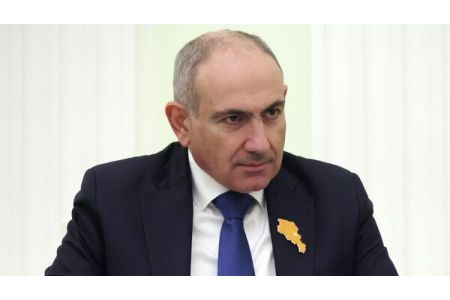
ArmInfo. Prime Minister of Armenia Nikol Pashinyan sent a message on the occasion of the adoption of the Declaration of Independence of Armenia, but made a mistake in the date of its adoption.
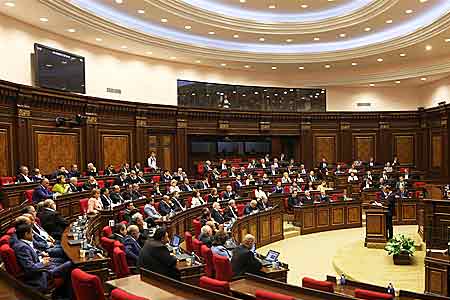
Pashinyan's message, received by ArmInfo, noted that on August 23, 1991, the Supreme Council of the Armenian SSR adopted the Declaration of Independence of Armenia, when in fact the declaration was adopted in 1990. This error caused a wide public outcry, with citizens outraged that the Armenian Prime Minister did not even know when the Declaration was adopted, despite promoting the fashionability of education. The Prime Minister of Armenia again criticized this Declaration, assuring that its provisions were contradictory and rather reflected the ideology of the USSR through the true aspirations of the Armenian people. "This document marked the beginning of the process forming our independent statehood - the Republic of Armenia. The Declaration, in essence, reflected the collective sentiments of the political and intellectual elite in Armenia at the time of its adoption, bore the stamp of the Karabakh movement, that began just two years before the adoption of this document and was at its peak. It was meant to predetermine the main features of the newly formed independent Republic of Armenia.
This is what happened: the main ideological provisions of the Declaration were contradictory and expressed the model of our collective patriotism that had been gradually but consistently instilled in us by the Soviet Union since the 1950s, amidst the establishment of the Iron Curtain and the beginning of the Cold War.
The model of patriotism shaped for us, Armenians, by the Soviet Union reflected the southwestern orientation of the ambitions of the USSR - a state that emerged victorious from the Second World War and clashed with the North Atlantic Alliance. On the other hand, this model aimed to export patriotic ideas existing in the Armenian SSR, beyond the republic's borders to prevent their local manifestation," Pashinyan said.
The Armenian Prime Minister was outraged to note that this ideology had been instilled for decades through books, films, and plays/theatrical performances shaping the socio-psychological system of the Armenian people that ultimately led to the Karabakh movement. According to him, the subconscious goal of this socio-psychological system was to ensure "the strategic impossibility of an independent state of Armenia, as a country surrounded by conflict cannot build real independence."
Then Pashinyan once again stated that there was no need to continue the Karabakh movement, as this "means the loss of the independence of the Republic of Armenia." "And finally, why did the Republic of Armenia, our Government and I personally not make concessions by September 2020, which was the only theoretical possibility to avoid a 44-day war? The main reason for this was that as a result of these concessions, all our threats and dependencies would have increased disproportionately, ultimately jeopardizing Armenia's independence and statehood.
We have adopted a strategy to preserve Armenia's independence and turn it into a reality. The embodiment of this strategy is the ideology of Real Armenia, under which peace between Armenia and Azerbaijan will be possible, under which a real dialogue with Turkey will be possible, under which our relations with Georgia and Iran should deepen, under which we become a real and interesting partner for the whole world," Pashinyan assured.
Then, the Armenian Prime Minister shortened the thousand-year history of the Armenian people and noted that the Republic of Armenia, with its internationally recognized sovereign territory of 29,743 square kilometers, has been the most important value for the past 500 years.
"Today, the Republic of Armenia is independent, sovereign, developed, prosperous and promising than never before, all thanks to peace. Peace has been established, and must now be a subject of daily care and attention, it must become institutional. August 2025 marked the beginning of a peaceful and prosperous life for the Republic of Armenia," the Armenian Prime Minister noted. The Armenian President, the Speaker of the Parliament and other officials also sent their messages on this occasion. The common theme in all these messages is that Armenia, by relinquishing Artsakh and making concessions to Azerbaijan, has achieved sovereignty and peace.













 Political analyst: Russia intends to determine which "Camp" Armenia will choose through a referendum
 Political analyst: Pashinyan- Putin phone call confirms deepening strategic rift between Yerevan and Moscow
 Narek Karapetyan will give up his parliamentary salary in favor of charitable contributions.
 Armenia and France discuss further development of strategic partnership and EU cooperation
  To overcome risks Armenia must reduce domestic escalation - expert
  Zatulin: Pashinyan was eager to get back to Russia because he actually lost the elections
 Pashinyan removed from INNOPROM guest list
 Zakharova: Armenia`s pro-EU pivot poses economic security risks to EAEU member states
 It`s time for South Caucasus countries to think of South Caucasus as single, unified region - RA premier
  Pashinyan: Armenia and Azerbaijan should leave each other alone
 Moscow sees situation with Armenia as attempt to attack Russia-involving integration associations - Russian presidential aid
 Zakharova: Armenia views relations with Russia as tool for financially securing reorientation toward EU
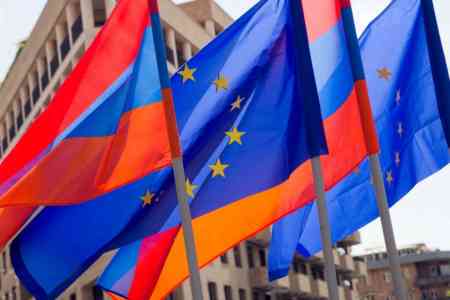 The Armenian Minister of Justice and the EU Ambassador discussed visa liberalization issues for Yerevan.
 Azerbaijan`s aggressive plans against Armenia became possible in wake of Pashinyan`s decisions on Artsakh - expert
  Zakharova: Russia sent a note of protest to Armenia over the act of vandalism at the "Mother Armenia" memorial in Gyumri