

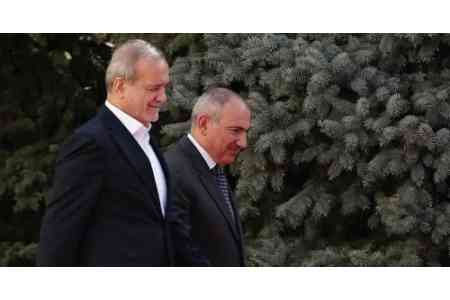
ArmInfo. Prime Minister of the Republic of Armenia Nikol Pashinyan and President of the Islamic Republic of Iran Masoud Pezeshkian signed a joint statement following the meeting in Yerevan on August 19.
As stated in the text of the joint statement, during the talks the parties exchanged views on various bilateral and multilateral issues. They highly appreciated the historical, deep and friendly relations between the two peoples, as well as their centuries-old cultural and civilizational commonality. The parties reaffirmed their determination to further expand these ties through all means and opportunities, and to develop and advance political consultations on various bilateral, regional and international issues. Expressing satisfaction with the dynamic and promising trend of developing cooperation between the two countries at the bilateral, regional and international levels, as well as high-level dialogues and exchanges of delegations, the parties:
-Emphasized their commitment to strengthening relations between the two countries and elevating them to the level of a strategic partnership.
-Noted the importance of regular high-level political consultations aimed at coordinating approaches to bilateral, regional and international issues and expanding cooperation. The parties emphasized that, regardless of the changing international situation, they will remain committed to strengthening bilateral relations and developing comprehensive cooperation.
-Condemning the recent attack on the Islamic Republic of Iran, called for compliance with the UN Charter and international law.
- Emphasized their commitment to the UN Charter and the generally recognized principles and norms of international law, including respect for the sovereignty, independence and territorial integrity of states, the inviolability and inviolability of international borders, the exclusion of the use of force or threat of force and non-interference in each other's internal affairs.
- Reaffirmed relations based on peaceful coexistence and good-neighbourliness.
- Stressed the importance of developing people-to-people ties, as well as scientific, cultural and tourist exchanges aimed at strengthening friendship and mutual understanding between the two peoples and, to this end, facilitating the movement of citizens of the two countries.
- Noting the importance of dialogue and cooperation between the parliaments of the two countries as an important component in promoting common goals and visions, they highlighted the importance of specialized committees and parliamentary friendship groups within the framework of international parliamentary organizations.
- Stressed the need to address common environmental issues, particularly, the pollution of the Araks River, through bilateral cooperation.
- Emphasizing the significant potential for increasing trade turnover and welcoming the holding of regular meetings between the Intergovernmental Mixed Commission between the two countries, they reaffirmed their determination to expand and deepen cooperation in various areas of mutual interest.
- To increase the trade volume between the two countries to 3 billion US dollars, a decision was made to increase the volume of trade, expand mutual investments and implement joint infrastructure projects aimed at strengthening the friendship and common interests of the two countries, taking into account the opportunities provided by the free trade agreement between Iran and the Eurasian Economic Union.
- Given the common interests of the two countries in strengthening the Persian Gulf-Black Sea route, the parties stressed the need to promote comprehensive transport cooperation, development of transport infrastructure and transit routes, including through the construction of a second bridge across the Araks River on the border of the two countries, developing and modernizing new border checkpoints, as well as reducing road tolls within the framework of the agreements signed between the two countries.
- The parties also reaffirmed the importance of the power transmission line 3 construction from the Republic of Armenia to the Islamic Republic of Iran, emphasizing the need to complete it in the shortest possible time, including expressing support for expanding the exchange of gas and electricity between the two countries within the framework of the Gas and Electricity Exchange Agreement.
The parties stressed the importance of developing transport and communication infrastructure between the two countries, including the integration of international transport routes, railways and roads, as well as the development of transit routes, leading to an increase in the regional role of the two countries. They reaffirmed the importance of Armenia's "Crossroads of Peace" initiative and stressed the need to mutually unblock transport routes within the framework of territorial integrity, national sovereignty and jurisdiction of states. Armenia and Iran highlighted the importance of supporting joint ventures in various sectors of the economy, including industry, agriculture, mining and services, as well as ensuring the necessary conditions for private sector activities of the two countries. Supporting the significant achievements in the context of the peace agreement between the Republic of Armenia and the Republic of Azerbaijan, the necessity to maintain territorial integrity, equal sovereignty, political independence and respect for the inviolability of recognized international borders was emphasized.
The importance of supporting the development of regional cooperation mechanisms, including the "3+3" regional consultative platform, as well as the need for ongoing consultations aimed at converging approaches to important global and regional issues were emphasized. They expressed their readiness to closely cooperate within the framework of regional and international organizations, in particular the United Nations. The need to jointly combat terrorism, extremism, transnational organized crime, drug trafficking, as well as other security challenges that undermine regional and international peace and stability was emphasized.
Yerevan and Tehran highlighted the importance of continuing joint efforts to enhance the fraternal relations between the Republic of Armenia and the Islamic Republic of Iran and noted that these relations are an example of peaceful coexistence and constructive cooperation between different civilizations and cultures. The leaders of the two states agreed to continue regular high-level meetings to assess the progress of cooperation and identify new areas for the development of relations. President Pezeshkian invited Prime Minister Nikol Pashinyan to visit Iran. The invitation was accepted. During the visit, several documents were signed on areas of mutual interest.















 Lawyer: according to preliminary results, Pashinyan`s party lacks 2/3 majority necessary to amend Armenia`s Constitution
 Politician: With high voter turnout, current government to no chance
 Antonio Costa: EU to deepen its partnership with Armenia, expanding cooperation in energy, trade, and digitalization
 Israeli MFA congratulates Pashinyan
 Turkish MFA comments on results of Armenian elections
  Zakharova: International observers cannot ignore `flagrant violations` in Armenian elections
 Strong Armenia to issue statement after vote count completed - Narek Karapetyan
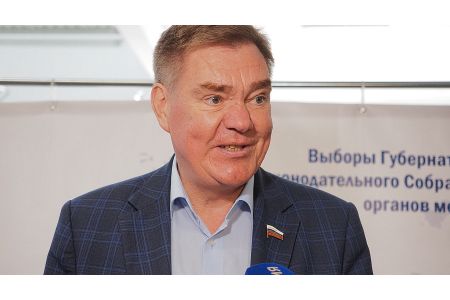 Russian Senator: Opposition complaints regarding election violations by ruling party remain unanswered
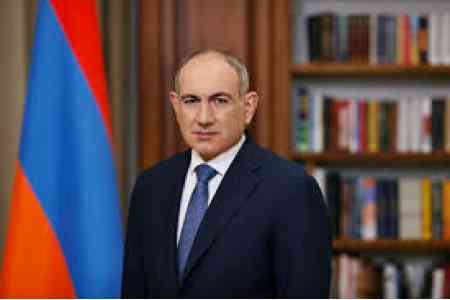 RA premier receiving congratulations on his victory in parliamentary elections
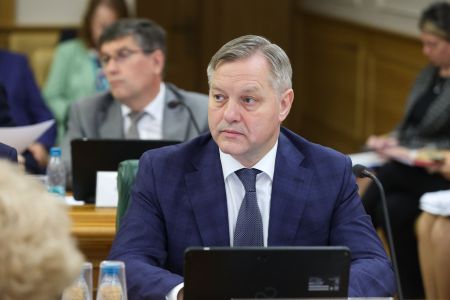 Head of IPA CIS Council Secretariat: Extremely difficult atmosphere during parliamentary elections campaign in Armenia accompanied by mass arrests
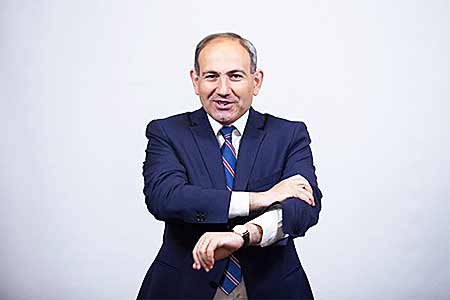 Pashinyan`s party leads with 51.13% based on vote counts from 533 polling stations
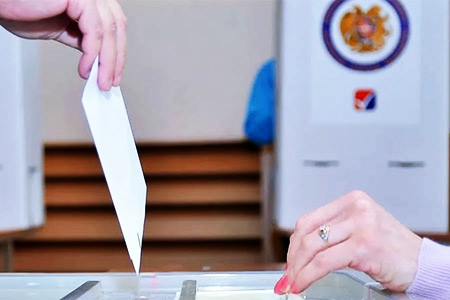 Voting in parliamentary elections in Armenia ends
  Strong Armenia: Administrative Court not providing judicial decisions to citizens wishing to vote in parliamentary elections