



ArmInfo. The Armenian authorities must publish and present the Washington documents to the public in detail. This was stated yesterday after the liturgy on the feast of the Dormition of the Blessed Virgin Mary by Catholicos of the Great House of Cilicia Aram I.
According to him, politicians and analysts should assess the possible consequences of the agreement between Yerevan and Baku.
"It is obvious that any document based on unilateral concessions can become a serious threat. This is an agreement on the future of the country, so the people must also express their opinion. Armenia can become an arena for a clash of geopolitical forces. The victory of one of them may be beneficial to Yerevan, but the defeat of the second will lead to serious problems," Aram I noted.
He condemned the arrests and criminal prosecutions inside Armenia, calling on the state to pay attention to the anti-Armenian policy of Azerbaijan and not to forget about Artsakh.
On August 8, Armenian Prime Minister Nikol Pashinyan and Azerbaijani President Ilham Aliyev signed a joint "Declaration of Peace" in Washington. It provides for a joint appeal to the Organization for Security and Cooperation in Europe (OSCE) to terminate the OSCE Minsk process and related structures, as well as the creation of a transport corridor through Armenian territory that will connect Azerbaijan with its Nakhchivan exclave. The TRIPP (Trump Route for International Peace and Prosperity) project, a 42-km road in southern Armenia that will hand over control of the road to the United States for 99 years, according to experts, is capable of significantly changing the geopolitical situation in the South Caucasus. On the same day, the Foreign Ministers of Armenia and Azerbaijan initialed a peace agreement, which consists of 17 articles. The preamble of the document states that the Republic of Armenia and the Republic of Azerbaijan, recognizing the urgent need to establish a just, comprehensive and lasting peace in the region, striving to promote the achievement of this goal through the establishment of interstate relations, guided by the Charter of the United Nations, the Declaration on Principles of International Law concerning Friendly Relations and Cooperation among States in accordance with the Charter of the United Nations (1970), the Final Act of the Helsinki Conference on Security and Cooperation in Europe (1975) and the Almaty Declaration of December 21, 1991, and striving to develop relations based on the norms and principles enshrined in the said documents, expressing mutual will to establish good-neighborly relations among themselves, agreed to establish peace and interstate relations.

























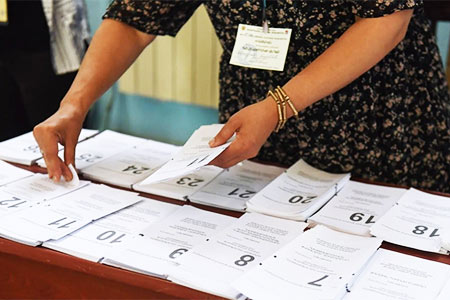








 Political analyst: Relatively high turnout indicates that Armenian citizens are actively and consciously shaping the country`s future
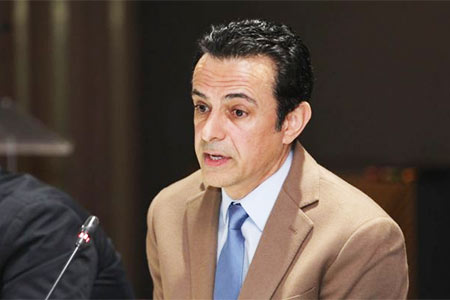 Stanford University professor calls current Armenian parliamentary elections the dirtiest in the country`s history
 Politician: The Moldovan scenario in Armenia will lead to revolution
 American agenda in South Caucasus has two priorities: TRIPP project and increasing pressure on Iran - expert
 Russia trying to convey to Armenia that the EU has effectively transformed into a military-political union – Overchuk
 Armenian FM: Relations between Armenia and Russia need " a certain degree of healing"
 Hungary to stop issuing worker visas to citizens of the Philippines, Georgia, and Armenia
 Russia is counting on holding the next "3+3" meeting in Baku or Yerevan
 Robert Kocharyan: Peace treaty with Azerbaijan will include guarantees for peace
 Edmon Marukyan: 1.7mln people must go to polls, and this government will be crushed
 Armenian authorities have turned country into center of a geopolitical struggle - Samvel Karapetyan
  Expert: Pashinyan is finished if most voters go to polls