
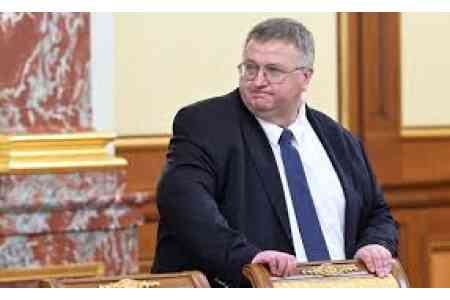
ArmInfo. Russia supports Armenia in its plans to create a transport corridor with Azerbaijan called the "Trump route", if Yerevan considers it necessary. This was stated to journalists by Russian Deputy Prime Minister Alexei Overchuk, whose words are quoted by TASS.
"We are considering this issue in this plane. Armenia is our strategic ally, and if Armenia believes that something is good for them, then, of course, we support Armenia here," he said, answering a relevant question.
"If they believe that signing a corresponding declaration in Washington provides greater security guarantees, then this is good, because we also support peace processes in the South Caucasus," Overchuk added. According to him, this "entirely and completely meets" the interests of the Russian Federation.
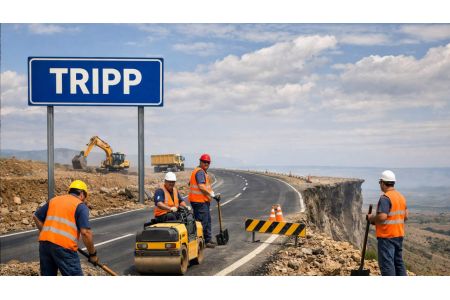
On August 8, Armenian Prime Minister Nikol Pashinyan and Azerbaijani President Ilham Aliyev signed a joint "peace declaration" in Washington. It provides for a joint appeal to the Organization for Security and Cooperation in Europe (OSCE) to terminate the OSCE Minsk process and related structures, as well as the creation of a transport corridor through Armenian territory that will connect Azerbaijan with its Nakhchivan exclave. The TRIPP (Trump Route for International Peace and Prosperity) project, a 42-km road in southern Armenia that will hand over control of the road to the United States for 99 years, according to experts, is capable of significantly changing the geopolitical situation in the South Caucasus. On the same day, the Foreign Ministers of Armenia and Azerbaijan initialed a peace agreement, which consists of 17 articles. The preamble of the document states that the Republic of Armenia and the Republic of Azerbaijan, recognizing the urgent need to establish a just, comprehensive and lasting peace in the region, striving to promote the achievement of this goal through the establishment of interstate relations, guided by the Charter of the United Nations, the Declaration on Principles of International Law concerning Friendly Relations and Cooperation among States in accordance with the Charter of the United Nations (1970), the Final Act of the Helsinki Conference on Security and Cooperation in Europe (1975) and the Almaty Declaration of December 21, 1991, and striving to develop relations based on the norms and principles enshrined in the said documents, expressing mutual will to establish good-neighborly relations among themselves, agreed to establish peace and interstate relations.








 Expert: Economic pressure on Armenia may be virtually painless for other EAEU members, but not for Armenia itself
 Expert on protests in France: Civilizations fade when society loses a vision of the future
 Turkologist: Azerbaijan is not all-powerful—its vulnerabilities should become part of Armenia’s security strategy
 Opinion: The development of the Amulsar mine near the resort town of Jermuk is the beginning of an environmental disaster in Armenia
 Expert: The arrest of opposition figures in Armenia for social media posts is a systematic attempt to intimidate the public and suppress dissent.
 The Armenian Foreign Minister commented on the country`s return to work within the CSTO.
 The Artsakh Public Council expressed outrage at the UN Secretary-General`s behavior
 Lukashenko called for Armenia to assume the CIS presidency in 2029
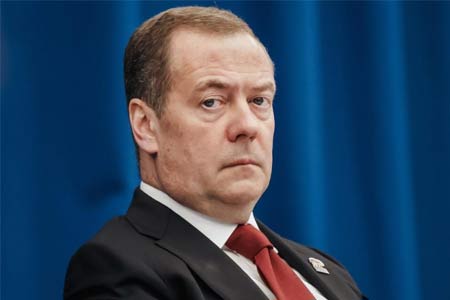 Dmitry Medvedev predicted a Ukrainian-like fate for Armenia amid the country`s shift in foreign policy
 Russian Security Council: In Armenia, they want to force Russian asset owners to dispose of their assets
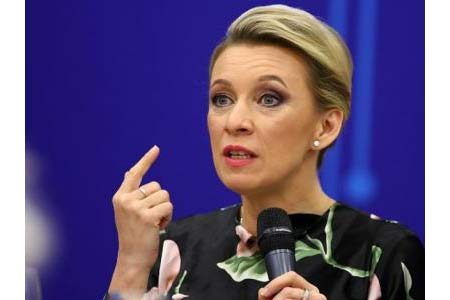 Zakharova: Russia ready to discuss with Armenia the prospects for expanding military cooperation as part of a review of bilateral ties
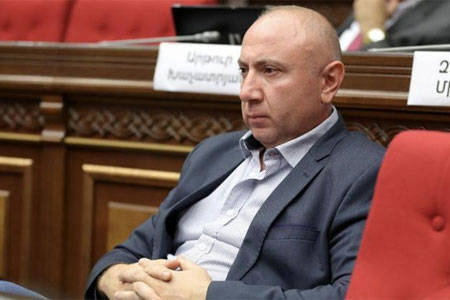 Tevanyan: Armenia, like Ukraine and Moldova, is being drawn into the EU’s global war
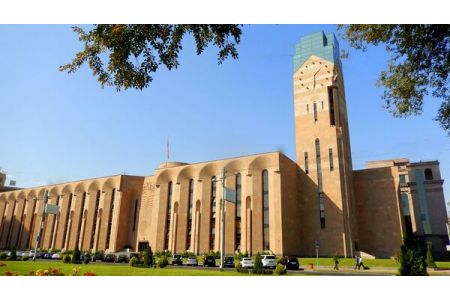 Yerevan City Hall is considering introducing a valet parking system in the city
 Expert: The circus surrounding the “Albanization” of Armenian culture in the presence of foreign ambassadors in occupied Artsakh is genocide
 Political scientist: If Russian-Armenian relations are destroyed, Turkey will take Russia`s place
 Political scientist: The Armenian public is simply obliged to significantly change the entire content of public discourse and struggle
 Cross tattoos are being removed from the skin of Christian prisoners in Azerbaijan by fire, according to a human rights activist.
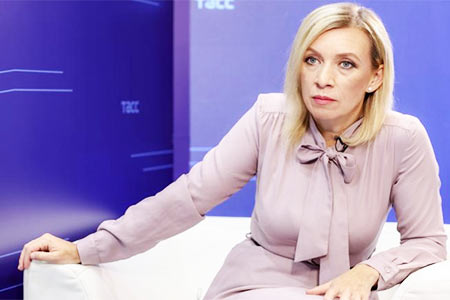 Zakharova: Armenia`s likely introduction of visas with Russia will be a step against Yerevan itself
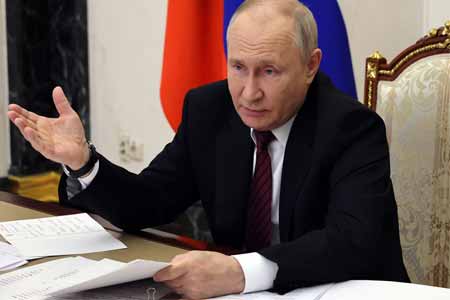 Putin: Armenia`s recognition of Karabakh as part of Azerbaijan in Prague has given Russia`s position on this issue an ambivalent character
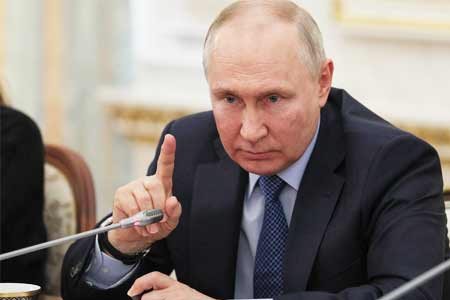 Putin: Armenia`s adoption of the law on EU accession means an announcement of its withdrawal from the Eurasian Economic Union