


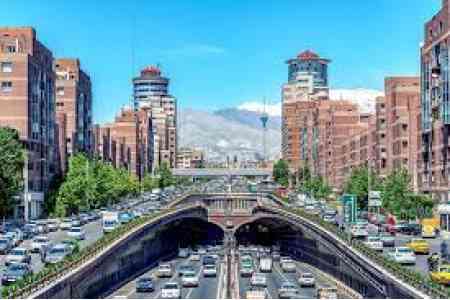
ArmInfo. The Islamic Republic of Iran emphasizes the importance of strengthening peace and stability in the South Caucasus region. This was stated on August 15 by First Vice President of the IRI Mohammad Reza Aref, speaking as an observer at a meeting of the intergovernmental council of the EAEU member states.
According to him, Iran welcomed the peace agreement between Armenia and Azerbaijan. Tehran, while declaring its unwavering position on respecting the territorial integrity of countries, believes that the interference of foreign states in the affairs of the region will not contribute to sustainable security.
On August 8, Armenian Prime Minister Nikol Pashinyan and Azerbaijani President Ilham Aliyev signed a joint "declaration of peace" in Washington. It provides for a joint appeal to the Organization for Security and Cooperation in Europe (OSCE) to terminate the OSCE Minsk process and related structures, as well as the creation of a transport corridor through Armenian territory that will connect Azerbaijan with its Nakhchivan exclave. The TRIPP (Trump Route for International Peace and Prosperity) project, a 42-km road in southern Armenia that will hand over control of the road to the United States for 99 years, according to experts, is capable of significantly changing the geopolitical situation in the South Caucasus.
On the same day, the Foreign Ministers of Armenia and Azerbaijan initialed a peace agreement, which consists of 17 articles. The preamble of the document states that the Republic of Armenia and the Republic of Azerbaijan, recognizing the urgent need to establish a just, comprehensive and lasting peace in the region, striving to promote the achievement of this goal through the establishment of interstate relations, guided by the Charter of the United Nations, the Declaration on Principles of International Law concerning Friendly Relations and Cooperation among States in accordance with the Charter of the United Nations (1970), the Final Act of the Helsinki Conference on Security and Cooperation in Europe (1975) and the Almaty Declaration of On December 21, 1991, and striving to develop relations based on the norms and principles enshrined in the said documents, expressing mutual will to establish good-neighborly relations among themselves, agreed to establish peace and interstate relations.











































 Politician: The Moldovan scenario in Armenia will lead to revolution
 American agenda in South Caucasus has two priorities: TRIPP project and increasing pressure on Iran - expert
 Armenian political scientist outlines two likely goals for tomorrow`s visit by U.S. Secretary of State to Yerevan
  Domestic escalation to lead to external escalation soon - expert
  Opinion: Situation within Armenia and on its borders will largely depend on developments surrounding Iran
 CSTO Secretary General: Dual Membership in EU and EAEU "highly difficult"
 Armenia a passenger who wants to get from point A to point G - Maria Zakharova
 EU prepares support for Armenia amid economic restrictions imposed by Russia - media
 Catholicos: We must make every possible effort to ensure justice prevails for the people of Artsakh
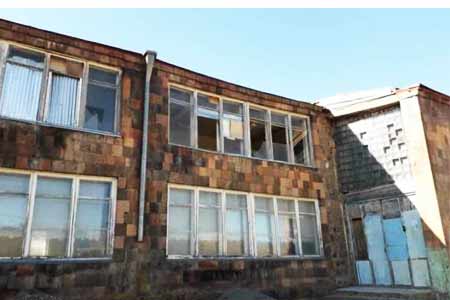 Opposition leader names newly built schools in Vayots Dzor to be handed over to Azerbaijanis
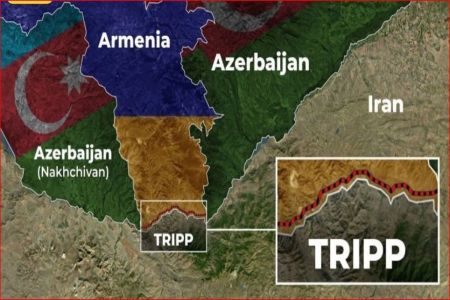 Expert: Armenia and Azerbaijan are participating in the US geopolitical game to encircle Iran
 Medvedev likens Pashinyan`s stance on EAEU/ EU referendum to Trotsky`s formula
 Breavis accuses EuroNews of spreading false information regarding Armenian elections
 Choice between EU and EAEU is choice between unrealizable dream and certainty