

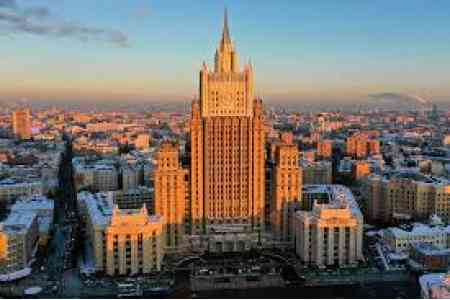
ArmInfo. Russia, Armenia, and Azerbaijan have not announced their withdrawal from the trilateral agreements of 2020-2022, as stated by Deputy Director of the Information and Press Department of the Russian Foreign Ministry Alexey Fadeyev during a briefing on August 13. According to him, Moscow is ready to assist partners in normalizing relations between Armenia and Azerbaijan, as has been repeatedly stated by the Russian leadership.
Regarding the "Trump Route", Fadeyev emphasized that the Russian Foreign Ministry will study this project, the details of which have not yet been made public. "As we have already noted, the involvement of extra-regional forces should promote the peace agenda and not create new dividing lines," Fadeyev emphasized, essentially reiterating the statement made by the official representative of the Russian Foreign Ministry, Maria Zakharova, on August 9.
Recall that on August 9, Zakharova stated that the involvement of extra-regional players in the resolution of conflict in the South Caucasus should not create additional difficulties. Commenting on the negotiations between the heads of the United States, Armenia and Azerbaijan in Washington, she noted that Russia is interested in the formation of a zone of stability and prosperity in the South Caucasus and one of the most important conditions for this is the comprehensive normalization of relations between Armenia and Azerbaijan, based on the interests of the peoples of both countries. "We consistently support all efforts to achieve this key goal for regional security. In this regard, the meeting of the leaders of the South Caucasus republics in Washington with the mediation of the American side deserves a positive assessment. We hope that this step will help advance the peace agenda," she said, adding that until recently, Yerevan and Baku claimed that they preferred to conduct a dialogue directly, without external assistance.
The representative of the Russian Foreign Ministry recalled that the current stage of Armenian-Azerbaijani normalization started with the direct assistance and central role of Russia with the adoption of the high- level trilateral Statement on November 9, 2020. According to Zakharova, the best option for solving the problems of the South Caucasus is to find and further implement solutions developed by the countries of the region themselves with the support of their immediate neighbors - Russia, Iran, and Turkey. "The involvement of extra-regional players should promote the peace agenda and not create additional difficulties and dividing lines. We would like to avoid the sad experience of Western assistance in resolving conflicts in the Middle East. Examples in the South Caucasus include the presence of the EU observer mission in Armenia, whose activities constantly irritate other regional countries," Zakharova noted. "It is also important to take into account the factor of Armenia's membership in the single customs space of the EAEU, in particular, with regard to the organization of transit cargo transportation through the territory of the republic. It is also impossible to ignore the fact that Armenia's border with Iran is guarded by Russian border guards deployed in accordance with the interstate agreement of September 30, 1992," Zakharova said.











 Political scientist: Real recount will deprive Pashinyan of any constitutional majority
 Expert: Even OSCE observers recorded numerous violations during elections in Armenia
  Armenia`s ex-minister of justice calls on opposition to honestly answer questions troubling Armenian citizens
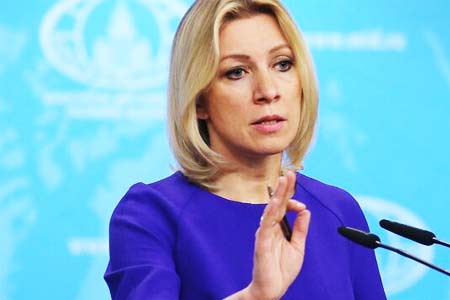 Elections in Armenia were accompanied by unprecedented pressure on opposition, RF MFA spokesperson claims
  Moscow to await official results of Armenian elections - Peskov
 Antonio Costa: EU to deepen its partnership with Armenia, expanding cooperation in energy, trade, and digitalization
 Israeli MFA congratulates Pashinyan
 Turkish MFA comments on results of Armenian elections
 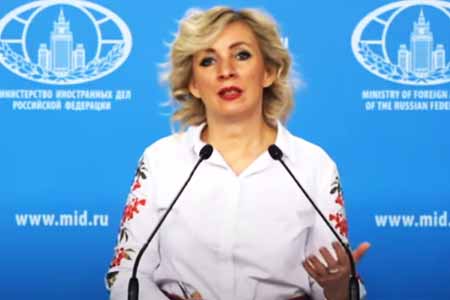 Zakharova: International observers cannot ignore `flagrant violations` in Armenian elections
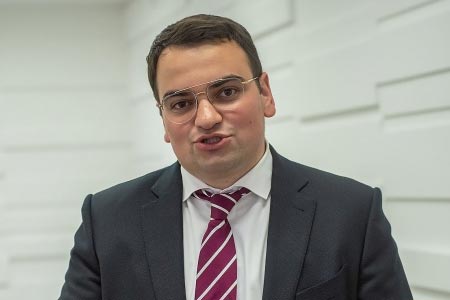 Strong Armenia to issue statement after vote count completed - Narek Karapetyan
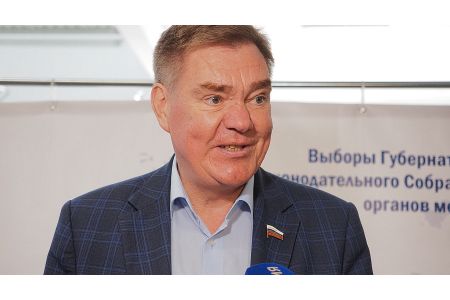 Russian Senator: Opposition complaints regarding election violations by ruling party remain unanswered
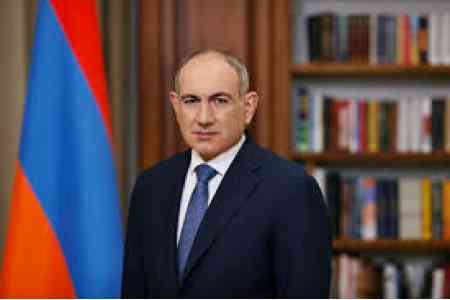 RA premier receiving congratulations on his victory in parliamentary elections
 Head of IPA CIS Council Secretariat: Extremely difficult atmosphere during parliamentary elections campaign in Armenia accompanied by mass arrests
 Pashinyan`s party leads with 51.13% based on vote counts from 533 polling stations
 Voting in parliamentary elections in Armenia ends
  Strong Armenia: Administrative Court not providing judicial decisions to citizens wishing to vote in parliamentary elections