



ArmInfo. In international law, unlike domestic law, there is no enforcement service, that is, there is no body that would ensure the execution of a decision if the defendant refuses to comply with it, and today the Armenian authorities take advantage of this. This opinion was expressed on her Facebook page by legal expert Gohar Meloyan in connection with the Armenian government's ignoring the decision of the Stockholm Arbitration Court on Electric Networks of Armenia (ENA) CJSC.
In this regard, the legal expert drew attention to the fact that in the case where the plaintiff applies to the court or arbitration and simultaneously petitions for the application of measures to secure the claim, and the court, in turn, satisfies this petition, then this is positive news for the plaintiff, but negative for the defendant. As Meloyan explained, this means that the Armenian authorities should have already taken some action to return control over ENA to the owner.
"In this context, the most difficult issue remains, which is the Achilles heel of International Investment Law and International Law in the current world order and legal order: the execution of decisions of International Courts and Tribunals," the lawyer emphasized.
As Meloyan noted, in this case the question is what is the "price" of non-compliance with the arbitration award. In this regard, she drew attention to the fact that there are similar precedents in International Investment Law, and assured that the study of all these cases shows that states are forced to comply with the decisions of the Arbitration Court sooner or later if the plaintiff seeks to restore their violated rights. "From the analysis of the Civil Procedure Code of Armenia and the Law of Armenia "On Commercial Arbitration", it becomes obvious that in very limited cases a decision may be made not to implement the decision of the Stockholm Arbitration until the said decision is recognized by the country's court," Meloyan is sure.
In this vein, she noted that there are already rumors that the authorities will try to use the provision "on contradiction to public order" provided for in subparagraph "b" of paragraph 2 of part 1 of Article 36 of the Law "On Commercial Arbitration", claiming that the decision of the aforementioned arbitration is contrary to the sovereignty of Armenia.
However, as Meloyan noted, in the International Investment Law the provision on "contrary to public order" has always been and will be interpreted in a narrow sense, since otherwise any state can refuse to implement unwanted arbitration decisions, referring to a broad, spatial and manipulative interpretation of this provision.
""Limitation of sovereignty" can never be referred to as "contrary to public order", since Armenia, having signed the relevant agreement with Cyprus and having delegated disputes arising from it, has already assumed obligations to limit its sovereignty in this matter. That is, by ratifying the Convention "on the Recognition and Enforcement of Foreign Arbitral Awards", Armenia has given consent to the execution of international arbitration decisions in disputes arising with Cypriot investors," the lawyer explained.
In this vein, she noted that in this situation there is no other solution than restoring the rights of businessman Samvel Karapetyan and recognizing the actions of the Armenian government as illegal, despite the attempts of the Armenian authorities to continue their illegal actions.
Recall that the head of the Tashir Group of Companies Samvel Karapetyan and his family won the arbitration dispute against the Armenian government on the nationalization of ENA. The case was heard at the Arbitration Institute of the Stockholm Chamber of Commerce (SCC) on the basis of the Agreement between Armenia and Cyprus on the Promotion and Reciprocal Protection of Investments of January 18, 1995. The court ruled that Armenia is obliged to refrain from applying the amendments recently adopted by parliament to the laws "On Energy" and "On the Public Services Regulatory Authority", as well as from any further steps aimed at seizing ENA assets.
However, the Armenian government stated that the decision of the Stockholm Arbitration Court will not be implemented. The statement of the Armenian Cabinet of Ministers, in particular, emphasizes: "While respecting the interim measures applied by foreign arbitration decisions, everyone must be guided by the legislation of the Republic of Armenia and international treaties establishing the rules and procedures for the recognition and enforcement of arbitration decisions."






















































 Political scientist: Real recount will deprive Pashinyan of any constitutional majority
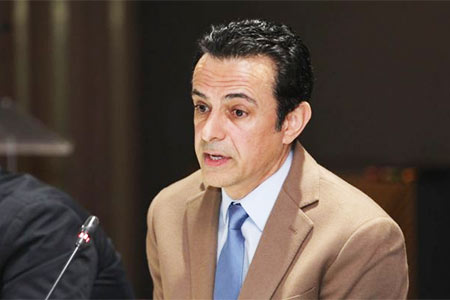 Expert: Even OSCE observers recorded numerous violations during elections in Armenia
  Armenia`s ex-minister of justice calls on opposition to honestly answer questions troubling Armenian citizens
 Elections in Armenia were accompanied by unprecedented pressure on opposition, RF MFA spokesperson claims
  Moscow to await official results of Armenian elections - Peskov
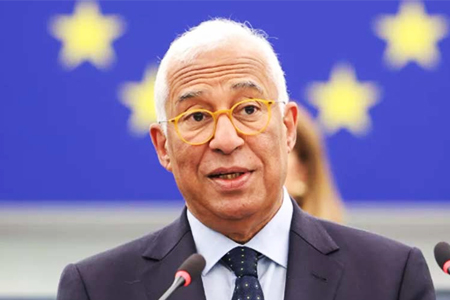 Antonio Costa: EU to deepen its partnership with Armenia, expanding cooperation in energy, trade, and digitalization
 Israeli MFA congratulates Pashinyan
 Turkish MFA comments on results of Armenian elections
  Zakharova: International observers cannot ignore `flagrant violations` in Armenian elections
 Strong Armenia to issue statement after vote count completed - Narek Karapetyan
 Russian Senator: Opposition complaints regarding election violations by ruling party remain unanswered
 RA premier receiving congratulations on his victory in parliamentary elections
 Head of IPA CIS Council Secretariat: Extremely difficult atmosphere during parliamentary elections campaign in Armenia accompanied by mass arrests
 Pashinyan`s party leads with 51.13% based on vote counts from 533 polling stations
 Voting in parliamentary elections in Armenia ends
  Strong Armenia: Administrative Court not providing judicial decisions to citizens wishing to vote in parliamentary elections