
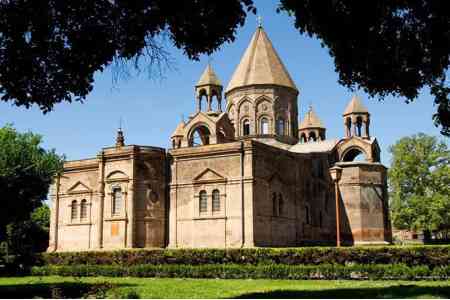
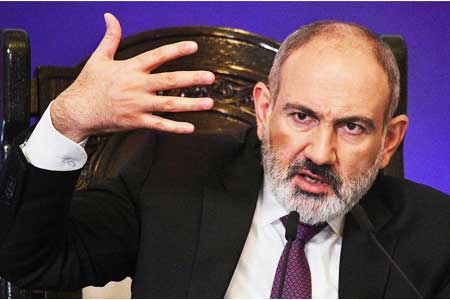
ArmInfo. By comparing serious domestic political, spiritual and canonical problems of church life with an incident in a private IT company, Armenian Prime Minister Nikol Pashinyan deliberately belittles the centuries-old mission and order of sovereign governance of the Armenian Apostolic Church (AAC), as noted in a statement received by ArmInfo, issued by the Pan- Armenian Council for the Defense of the Armenian Church in connection with the Prime Minister's publication on his Facebook page on July 19. The Council noted that the purpose of this post is another attempt to discredit the senior clergy of the Armenian Apostolic Church and sow distrust and hatred in society.
"Pashinyan's actions are not only disproportionate, but also manipulatively distort the facts, openly provoking anti-church hysteria. The Constitution guarantees the separation of state and church. The Prime Minister's public "witch hunt" against the clergy grossly violates this principle, leading to a dangerous encroachment on state sovereignty over church territory," the Council said in a statement.
Additionally, the Pan-Armenian Council pointed out that the use of terms such as "desecration," "betrayal," and "adultery" serves as a tool for the Prime Minister to denigrate individuals and the entire church institution without a completed investigation and a reasoned judicial procedure. "Today, Catholicos of All Armenians Karekin II is the target, tomorrow - any clergyman who dares to express an opposing point of view," the Council emphasizes.
In light of the above, the Pan-Armenian Council for the Defense of the Armenian Church demanded that Pashinyan immediately issue a public apology to the AAC and renounce his assessments regarding the Church's internal affairs. The Council also called on human rights organizations to address this issue, which represents a form of state pressure on religious freedom and the autonomy of the church.
"We remind all levels of state power that issues of church discipline are regulated exclusively by canon law, and not by the intervention of the executive or legislative branches. We call on all structures, public, academic and journalistic circles operating in the homeland and in the Diaspora to join our voice and say a single, sharp "No" to the persecution of the church sponsored at the state level," the Council concluded.




















 Political scientist: The failure of the mission to adopt a new Armenian Constitution could raise the question of Pashinyan`s resignation.
 Opinion: Russia`s involvement in the Organization of Turkic States may increase its international weight, but will force a redistribution of political influence within it
 Expert: Economic pressure on Armenia may be virtually painless for other EAEU members, but not for Armenia itself
 Drmeyan: The ECHR rejected Azerbaijan`s appeal in the case of Artsakh Defense Army Major Hayk Toroyan
 Zakharova commented on the scandalous epithets of the governor of Armenia`s Shirak region about "Ivanov"
 Nikolai Bordyuzha proposed excluding Armenia from the CSTO.
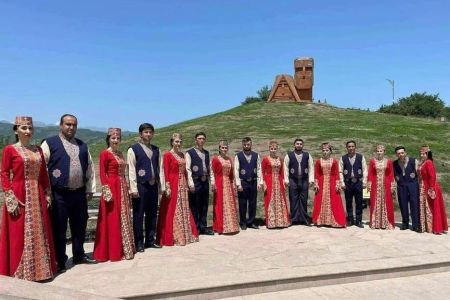 The participation of Artsakh ensembles in an international festival in Vienna was cancelled following the intervention of several foreign embassies
 Expert: It`s time for Armenia to move away from uncertainty and choose between West and East
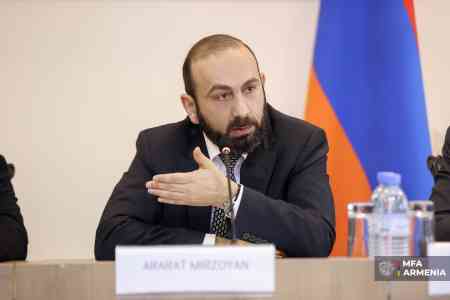 The Armenian Foreign Minister commented on the country`s return to work within the CSTO.
 The Artsakh Public Council expressed outrage at the UN Secretary-General`s behavior
 Lukashenko called for Armenia to assume the CIS presidency in 2029
 Dmitry Medvedev predicted a Ukrainian-like fate for Armenia amid the country`s shift in foreign policy
 Russian Security Council: In Armenia, they want to force Russian asset owners to dispose of their assets
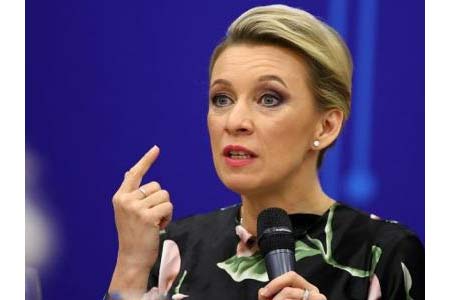 Zakharova: Russia ready to discuss with Armenia the prospects for expanding military cooperation as part of a review of bilateral ties
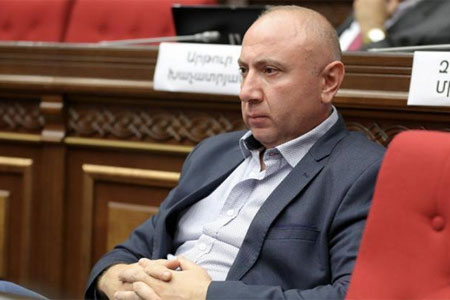 Tevanyan: Armenia, like Ukraine and Moldova, is being drawn into the EU’s global war
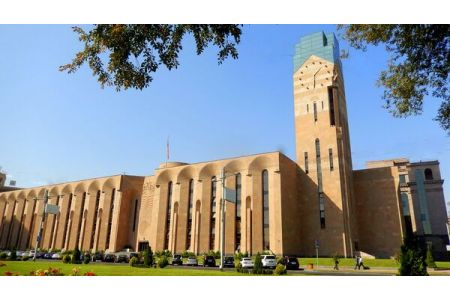 Yerevan City Hall is considering introducing a valet parking system in the city
 Expert: The circus surrounding the “Albanization” of Armenian culture in the presence of foreign ambassadors in occupied Artsakh is genocide