

ArmInfo. The results of genetic and archaeological studies have confirmed the presence of an Armenian trace in Volga Bulgaria, located in the Volga region, as well as their significant influence on architecture and important role in the economic and cultural life of the region.
As noted in a message received by ArmInfo from the Geghard Foundation, the study was conducted by scientists from the Sirius University of Science and Technology of the Russian Federation in cooperation with the Vavilov Institute of General Genetics of the Russian Academy of Sciences and the Research Institute of Anthropology of Moscow State University. According to the data obtained, the Armenian trace begins to be traced back to the Middle Ages, especially in the period from the 10th to the 11th centuries.
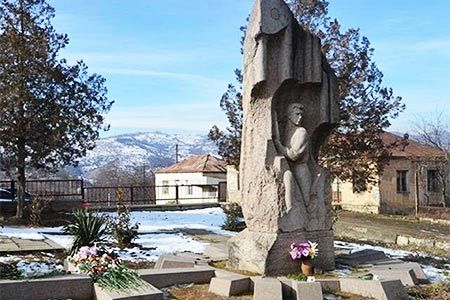
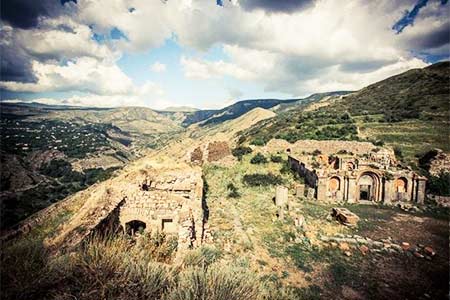
As part of the study, scientists studied the DNA of three individuals buried near the "Greek Palace." According to the researchers, the "Greek Palace" , a small Christian chapel, is most likely of Armenian origins. They came to this conclusion during excavations of the chapel's ruins and adjacent southern and southeastern areas, where archaeologists discovered and examined 113 Christian burials. Thus, according to the source, genomic analysis of two men confirmed their Armenian origin, which indicates migration from the Caucasus or Anatolia.
"This means that their ancestors came from the south, probably as traders or artisans," the report explains. Additionally, the Foundation noted that archaeological excavations at the "Greek palace" were carried out twice: first in 1916 by V. F. Smolin, and later in the mid-1940s by A. P. Smirnov. The structural and dimensional features of the chapel, along with tombstones bearing Armenian inscriptions, allowed researchers to associate it 14th-century Armenian churches in Noravank, Theodosia and Old Crimea. As a result of the excavations, it was also established that the objects found in some burial pits resemble the work of Armenian artisans from medieval Ani. "The reconstruction of skulls from this cemetery revealed characteristics of the Armenoid type among the buried individuals. One of them was identified as a Chinese woman. It appears that many Christians living in Bolgar found their final resting place in the cemetery of the Armenian colony," the Foundation concluded.











 Expert: The arrest of opposition figures in Armenia for social media posts is a systematic attempt to intimidate the public and suppress dissent.
 Azerbaijani Studies Expert: While Azerbaijan Prepares Its Generation for War, Aliyev’s Aide Calls on Armenia to Prepare Armenian Society for “Peace”
 Turkologist: Azerbaijan will never, under any circumstances, stop pressuring the Armenian people
 Political scientist: We need to move away from the question of "when" and replace it with more important questions
 International Law Specialist: Azerbaijan intends to initiate legal proceedings against Armenia by sentencing Armenian prisoners
 Lukashenko called for Armenia to assume the CIS presidency in 2029
 Dmitry Medvedev predicted a Ukrainian-like fate for Armenia amid the country`s shift in foreign policy
 Russian Security Council: In Armenia, they want to force Russian asset owners to dispose of their assets
 Zakharova: Russia ready to discuss with Armenia the prospects for expanding military cooperation as part of a review of bilateral ties
 Tevanyan: Armenia, like Ukraine and Moldova, is being drawn into the EU’s global war
 Yerevan City Hall is considering introducing a valet parking system in the city
 Expert: The circus surrounding the “Albanization” of Armenian culture in the presence of foreign ambassadors in occupied Artsakh is genocide
 Political scientist: If Russian-Armenian relations are destroyed, Turkey will take Russia`s place
 Political scientist: The Armenian public is simply obliged to significantly change the entire content of public discourse and struggle
 Cross tattoos are being removed from the skin of Christian prisoners in Azerbaijan by fire, according to a human rights activist.
 Zakharova: Armenia`s likely introduction of visas with Russia will be a step against Yerevan itself
 Putin: Armenia`s recognition of Karabakh as part of Azerbaijan in Prague has given Russia`s position on this issue an ambivalent character
 Putin: Armenia`s adoption of the law on EU accession means an announcement of its withdrawal from the Eurasian Economic Union
 Aram Vardevanyan: Public demands solutions, not apology scandals in Parliament
