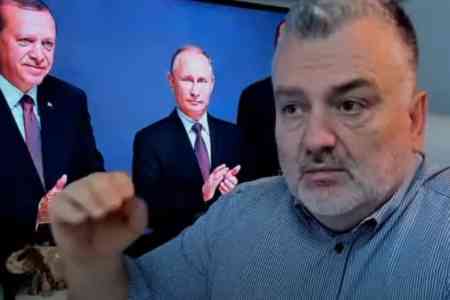
ArmInfo. The deterioration of relations between Azerbaijan and Russia should be considered not separately, but in the format of a with the participation of Turkey, Iran and, of course, Great Britain. This viewpoint was expressed by the well-known Bulgarian analyst and internationalist Plamen Paskov on his YouTube channel. Moreover, an attempt to not take into account at least one of the components of the will lead to a very incomplete, to put it mildly, distorted picture.
According to Paskov, if Azerbaijan's relations with Russia were subjective and self-sufficient, then there would never have been problems between the two countries. This is not only a matter of the presence of a huge Azerbaijani diaspora in Russia sending billions of money home, but also of Russia providing Baku with high-quality Chechen oil, that is mixed with low-quality Baku oil and then exported. These are also purely economic ties between the countries.
However, the reason for the strained relations is the presence of the Turkish factor. Namely, Azerbaijan is gradually becoming a vilayet of Turkey, albeit informally at this point. This process of vilayetization dictates the need for a stable land strategic logistics road between Turkey and Azerbaijan through the Nakhichevan autonomy, which is already undergoing the final process of Turkish infiltration. The 40-km section of southern Armenia, which serves as a border communication between Iran and Armenia, and then Russia, hinders Turkey from implementing this plan. Consequently, one of the necessary and useful channels of communication between Iran and Russia is severed, as these channels are crucial not only diplomatically, but also in terms of military, economic and strategic importance.
Therefore, when it comes to Turkey's geopolitical need for this corridor, Paskov is convinced that it is necessary to take into account the long-term interests of Great Britain in this region. In fact, the political scientist believes that Britain is the ultimate beneficiary of this process, pushing and helping Turkey and Azerbaijan in implementing the project. In his opinion, Turkey, as it was, with short breaks of world wars, remains an important subject representative of Great Britain, This continues to drive a wedge between Russia and Azerbaijan, while also keeping relations between Turkey and Russia at a certain distance, despite the presence of great mutual interests in energy, economic, trade and investment. Therefore, examples of excessive closeness between Turkey and Russia end either with the murder of the Russian Ambassador, which is certainly a casus belli, or with the shooting down of a Russian attack aircraft over Syria. Therefore, Turkey behaves in relation to Russia sinusoidally, without a certain stable line of behavior.
And Turkey should have shown gratitude and treated Russia, with at least, some level of respect. But Turkey hasn't done so, they sell to Ukraine, quarrels with Russia about the grain deal, etc. So the actions of Erdogan and Aliyev do align with their greater self-sufficient interests>, Paskov noted. This means, he believes, that there is another factor at play and this factor is called Great Britain, which is no less eager than Turkey to cut Iran from Russia and has been considering ways to weaken Iran, including by supporting separatism in the so-called Iranian Azerbaijan, where its agent network has long been working no worse, and even better than Mossad. Paskov believes that Turkey currently is boldly expanding its influence in the Russian Caucasus and skillfully infiltrating the Volga region of Russia, with assistance from Azerbaijan.












 RA Government guarantees high salaries for CC justices, Syunik families deprived of family benefits - politician
 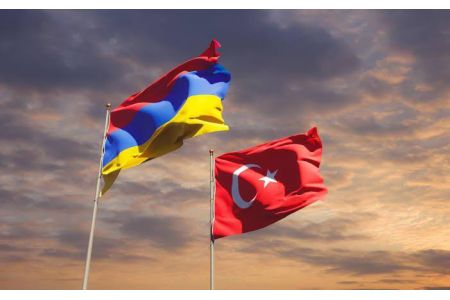 Armenian experts, leading Turkish think tanks discuss prospects for expanding cooperation
  Political Scientist: As long as the opposition remains silent, Pashinyan can use Plan B and secure a constitutional majority
 US-Iranian memorandum more beneficial for Iran from political and economic perspective - expert
  Zakharova: Armenia`s pro-EU pivot poses economic security risks to EAEU member states
 It`s time for South Caucasus countries to think of South Caucasus as single, unified region - RA premier
  Pashinyan: Armenia and Azerbaijan should leave each other alone
 Moscow sees situation with Armenia as attempt to attack Russia-involving integration associations - Russian presidential aid
 Zakharova: Armenia views relations with Russia as tool for financially securing reorientation toward EU
 The Armenian Minister of Justice and the EU Ambassador discussed visa liberalization issues for Yerevan.
 Azerbaijan`s aggressive plans against Armenia became possible in wake of Pashinyan`s decisions on Artsakh - expert
  Zakharova: Russia sent a note of protest to Armenia over the act of vandalism at the "Mother Armenia" memorial in Gyumri
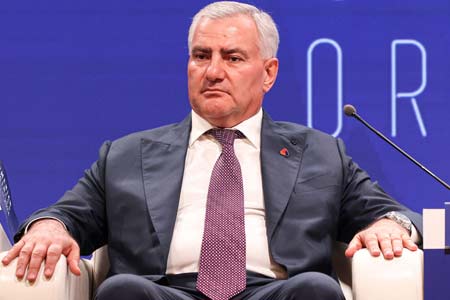 Samvel Karapetyan proposes creating a post-election opposition coalition
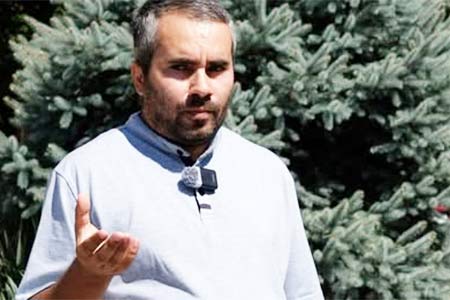 Artsakh`s Cultural Heritage Ombudsman called on Moscow to respond to destruction of WWII monuments by Azerbaijan in occupied NKR
 Prosecutor General`s Office petitions Central Electoral Commission for criminal prosecution of Robert Kocharyan
 Dutch Prime Minister expresses his support for Armenia`s democratic reform and economic diversification agenda
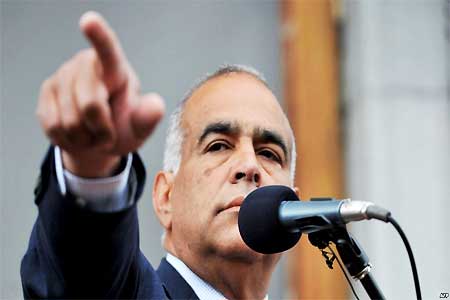 Heritage: It`s time for Armenia`s opposition to present people with legitimate alternative to power
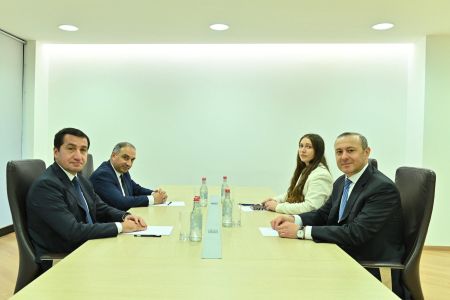 RA Security Council Sec, Assistant to President of Azerbaijan hold negotiations in Dilijan