


ArmInfo. The problem of West Nile fever was studied in Armenia 40 years ago. This was written on his Facebook page by the rector of Yerevan State Medical University Armen Muradyan.
He noted that the university studied the problem in 1985-1999. West Nile fever is classified as an arbovirus, which is transmitted by live carriers, mainly ticks and mosquitoes. There are more than 500 types of arboviruses, of which more than 100 are pathogenic for humans.
The Department of Epidemiology of the University conducted scientific research in Armenia, which included epidemiological, entomological, virological and serological studies. "Every year in the fall and spring (at the peak of the disease), we visited 10 regions of Armenia with our entomologists, where data was collected on 118 settlements. The results of these studies were saved. In particular, a virological study was conducted on newborn mice aged 1-2 days, these mice are very sensitive to arboviruses," says Professor of the Department of Epidemiology Hasmik Oganesyan.
In the world, arboviruses are transmitted mainly through birds and rodents. Migratory birds become infected with the virus from tick or mosquito bites, after which they can be transmitted to humans.
Arboviruses have a pronounced seasonality. There are pathogens that can occur in a very mild form with flu-like symptoms, but severe forms are also possible.
"Various pathogens of arboviruses have been isolated in 8 out of 10 regions of Armenia. The greatest prevalence is observed in Aragatsotn, Armavir, Ararat regions, where mosquitoes were carriers, and in Kotayk region - ticks. We did not find pathogens in Lori and Shirak regions. For the first time in Armenia, we isolated 22 strains of West Nile fever from mosquitoes and only 4 strains from ticks. Therefore, we focus mainly on mosquitoes," emphasizes Hasmik Oganesyan.
According to her, natural foci of transmission of the virus can persist for a long time and not cause concern, but recently the situation has changed due to climate change, rising temperatures and a large flow of migratory birds.
According to the WHO, this disease is asymptomatic in most cases, but can cause severe complications, including death. The infection is transmitted to humans from live carriers - ticks, mosquitoes, and is not transmitted from person to person. There is currently no special treatment or vaccine.
Note that according to the RA Ministry of Health, as of August 24, 75 cases of West Nile fever have been recorded in the country. 8 people are undergoing treatment at the Center for Infectious Diseases, another 9 people are under observation with suspected of having this acute viral disease. At the moment, only one fatal case has been confirmed: a patient with multiple concomitant diseases has died.




























 Opinion: The development of the Amulsar mine near the resort town of Jermuk is the beginning of an environmental disaster in Armenia
 Expert: The arrest of opposition figures in Armenia for social media posts is a systematic attempt to intimidate the public and suppress dissent.
 Azerbaijani Studies Expert: While Azerbaijan Prepares Its Generation for War, Aliyev’s Aide Calls on Armenia to Prepare Armenian Society for “Peace”
 Turkologist: Azerbaijan will never, under any circumstances, stop pressuring the Armenian people
 Political scientist: We need to move away from the question of "when" and replace it with more important questions
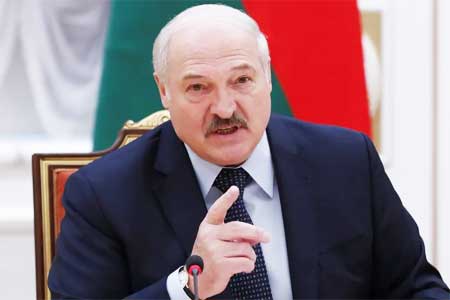 Lukashenko called for Armenia to assume the CIS presidency in 2029
 Dmitry Medvedev predicted a Ukrainian-like fate for Armenia amid the country`s shift in foreign policy
 Russian Security Council: In Armenia, they want to force Russian asset owners to dispose of their assets
 Zakharova: Russia ready to discuss with Armenia the prospects for expanding military cooperation as part of a review of bilateral ties
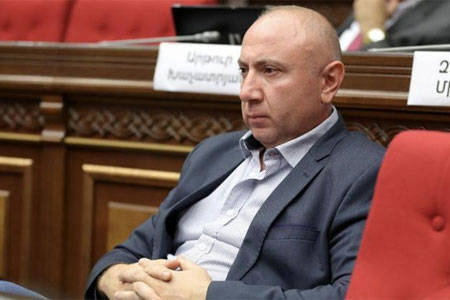 Tevanyan: Armenia, like Ukraine and Moldova, is being drawn into the EU’s global war
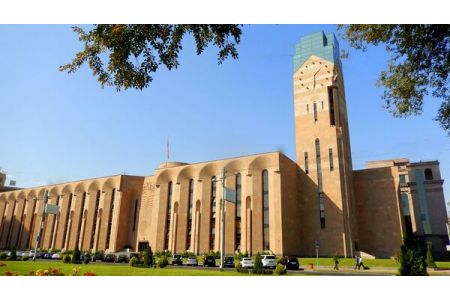 Yerevan City Hall is considering introducing a valet parking system in the city
 Expert: The circus surrounding the “Albanization” of Armenian culture in the presence of foreign ambassadors in occupied Artsakh is genocide
 Political scientist: If Russian-Armenian relations are destroyed, Turkey will take Russia`s place
 Political scientist: The Armenian public is simply obliged to significantly change the entire content of public discourse and struggle
 Cross tattoos are being removed from the skin of Christian prisoners in Azerbaijan by fire, according to a human rights activist.
 Zakharova: Armenia`s likely introduction of visas with Russia will be a step against Yerevan itself
 Putin: Armenia`s recognition of Karabakh as part of Azerbaijan in Prague has given Russia`s position on this issue an ambivalent character
 Putin: Armenia`s adoption of the law on EU accession means an announcement of its withdrawal from the Eurasian Economic Union
 Aram Vardevanyan: Public demands solutions, not apology scandals in Parliament
