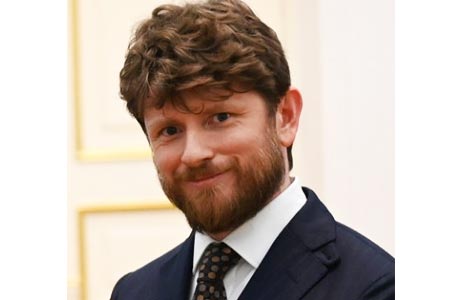
ArmInfo.Below is an interview by French Ambassador to Armenia Olivier Decottignies.
Alain Boinet: Mr. Ambassador, thank you for answering our questions for the online magazine D‚fis Humanitaires. You are French Ambassador to Yerevan, Armenia. My first question concerns Missak and M‚lin‚e Manouchian who entered the Pantheon on February 21. It is a strong symbol to salute the memory of a resistance fighter who fought with his comrades for our country during the war and who paid for it with their lives. What is the significance of this event?
Olivier Decottignies: Thank you very much. It is first and foremost a French event, a Republican event, a national commemoration. But it is also a Franco-Armenian event in that the leader of this group of foreign resistance fighters, who are honored in the Pantheon, was an Armenian. Missak Manouchian was a survivor of the 1915 genocide, he experienced the orphanages of Lebanon as a child, then he arrived in France as an adult. He is therefore a multifaceted personality, at the same time Armenian, communist activist, volunteer in Armenian charitable organizations, resistance fighter, poet, worker. Through him and his wife M‚lin‚e, who was also a member of his network and who rests alongside him in the Pantheon, the entire Manouchian group as a whole is honored. A group in which there were not only Armenians - it included Italians, Hungarians, Poles, Spaniards. Many of them were Jews. It is the contribution to the Resistance of all these foreigners who died for France that is recognized.
Alain Boinet: The Armenian Prime Minister, Nikol Pashinian, proposed at the end of January that Azerbaijan sign a non-aggression pact which would anticipate a global peace treaty. On February 13, 4 Armenian soldiers were killed by Azeri fire in Syunik province. President Ilham Aliyev regularly makes bellicose statements. How can we understand this attitude and what can be done to preserve peace in the South Caucasus?
Olivier Decottignies: The situation which prevails between Armenia and Azerbaijan is still a situation of armed conflict, since we are talking about negotiating a peace treaty. This conflict regularly gives rise to incidents along the lines of military contact. Moreover, these lines of contact do not correspond everywhere to the outline of the border itself, since Azerbaijan has militarily occupied, since its offensives of May 2021 and September 2022, entire sections of the sovereign territory of Armenia. There are negotiations that have been initiated in different formats. These negotiations today are no longer making substantial progress and this explains the concerns, not only of the Armenian authorities, of France, but of all those who work for peace. The statements by President Aliyev to which you refer obviously contribute to this concern.
Alain Boinet: One of the reasons mentioned by Azerbaijan is the passage between its territory, to the east, and Nakhitchevan, to the west, which is Azeri and which is separated in some way by Armenia and his province of Syunik. For the Armenians, what is the solution to allow passage between these two parts of Azerbaijan? And why is this not happening?
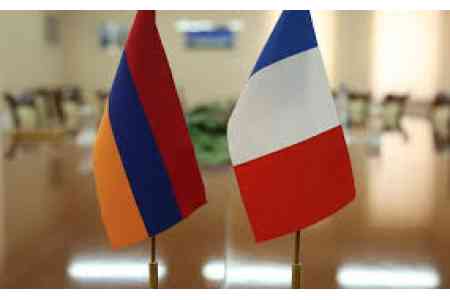
Olivier Decottignies: The proposal that the Armenians are making, not only to Azerbaijan but to all the states in the region, is to find a traffic regime, which the Armenians have called "peace crossroads." ¯ This is an initiative that was launched last October by the Armenian Prime Minister, from Georgia. It does not only concern Azerbaijan and Armenia, but aims to integrate all neighboring states, by facilitating movement in the region under certain conditions: freedom, reciprocity, equality of these states and respect of their sovereignty. It is a formula which has the merit of being able to bring together all the States in the region around common interests and clear principles. This formula has the support of France.
Alain Boinet: So why isn't this happening?
Olivier Decottignies: The discussions have several aspects. Including a part which is essential, when you want to be at peace with your neighbor, which consists of determining where one country begins and where the other ends. The delimitation of the border is not the subject of an agreement between the two States, not only on the route, but on the method, and in particular on the references which would be used. The key principle is that of the Alma-Ata Declaration, which provides that the borders of the states emerging from the Soviet Union correspond to the administrative boundaries of the former Soviet republics. It is a principle which commits both Armenia and Azerbaijan, which the two States reiterated in Prague in October 2022, thanks to the mediation of President Emmanuel Macron. Then, to proceed with the plot, you need a reference frame. This reference is provided by maps from the Soviet era. There is currently no complete agreement between the parties on which set of cards should be based.
Alain Boinet: Does Armenia agree with this card game? With the borders as they were defined at the time?
Olivier Decottignies: Armenia adheres to the principles of Alma-Ata. But these principles are not only imposed on Armenia, they are also imposed on Azerbaijan as well as on all the post-Soviet states which subscribed to this rule at the time of the breakup of the Soviet Union. . We are talking about a time when administrative boundaries existed, but had no more physical manifestation than the boundaries between French departments or regions.
Alain Boinet: Armenia's neighboring countries are therefore Russia, Azerbaijan, Turkey, Iran, Georgia. What is the attitude of these countries in this situation in the South Caucasus, in this tension that you just mentioned? What is their position in relation to Armenia? What can more distant countries like France, member countries and the European Union, India, Greece, the United States, India do who also feel concerned by the issues in this region?
Olivier Decottignies: It is difficult for me to express myself on behalf of these countries that I do not represent. On the other hand, I have regular dialogue with the Armenian authorities and I can try to explain to you their situation.
Armenia has noted on several occasions, in particular in May 2021 and September 2022, that the security guarantee historically provided to it by Russia, and which in principle binds Russia within the framework of the Collective Security Treaty Organization (editor's note OTSC), had not played. She also realized in 2023 that the Russian peace forces which had been deployed in Nagorno-Karabakh as part of the 2020 ceasefire agreement, concluded under the aegis of Russia, had remained the gun at the ready when the Azerbaijani offensive was launched against Nagorno-Karabakh.
In fact, Russian soldiers only left their barracks when it came time to disarm the forces in Nagorno- Karabakh, as provided for in the ceasefire agreement that the de facto authorities had concluded with the government. Azerbaijani. There was therefore an Azerbaijani offensive against Nagorno-Karabakh, carried out with the support of Turkey, but also with the complicity of Russia, and which resulted in the massive and forced departure of almost all Armenians from this territory. - more than 100,000 people - who are refugees in Armenia.
Therefore, Armenia seeks to diversify its partnerships in the field of security. To do this, it turns to more distant states, such as France, with which a defense relationship is developing, which we assume, in terms of equipment, training and advice. And France, by choosing this defense relationship with Armenia, has broken a taboo, since it is the first NATO country to provide defense equipment to Armenia, which remains a member of the Organization of the collective security treaty. In the same spirit, Armenians are also turning towards India. And after the French Minister of the Armed Forces on February 23, the Greek Minister of Defense visited Armenia on March 4.
In another register, we must not forget Iran, which is an important neighbor for Armenia, to the extent that Tehran has reaffirmed, on numerous occasions, its concern that the Armenian-Iranian border to the south of Armenia is not controlled by any state other than Armenia.
Alain Boinet: The President of the Republic, Emmanuel Macron, recently declared that France had a friendly relationship with Armenia. Observers understood that there was an evolution there, the affirmation of a particular relationship. Can you tell us more?
Olivier Decottignies: Proximity is not new, it is the result of a long shared history, between the two States, but also between the two peoples. Today, there is above all a very clear line, which is that of the President of the Republic: that France's support for Armenia is unconditional, complete and constant. This is the line that with my team in Yerevan, under the authority of the Minister for Europe and Foreign Affairs and with the support of all the state services concerned, we are implementing.
Alain Boinet: Doesn't this create obligations in the current situation?
Olivier Decottignies: This position of France is not declaratory: it is translated into actions. In the humanitarian field, France was present for the massive exile of 100,000 Armenians from Nagorno- Karabakh with humanitarian aid which was increased to 29 million euros for the year 2023, i.e. that is, more than any other bilateral donor. France was the first to send emergency medical aid to Armenia, the first to evacuate seriously injured and seriously burned people from Nagorno-Karabakh to French hospitals. France was also there on the political level. She referred the situation in Nagorno-Karabakh to the Security Council three times. At the European level it has pushed for measures which were adopted by the Foreign Affairs Council last November: on the one hand, the strengthening of the European observation mission, whose numbers will double; and on the other hand, the opening of discussions so that Armenia can have access to the European Peace Facility. Finally, France was there on the bilateral level, including, as we have said, with regard to the defense relationship.
Alain Boinet: In this situation of tension, or even possible slippage, which Armenian Prime Minister Nikol Pashinian recently spoke about on Armenian television, what can we expect from the European Union, but also from the United Nations and other countries in order to seek to avoid the risk of a possible conflict?
Olivier Decottignies: All member states of the United Nations are, in principle, committed to respect, sovereignty and territorial integrity of other members. This is therefore what we have the right to expect from any State. There are obviously special responsibilities of the member states of the Security Council, of which France is a member.
Armenia wants to get closer to the European Union. Prime Minister Nikol Pashinian said it in front of the European Parliament on October 17: Armenia is ready to develop its relationship with the European Union as far as the European Union is ready to go. Armenia welcomed the prospect of membership in the Union which was opened for Georgia a few weeks ago. She also held a cooperation council with the European Union.
The European Union observation mission is a very good example of what the European Union can do effectively and concretely. Having been on the ground, on patrol with the mission, I was able to see that the European observers are warmly welcomed, that they are greeted friendly in the villages and along the roads, that their presence reassures. They are proof, for these vulnerable and isolated populations who live in military contact zones, that they are not forgotten by the world. Beyond this role of reassurance, there is, due to the presence of this observation mission, the possibility of impartial information from the international community, which is fundamental in a crisis of this nature. It helps dissipate the fog of war.
Alain Boinet: Can we imagine that in the current context, this mission would be particularly mobilized in the Syunik region which seems particularly threatened?
Olivier Decottignies: The mission's mandate covers the entire Armenian territory. She therefore has the possibility of going everywhere. Its patrols primarily concern border areas and military contact zones. The increase in power of the mission aims to have sufficient personnel to increase patrols and Syunik is obviously one of the priority areas in this context.
Alain Boinet: Do you think that the current fragmentation of the world illustrated by the war in Ukraine, the Sahel or the Taiwan Strait is a favorable moment that Azerbaijan could exploit by attempting a military coup against Armenia, a country member of the international community represented at the United Nations.
Olivier Decottignies: I do not know what the intentions of the Azerbaijani authorities are and I have no contact with them. But what I note is that in this fragmented, degraded international environment that you describe, there have been several military episodes in recent years pitting Azerbaijan and Armenia, or Azerbaijan and Nagorno-Karabakh region, and that each time, Azerbaijan took the initiative.
Alain Boinet: On September 19 and 20, a military offensive by Azerbaijan chased 100,000 Armenians from their ancestral territory of Nagorno-Karabakh or Artsakh located in Azerbaijan. How were they received in Armenia? What is their current situation? And what help does France provide to these refugees?
Olivier Decottignies: 100,000 people forced to leave their homes in less than a week is no small thing. Given the scale of this population movement, the Armenian response, with the support of the international community and in particular the support of France, was satisfactory. In particular, we have not seen the formation of refugee camps. Accommodation solutions could be found, with voluntary individuals, with relatives, but also in accommodation requisitioned by the State, whether hotels, gymnasiums or schools. The immediate response was, I think, up to the challenge. The outpouring of solidarity was very strong in Armenia and the international community was there. France played a key role in this response, since we were the first donor of bilateral humanitarian aid to Armenia, with 29 million euros in 2023, thanks to the mobilization of the Government and Parliament.
Now that this emergency phase has passed, the question of the integration of refugees arises. This integration raises legal questions, such as the choice of opting, or not, for Armenian nationality. It also involves responding to very concrete challenges, facing which we stand alongside Armenia:
The question of housing, that is to say not simply transitional accommodation but sustainable housing;
The question of employment with a structure of the labor market which was quite different in Nagorno- Karabakh from that of Armenia, with a weight of the public sector and the agricultural sector which was much greater;
The question of education, out of the 100,000 refugees, we have approximately 23,000 children of school age who are integrated into the Armenian school system but all this has a cost and requires support;
Finally, a question which is far from being secondary, that of psychosocial support. We are talking about a population traumatized by nine months of blockade, a brutal military offensive, a forced exodus. From a polytraumatized population because for many, this is not the first experience of forced displacement. Some were driven out in the late 1980s and early 1990s by anti-Armenian pogroms in Azerbaijan. And for every Armenian, from Nagorno-Karabakh, from Armenia or in the diaspora, there is, whether we like it or not, the memory of the genocide. It is therefore a trauma which rekindles others and which requires appropriate psychosocial support. This is one of the axes of our humanitarian cooperation with Armenia, already and for the months to come.
Alain Boinet: In France, humanitarian aid and development aid, apart from the Crisis and Support Center of the Ministry of Europe and Foreign Affairs and the French Development Agency, is essentially the work of associations, foundations, local authorities What can these actors do in Armenia today for those who are not yet present there and what do you suggest to them?
Olivier Decottignies: These actors are already doing a lot. Armenia is a land of decentralized cooperation. There is not a single region in Armenia which has not established, at the municipal or governorate level, cooperation with French local authorities. And on the French side, civil society organizations, diaspora organizations, NGOs are mobilized and are present on the ground. We supported, via the CDCS, Acted, M‚decins du monde, Action contre la Faim, who are hard at work in Armenia with their Armenian partners. Many diaspora organizations have been active in the country since independence, or even before, since the starting point of French humanitarian action in Armenia was the earthquake of December 7, 1988.
The priority for organizations wishing to help Armenia and Armenians is of course support for the refugees from Nagorno-Karabakh, under the four main aspects that we mentioned: housing, employment, education and psychosocial support.
At the same time, there is the need, in the situation Armenia finds itself in today, to focus on the most strategic sectors and the most exposed regions. This means the structuring sectors for the territory, the economy, the resilience of Armenia and the border regions, close to the lines of military contact. From this point of view, there is no small subject or small project. A territory that holds up is a territory where the population remains, therefore where there are jobs, services which can - which must - also be medical, educational and cultural services. I think that today the important thing is to concentrate where we have the most impact and to act not only in a compassionate way, but in a strategic way. You should always think about Armenia with the map in front of you.
Obviously, all these organizations, these initiatives know that they can find advice from the Embassy team: our door is always open to them.
Alain Boinet: How do you see the future of Armenia?
Olivier Decottignies: I see him looking towards Europe. This is the meaning of the democratic trajectory that the Armenian people chose during the "velvet revolution" of 2018 and which they have maintained since then, through the ordeals. From this point of view, Armenia's recent accession to the International Criminal Court is also a very strong signal. However, turning towards Europe does not mean isolating oneself from its regional environment. Building the future of Armenia requires reaching a peace agreement with Azerbaijan but also, more broadly, a modus vivendi which allows all the States in the region to take full advantage of the strategic position that They occupy, at the crossroads of Europe, Asia and the Middle East. This is also why the resolution of this conflict matters to us, Europeans.
Alain Boinet: How would you like to conclude this interview?
Olivier Decottignies: I would like to conclude with an expression of gratitude towards all those who form our relationship with Armenia and whom I meet in France and when they go to Armenia: the humanitarian community, civil society, the diaspora, the local authorities, elected officials, French administrations. Always, they welcome me very favorably with a lot of ideas, a lot of enthusiasm and a lot of commitment in developing this relationship with Armenia. I believe that it is a great opportunity to benefit from this support and there are few bilateral relations that generate such support. From the bottom of my heart, thank you.







 Armenian Analyst: One of the Key Tasks of the United Opposition is to Form Effective Mechanisms to Contain the Armenian Authorities
 Armenian expert: Could modern Azerbaijan even exist without Russian and Soviet modernization?
 South Caucasus is entering a new phase of turbulence - ex-official
  Zatulin: Pashinyan was eager to get back to Russia because he actually lost the elections
 Human rights activist Ruben Melikyan dismissed from YSU
 Zakharova: Armenia`s pro-EU pivot poses economic security risks to EAEU member states
 It`s time for South Caucasus countries to think of South Caucasus as single, unified region - RA premier
  Pashinyan: Armenia and Azerbaijan should leave each other alone
 Moscow sees situation with Armenia as attempt to attack Russia-involving integration associations - Russian presidential aid
 Zakharova: Armenia views relations with Russia as tool for financially securing reorientation toward EU
 The Armenian Minister of Justice and the EU Ambassador discussed visa liberalization issues for Yerevan.
 Azerbaijan`s aggressive plans against Armenia became possible in wake of Pashinyan`s decisions on Artsakh - expert
  Zakharova: Russia sent a note of protest to Armenia over the act of vandalism at the "Mother Armenia" memorial in Gyumri
 Samvel Karapetyan proposes creating a post-election opposition coalition
 Artsakh`s Cultural Heritage Ombudsman called on Moscow to respond to destruction of WWII monuments by Azerbaijan in occupied NKR
 Prosecutor General`s Office petitions Central Electoral Commission for criminal prosecution of Robert Kocharyan
 Dutch Prime Minister expresses his support for Armenia`s democratic reform and economic diversification agenda