
ArmInfo.David Babayan, Advisor to the President of Artsakh, has commented on the ruling by the International Court of Justice.
"Armenian lawyers have done a good and highly professional job at the International Court of Justice. Thanks for this. But, in general, the decision of the International Court of Justice on the lawsuit filed by Armenia against Azerbaijan can be characterized as 60/40 in our favor. Although, not in ours, but in favor of justice, in favor of law and morality. The main thing is that the court ruled that Azerbaijan is obliged to take all measures in its power to ensure the unhindered movement of people, vehicles and goods along the Lachin corridor in both directions. No less important is the fact that Azerbaijan's claims were rejected.
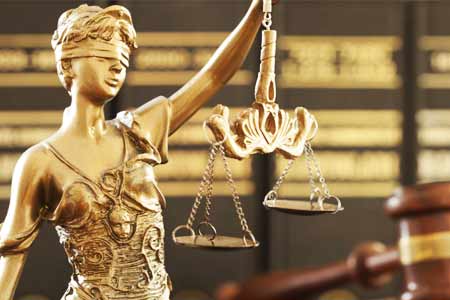
But, on the issue of these pseudo "eco-activists" and "gas torture" of the people of Artsakh by Azerbaijan, the International Court actually gave "indulgence" to Azerbaijan, and if in churches indulgence can be obtained after repentance, in the behavior of Baku instead of repentance, we have sincere self-justification. This is the case when Themis must remove the bandage from her eyes," he wrote in a Facebook post.
The International Court of Justice (ICJ) has ruled that Azerbaijan must guarantee free movement along the Lachin Corridor.
The Lachin Corridor has been closed since December 12, placing Artsakh under blockade. The corridor, the sole route connecting Artsakh with Armenia, has been blocked by Azerbaijani activists supported by their government. Armenia sent a request to the ICJ on December 28 for provisional measures ordering Azerbaijan to reopen the corridor.
In its final ruling on February 22, the United Nations court observed that "since 12 December 2022, the connection between Nagorno-Karabakh and Armenia via the Lachin Corridor has been disrupted." The ICJ ruled that Azerbaijan must "take all measures at its disposal to ensure unimpeded movement of persons, vehicles and cargo along the Lachin Corridor in both directions."
"The disruption on the Lachin Corridor has impeded the transfer of persons of Armenian national or ethnic origin hospitalized in Nagorno-Karabakh to medical facilities in Armenia for urgent medical care. The evidence also indicates that there have been hindrances to the importation into Nagorno-Karabakh of essential goods, causing shortages of food, medicine and other life-saving medical supplies," the decision reads.
Armenia had also requested that Azerbaijan "cease its orchestration and support of the alleged 'protests' blocking uninterrupted free movement along the Lachin Corridor in both directions" and "immediately fully restore and refrain from disrupting or impeding the provision of natural gas and other public utilities to Nagorno-Karabakh." The ICJ rejected those provisional measures.
The ICJ also rejected a request for provisional measures ordering Armenia to halt any efforts to plant mines in territories that came under Azerbaijani control at the end of the 2020 Artsakh War, including "the use of the Lachin Corridor for this purpose." Azerbaijan requested that Armenia provide information about the quantity and location of landmines and booby traps and allow Azerbaijan to demine these territories.
Azerbaijan presented a similar request to the ICJ in December 2021. The ICJ rejected that request on the grounds that it did not have enough evidence that Armenia's alleged conduct violated the rights of Azerbaijani people under international law. It rejected the new request made by Azerbaijan on January 4, 2023 on the same grounds.















 Who and why is sacrificing RA National Security Service`s reputation? - expert
  Tehran creating security environment in which sustainable shipping in Strait of Hormuz difficult to imagine without its direct participation - expert
  Arrested Armenian oligarch on economy and new jobs
  NA Vice Speaker candidate believes his wife`s salary as director of HayPost is the lowest in the company`s history
 RF Permanent Representative: There is no CSTO-Armenia conflict
 Moscow: NATO seeking to "Pull" Armenia away from CSTO Allies
  Political analyst: Russia intends to determine which "Camp" Armenia will choose through a referendum
 Narek Karapetyan will give up his parliamentary salary in favor of charitable contributions.
 Armenian analyst: Developing relations with Europe and the U.S. must not jeopardize relations with regional powers
 Armenia and France discuss further development of strategic partnership and EU cooperation
  To overcome risks Armenia must reduce domestic escalation - expert
  Zatulin: Pashinyan was eager to get back to Russia because he actually lost the elections
 Human rights activist Ruben Melikyan dismissed from YSU
 Pashinyan removed from INNOPROM guest list
 Zakharova: Armenia`s pro-EU pivot poses economic security risks to EAEU member states
 It`s time for South Caucasus countries to think of South Caucasus as single, unified region - RA premier
  Pashinyan: Armenia and Azerbaijan should leave each other alone