


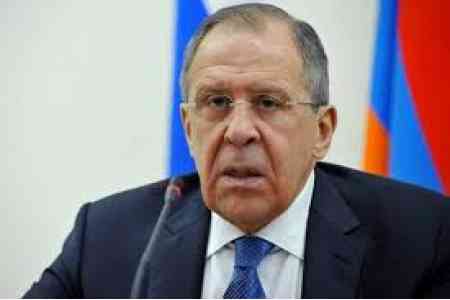
ArmInfo. The participants in the meeting of the Council of Foreign Ministers of the Collective Security Treaty Organization (CSTO Council of Foreign Ministers) adopted a document confirming the commitment to the principle of indivisibility of security. Minister of Foreign Affairs of Russia Sergei Lavrov stated at a press conference following the meeting of the CSTO Ministerial Council.
"We adopted a document on international security issues, which for the first time within the framework of the CSTO enshrined the principle of the indivisibility of security, the need to ensure equal and indivisible security, when no country will strengthen its security at the expense of the security of any other country. This principle was proclaimed quite a long time ago within the OSCE as a political obligation, but our Western partners categorically refuse to implement it in practice, and demanded the provision of legal security guarantees exclusively within the framework of the North Atlantic Alliance," he said. According to Lavrov, this document confirmed the adherence to this principle not only in the OSCE space, but also in the development of the entire international situation. The relevance of assertions of the indivisibility of security is now evident in the Indo-Pacific region as well.
According to him, the second document that was signed is an extensive Plan of consultations between the foreign ministries and ministries of defense. Lavrov added that it envisages coordination of actions in the Euro-Atlantic area (this is exactly the OSCE space), approaches to the agenda of the UN General Assembly and consultations on various regional crises and conflicts.
" A number of activities are devoted to coordinating positions on international information security and cybercrime. Consultations will be held on the military line, military-technical cooperation, the development of collective aviation forces and other aspects, including the training of CSTO peacekeeping contingents to participate in peacekeeping operations that are carried out through the UN. A separate item of the Plan provides for regular consultations through the press services of the Ministry of Foreign Affairs," the Russian minister said.
Regarding the expansion of the CSTO, Lavrov, in particular, said that, "As for the quantitative composition, there is quantity, but there is also quality, both from the point of view of the states themselves that are members of a particular military-political alliance, and from the point of view of existing defensive capabilities. We have repeatedly suggested to our partners from NATO on behalf of the CSTO (this was done for the first time many years ago at the level of heads of state and foreign ministers) to start a dialogue, establish mechanisms for interaction and consultations. They arrogantly refused. I think that it has already become clear to everyone that they cannot decide the fate of Europe."













 Political Scientist: As long as the opposition remains silent, Pashinyan can use Plan B and secure a constitutional majority
 US-Iranian memorandum more beneficial for Iran from political and economic perspective - expert
  Political analyst: While Pashinyan pledges peace with Azerbaijan, Baku continues promoting the "Western Azerbaijan" project
 Political analyst: In light of new realities, Yerevan may propose advancing peace process with Baku without constitutional referendum
 Present-day geopolitical competition shifts from territorial control to infrastructure flows
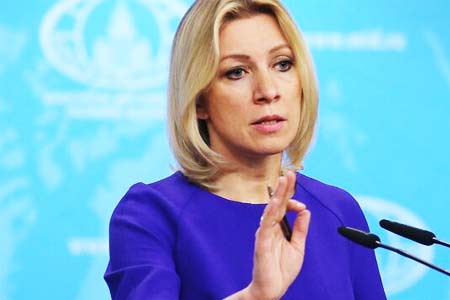
 Zakharova: Russia sent a note of protest to Armenia over the act of vandalism at the "Mother Armenia" memorial in Gyumri
 Samvel Karapetyan proposes creating a post-election opposition coalition
 Artsakh`s Cultural Heritage Ombudsman called on Moscow to respond to destruction of WWII monuments by Azerbaijan in occupied NKR
 Prosecutor General`s Office petitions Central Electoral Commission for criminal prosecution of Robert Kocharyan
 Dutch Prime Minister expresses his support for Armenia`s democratic reform and economic diversification agenda
 Heritage: It`s time for Armenia`s opposition to present people with legitimate alternative to power
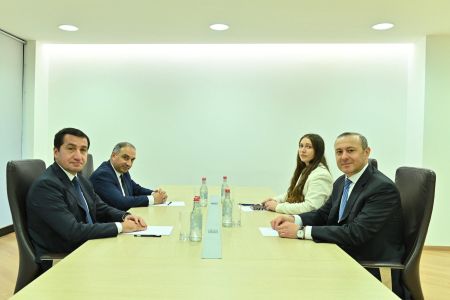 RA Security Council Sec, Assistant to President of Azerbaijan hold negotiations in Dilijan
 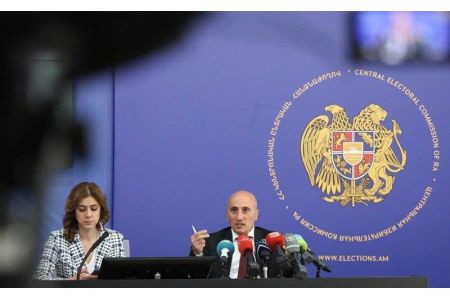 CEC Neutralizes PAP: Three Political Forces to Enter Armenian Parliament Following Election Vote
 Expert: Even OSCE observers recorded numerous violations during elections in Armenia
  Moscow to await official results of Armenian elections - Peskov
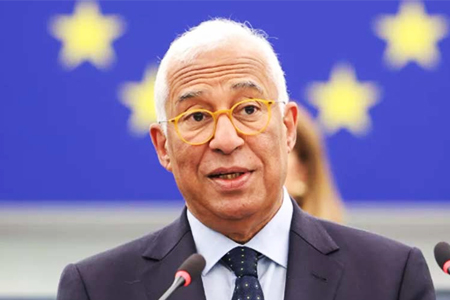 Antonio Costa: EU to deepen its partnership with Armenia, expanding cooperation in energy, trade, and digitalization
 Israeli MFA congratulates Pashinyan
