

ArmInfo. Defense of Artsakh and Armenia today is absolutely identical to the defense of the interests of Russia. It has long been clear to any more or less literate observer that the military conflict in Karabakh is by no means a local one. That a big geopolitical game has begun in the region, and it is synchronized with the events that are taking place today in Belarus, Ukraine, Moldova, the countries of Central Asia, Georgia, and tomorrow they will fully manifest themselves directly in the space of the Russian Federation. This opinion is shared by the well-known Russian political scientist, director of the EurAsEC-EAEU Institute Vladimir Lepekhin.
According to his opinion, expressed to Rusnext, the brooding indecision of the Russian Federation's position and its inclination to compromise is perceived by the geopolitical opponents and competitors of the Russian Federation as a weakness and, therefore, as an invitation to more active and larger-scale actions directed against Russian interests. "I will give just one example - an example of how Turkey is preparing for a future military campaign in the post-Soviet space. According to some reports, Turkey has recently started restructuring the strike group of forces operating in the Karabakh direction within the framework of the unified "Turan Army" (ETA). At the same time, it is known that the project for the creation of the ETA was first proposed to the Turkish leadership in September 2019. Insiders report that within the framework of the ETA, a special group has been created, specializing in the development of new tactical techniques for conducting military operations in the northern direction. In particular, this group is working out a strategy for coordinating the activities of the armed forces of Turkey, Azerbaijan, Kyrgyzstan, Uzbekistan, Tajikistan and Turkmenistan to develop and test actual and potential technologies and methods for carrying out military campaigns in different geographic conditions.
The main goal of ETA at this stage is to carry out covert operations in the immediate vicinity of the borders of the Russian Federation, involving the organization of terrorist acts and environmental disasters, monitoring the movement of the armed forces of Russia and its strategic allies, including Armenia, as well as recruiting supporters. The group includes several specialized (assault, analytical, training, technical and information-propaganda, etc.) detachments. At the same time, most of the officers of the ETA command have experience of participating in battles in Iraq, Syria and Libya, and personnel training is reportedly carried out within the framework of the <SADAT> PMC. The command of the ETA strike force is located in Istanbul, and its Analytical Center is in Izmir. According to the expert, the plans of this group at any time can be adjusted (if not already) in the direction of including agents in the North Caucasian and Volga directions. According to Lepekhin, today the "neo-isolationists" sitting in warm Moscow, dreaming of imitating the "sovereignty" and "self-sufficiency" of the Russian Federation by refusing to fight for own interests in the near abroad, while maintaining a "constructive dialogue" with the main "centers of power" in the far abroad believe that the arson of the Russian Federation on the outskirts will not personally affect them. But this is their personal selfish game. As for the position of representatives of the pro-Russian elites and, for example, such structures as the Ministry of Defense and the Security Council of Russia, the expert believes that they tend to trust facts more than demagoguery.
"I think one should not consider the ostrich position of individuals as the national interests of a power, which today has no obstacle for standing up to its full geopolitical weight and height. The other day I read a post of a Russian "political scientist" entitled "Why Russian peacekeepers cannot be brought into the zone of the Karabakh conflict", in which the author "pragmatically" complains that the Russian Federation cannot send its peacekeepers to the NKR without the consent of Baku, without a UN decision and without a mandate from the OSCE Minsk Group. Question: which of these three decisions did Russia need to recognize the will of the people of Crimea? In fact, the same Turkey, the absence of treaties with Arab and post-Soviet countries does not prevent it from rigidly promoting its interests both in Syria-Libya and in the South Caucasus, aiming at the same time at the Turkic-speaking countries of Northern Eurasia. From my point of view, the Vladimir Putin's principle - to act tit-for-tat - is the only correct decision in the current situation. Without regard to international structures, many of which were created by the West precisely in order to contain Russia with manipulative demagogy about "principles of international law".
The appeals of the head of Artsakh and the Prime Minister of Armenia to the President of Russia about the need for joint actions are quite enough to move from words about the need for reconciliation between the parties to concrete actions to restore order in the region, '' the director of the EurAsEC-EAEU Institute is convinced.

















 A security sphere expert commented on a video about Papikyan`s achievements during his five years as Defense Minister
 The future of the South Caucasus was discussed in the capital of a country whose problem remains unresolved — Davtyan
 An Armenian orientalist presented possible US actions against Iran
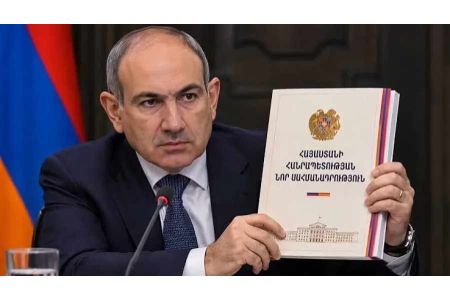 Prime Minister: The Constitution is our collective agreement on the fundamental principles of our internal and external relations
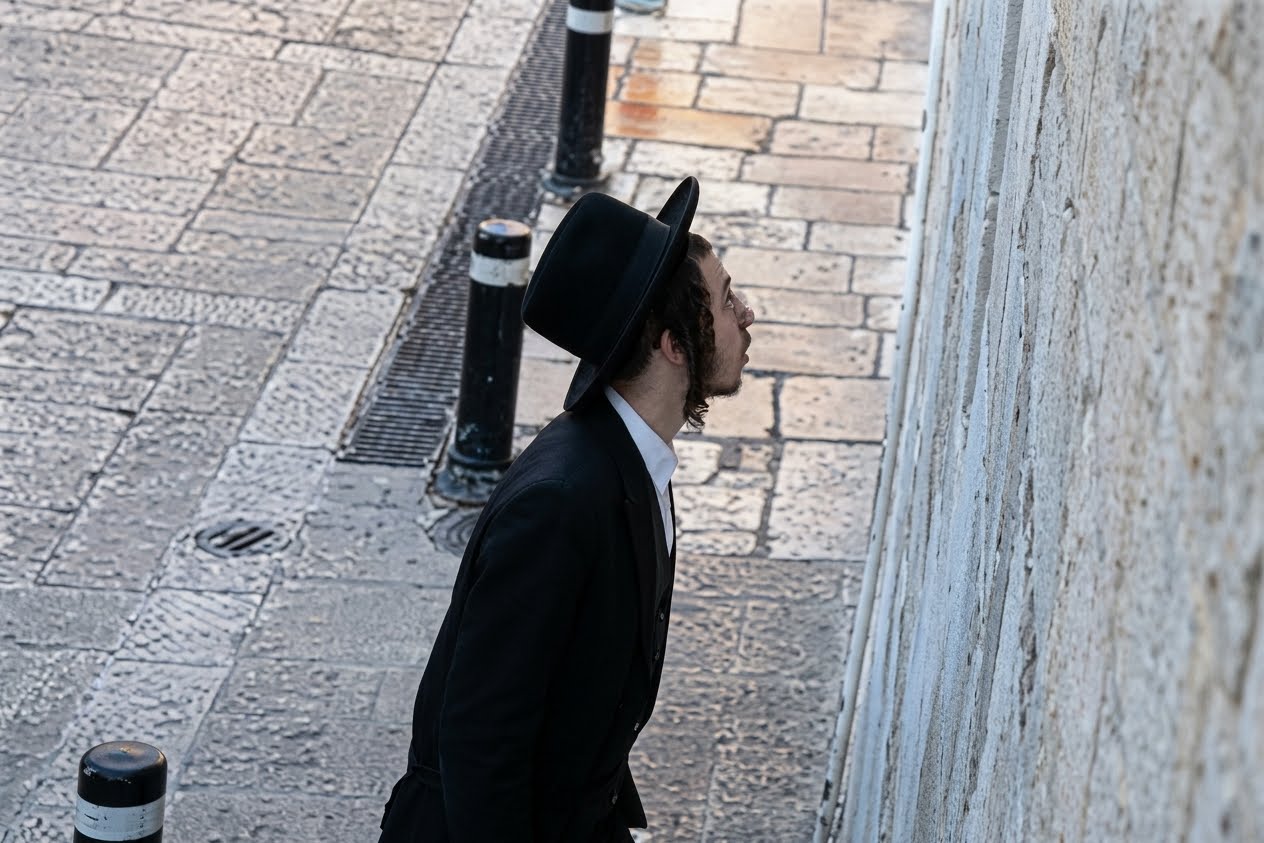 Ultra-Orthodox Jews continue to desecrate Armenian holy sites in Jerusalem’s Armenian Quarter
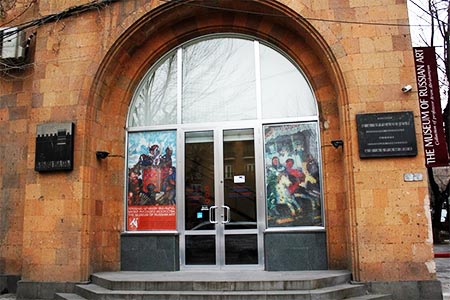 The Yerevan Museum of Russian Art Turns 42
 Armenia wants to host COP-34 in 2029
 Speaker: Armenia has never approached the CSTO regarding the Karabakh issue
 Lavrov: Armenia will not be expelled from the CSTO
 Drmeyan: The ECHR rejected Azerbaijan`s appeal in the case of Artsakh Defense Army Major Hayk Toroyan
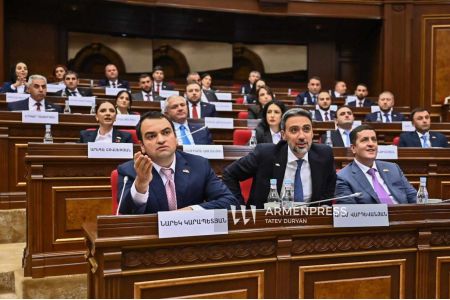 "Strong Armenia": The brawl in parliament was staged to distract public attention from Pashinyan`s failed foreign policy
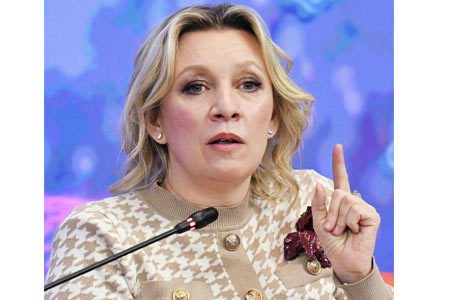 Zakharova commented on the scandalous epithets of the governor of Armenia`s Shirak region about "Ivanov"
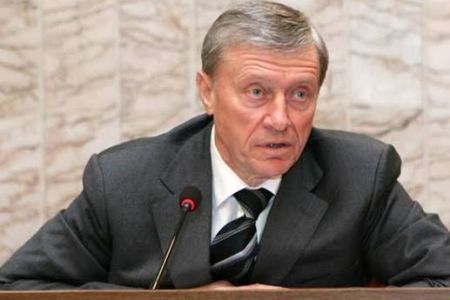 Nikolai Bordyuzha proposed excluding Armenia from the CSTO.
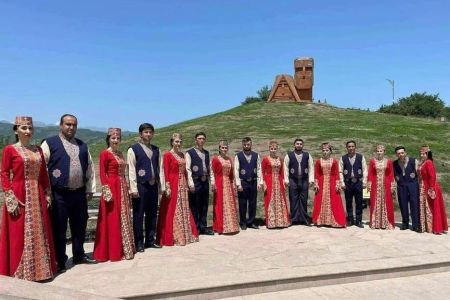 The participation of Artsakh ensembles in an international festival in Vienna was cancelled following the intervention of several foreign embassies